Key takeaways
- Best budget classic: IKEA POÄNG, a bentwood frame with a springy seat.
- Best for reading and long sitting: IKEA STRANDMON wing chair, with a high back and rounded arms.
- Best small-space chair: IKEA EKENÄSET, only 25 inches wide.
- Best light-visual-weight pick: IKEA PERSBOL, a slatted wood-style design with open sides.
- Best soft, deep seating: IKEA VEDBO, a roomy chair with a cushioned back.
- Best modern lounge look: Burrow Nomad armchair, deep and modular-feeling.
- Best design icon: Carl Hansen and Son CH25 lounge chair by Hans Wegner, a woven paper cord classic.
The best living room chair with arms has a seat height of 17 to 19 inches, arms about 7 to 10 inches above the seat, and a seat depth of 19 to 22 inches, so most adults can sit comfortably and stand up without strain. Arms are the feature that separates a lounge seat from a side chair: they support elbows, give leverage when standing, and define the look of the room. This guide compares seven real armchairs by their measured dimensions and explains how to choose among them.
Quick Picks by Need
- Best budget classic: IKEA POÄNG, a bentwood frame with a springy seat.
- Best for reading and long sitting: IKEA STRANDMON wing chair, with a high back and rounded arms.
- Best small-space chair: IKEA EKENÄSET, only 25 inches wide.
- Best light-visual-weight pick: IKEA PERSBOL, a slatted wood-style design with open sides.
- Best soft, deep seating: IKEA VEDBO, a roomy chair with a cushioned back.
- Best modern lounge look: Burrow Nomad armchair, deep and modular-feeling.
- Best design icon: Carl Hansen and Son CH25 lounge chair by Hans Wegner, a woven paper cord classic.
Why Arm Height and Seat Height Matter
Arms are only comfortable when their height matches the user’s elbows. A rule of thumb is that the top of the arm should sit 7 to 10 inches above the seat. Lower than 7 inches and the arm no longer supports the elbow; higher than 10 inches and the shoulders hunch. Seat height should allow feet to rest flat with knees close to a 90 degree angle, which is 17 to 19 inches for most adults. Low-slung lounge chairs at 14 to 16 inches look relaxed but are harder to stand up from, which matters for older users or anyone with sore knees.
Seat depth is the other number that gets overlooked. A seat that is 19 to 21 inches deep supports most people. Deeper seats of 23 inches or more encourage a slouch and are great for curling up but make shorter users perch at the edge. A shallow seat of 17 or 18 inches keeps you upright and suits dining-adjacent reading chairs.
Arm Style Cheat Sheet
| Arm Style | Look | Comfort | Space Needed | Best For |
|---|---|---|---|---|
| Rolled arms | Traditional, soft | Good for resting arms or head | Wider footprint | Family rooms |
| Track (square) arms | Modern, clean | Firm edge | Medium | Contemporary rooms |
| Open wood arms | Mid-century, light | Firm, slim | Minimal | Small spaces, airy layouts |
| Wingback arms | Classic | Head and shoulder support | Large | Reading corners |
| Bentwood arms | Scandinavian | Flexible, springy | Compact | Cozy corners |
How Much Space an Armchair Needs
An armchair is easy to underestimate. In a living room, leave at least 18 inches between the chair and the coffee table, 30 to 36 inches for walkways, and 3 to 4 inches of breathing room behind it if it sits against a wall. A 30 inch wide chair next to a 84 inch sofa leaves room for a side table in a 12 by 14 foot room. If the chair swivels or rocks, add another 6 to 10 inches of clearance.
For small rooms of 10 by 10 feet, choose chairs under 28 inches wide with open arms, such as the PERSBOL or EKENÄSET, so the floor stays visible beneath them. In larger rooms of 14 by 18 feet or more, a pair of wider chairs like the Burrow Nomad or VEDBO can anchor the seating area at an angle to the sofa.
7 Living Room Chairs With Arms Compared
1. IKEA POÄNG Armchair
The POÄNG is one of the best-known chairs in budget furniture. IKEA lists it at about 26 3/4 inches wide, 32 1/4 inches deep and 39 3/8 inches high, with a 22 inch seat width, 19 5/8 inch seat depth and 16 1/2 inch seat height. Its layered-wood frame flexes slightly, which gives a gentle rocking spring, and the high back supports the neck. IKEA bases its guidance on users up to about 242 pounds and does not state a hard maximum load.
Who it is for: first apartments, reading corners and anyone who wants a classic design with replaceable cushions.
Pros: washable cushion covers; lightweight; many finishes; spring in the frame.
Cons: seat is low at 16 1/2 inches; the bentwood arms are slim and not padded; users over 242 pounds should look elsewhere.
2. IKEA STRANDMON Wing Chair
STRANDMON is a wing chair about 32 1/4 inches wide, 37 3/4 inches deep and 39 3/4 inches high, with a 19 1/4 inch seat width, 21 1/4 inch seat depth and 17 3/4 inch seat height. The high wings support the head and block drafts, and the rounded arms are at a comfortable height for reading or nursing. It comes in a range of fabrics and leather-like covers.
Who it is for: reading nooks, bedrooms and people who want head support.
Pros: high back with wings; solid seat height; classic look.
Cons: deep at nearly 38 inches; the covers are not removable; takes up a visual chunk of a small room.
3. IKEA EKENÄSET Armchair
EKENÄSET is a compact chair with a solid beech wood frame, about 25 inches wide and 31 inches deep, 30 inches high, with a seat width of about 22 inches, depth of about 20 inches and a seat height of 17 3/4 inches, with an armrest at about 25 inches off the floor. It weighs about 32 pounds in the box, which makes it easy to carry up stairs. There is also a high-back version that stands about 42 inches tall.
Who it is for: small apartments, entryways and bedroom corners.
Pros: narrow footprint; solid wood frame; easy to move; good seat height.
Cons: a firm, upright feel; the low-back version lacks head support.
4. IKEA PERSBOL Armchair
PERSBOL has an open frame with slatted sides, measuring about 27 1/8 inches wide, 27 1/2 inches deep and 33 1/8 inches high, with a seat height of about 17 inches and armrests about 22 inches from the floor. The cushion tie-downs keep it in place, and the open sides let light through. It comes in black, birch and brown-red frames.
Who it is for: small living rooms and Scandinavian-style spaces.
Pros: light visual weight; compact; simple assembly.
Cons: thin cushions; the open arms are narrow; not the plushest chair for long sits.
5. IKEA VEDBO Armchair
VEDBO is a soft, boxy armchair with removable covers. The standard version is about 28 3/4 inches wide, 25 5/8 inches deep and 29 1/2 inches high on the US site; the high-back version is about 31 1/2 inches wide, 33 1/2 inches deep and 42 1/2 inches high. Seat height is about 17 1/4 inches, with seat dimensions near 18 inches wide and 19 inches deep. The cushioned back adds comfort for lounging.
Who it is for: casual family rooms and shoppers who want removable, washable covers.
Pros: washable covers; soft seating; choice of back height.
Cons: the seat is narrow for larger frames; the cushion fill can flatten over time.
6. Burrow Nomad Armchair
The Burrow Nomad is a modern lounge chair about 35 inches high, 36 inches wide and 36 inches deep, with a 17 inch seat and a 25 inch arm height. It can be paired with an ottoman of about 26 inches wide and 17 inches high. It ships in a manageable box and assembles with a few tools.
Who it is for: modern living rooms and people who want a deep, cushioned seat.
Pros: deep seating; matching ottoman; delivery that fits through standard doors.
Cons: at 36 inches wide and deep, it needs a mid-size or large room; premium pricing tier.
7. Carl Hansen and Son CH25 Lounge Chair
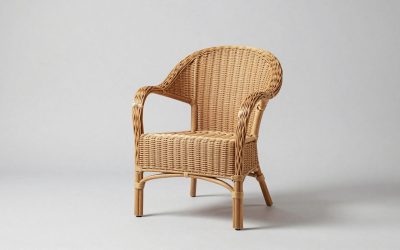
Designed by Hans Wegner, the CH25 is a classic wooden lounge chair with a woven paper cord seat and back. Dimensions are about 28.7 inches high, 27.9 inches wide and 28.7 inches deep, with a seat height of roughly 13.7 inches and an arm height of about 21.6 inches. It is a low, leaning seat that rewards relaxed posture.
Who it is for: design lovers and rooms that need a statement piece.
Pros: iconic design; solid wood; handmade cord weaving.
Cons: low seat height makes standing harder; the cord seat is firm; luxury pricing tier, with reproductions available at lower tiers.
Dimension Comparison Table
| Chair | Width | Depth | Height | Seat Height | Frame |
|---|---|---|---|---|---|
| IKEA POÄNG | 26 3/4 in | 32 1/4 in | 39 3/8 in | 16 1/2 in | Layered wood |
| IKEA STRANDMON | 32 1/4 in | 37 3/4 in | 39 3/4 in | 17 3/4 in | Wood and spring |
| IKEA EKENÄSET | about 25 in | about 31 in | about 30 in | about 17 3/4 in | Solid beech |
| IKEA PERSBOL | 27 1/8 in | 27 1/2 in | 33 1/8 in | 16 7/8 in | Wood slats |
| IKEA VEDBO | 28 3/4 in | 25 5/8 in | 29 1/2 in | about 17 in | Wood and foam |
| Burrow Nomad | 36 in | 36 in | 35 in | 17 in | Wood and foam |
| Carl Hansen CH25 | 27.9 in | 28.7 in | 28.7 in | 13.7 in | Solid wood, paper cord |
Frame and Upholstery Trade-Offs
| Material | Durability | Comfort | Cleaning | What Wears First |
|---|---|---|---|---|
| Solid hardwood frame | Very high | Firm | Wipe | Joints loosen over decades |
| Layered or bent wood | High | Springy | Wipe | Finish on arms |
| Engineered wood | Moderate | Varies | Wipe | Screw holes, edges |
| Polyester or microfiber cover | High | Soft | Spot or machine wash | Pilling on arms |
| Cotton or linen blend | Moderate | Breathable | Dry clean or wash | Fading, wrinkles |
| Bonded or faux leather | Moderate | Warm in summer | Wipe | Peeling surface |
The cover is often what ends a chair’s life, not the frame. Removable covers extend the usable lifespan because you can replace or wash them. Foam density matters as well: seat foam at 1.8 pounds per cubic foot or higher resists sagging better than low-density fill, so ask for the foam spec where it is given.
Matching a Chair to the Room
- Small apartment under 400 square feet: EKENÄSET or PERSBOL, which have narrow widths and visible floor beneath.
- Rooms with children and pets: VEDBO with washable covers, or a performance fabric chair.
- Back pain: a chair with a high back and lumbar support, such as STRANDMON; avoid very low seats below 16 inches.
- Elderly users: seat height above 18 inches and firm arms that give leverage, plus a stable, wide base.
- Open-plan rooms: a single large statement chair like the Burrow Nomad to anchor a corner.
- Renters: lightweight chairs that move easily and fit through narrow doors.
Layout Tips for Chairs With Arms
Place an armchair at a 45 to 90 degree angle to the sofa so conversation flows, and leave 4 to 5 feet between the chair and the sofa if you want to face each other across a coffee table. Pairs of chairs can float opposite a sofa for symmetry. A single chair sits well beside a window or a bookshelf. For reading, pair the chair with a floor lamp 2 to 3 feet to one side and a small table within arm’s reach at about the same height as the chair’s arm.
Rugs help define the area. A 5 by 8 foot rug beneath the front two legs of the chair anchors it, and in larger rooms a 8 by 10 foot rug can hold the sofa and chairs together. Avoid putting a chair directly under an air vent or in a high-traffic path where people brush against the arms.
Assembly, Moving and Durability Realities
- Box weight: most of these chairs ship in boxes between 14 and 45 pounds, so one person can carry them.
- Assembly time: 15 to 45 minutes with a hex key or screwdriver; the POÄNG is quick, while the Nomad takes a bit longer.
- Doorway fit: flat-packed chairs pass through any 30 inch doorway; fully assembled upholstered chairs like a CH25 or a premium lounge chair typically need a 30 to 32 inch clear opening.
- Tighten bolts: re-tighten frame bolts after the first month and once a year after that, since seats loosen with use.
- Floor protection: add felt pads under legs to protect hardwood floors.
How to Judge Comfort Before You Buy
Because most chairs are bought online, use measurements as a stand-in for a showroom sit. Measure your current favorite chair: seat height, seat depth and arm height. Then compare those three numbers to the spec line of any candidate. A difference of more than an inch in seat height or two inches in depth is usually noticeable within minutes of sitting.
Use a tape measure and a dining chair to simulate the footprint. Mark the width and depth on the floor with painter’s tape, then walk around the outline. If the taped area blocks a path narrower than 30 inches, the chair is too large for that spot. Place a stack of books at the arm height you are considering and rest an elbow on it to check whether your shoulder relaxes or lifts.
Pay attention to the return policy and the cover. Chairs with removable covers are easier to live with, since a stained cushion can be swapped without replacing the whole chair. Lastly, think about who will sit in it most. A chair used mostly by a taller person needs a deeper seat and higher back, while one used by a child or a petite adult benefits from a shallower seat so the feet can reach the floor. If two people of very different sizes share the chair, choose a medium depth of about 20 inches and add a small lumbar cushion for the smaller user.
Weight capacity deserves a quick look as well. Many budget chairs carry a use guideline near 240 to 250 pounds rather than a hard limit, and heavier users are better served by solid hardwood frames with metal hardware, or by wider seats of 24 inches or more.
Frequently Asked Questions
How wide should an armchair be for a small living room?
Aim for 25 to 29 inches. Narrow chairs like the EKENÄSET fit beside a sofa or in a corner without crowding a path.
What is the ideal arm height for a living room chair?
Arms should be 7 to 10 inches above the seat. For a 17 inch seat, that is an arm top at 24 to 27 inches from the floor, which matches the Burrow Nomad at 25 inches.
Are wingback chairs comfortable for long reading sessions?
Yes, the wings support the head and neck, and the high back helps posture. Pair it with a footstool for the best result.
Do armchairs need to match the sofa?
No. Chairs that share a color or material with the room, but not an exact fabric, usually look more intentional. Repeat one color or texture from the sofa or rug.
Can I use an armchair as a dining chair?
Some, like the PERSBOL, can double as seating at the end of a table. The ideal dining chair seat is about 18 inches high with a table at 29 to 30 inches.
Final Recommendation
For most living rooms, the IKEA POÄNG or STRANDMON is the safest choice for comfort, availability and fit. Small spaces suit the EKENÄSET or PERSBOL, and families who need washable covers should consider the VEDBO. If you want a deeper, more modern seat, the Burrow Nomad delivers more lounge. Pick the CH25 when you want design heritage and are willing to accept a lower, firmer seat. Whatever you choose, measure the room, check the seat height against your needs, and make sure the arm height supports your elbows.