Key takeaways
- Follow the manual first. Cleaning frequency and approved products vary by machine and component. Use the manufacturer’s schedule rather than a cleaner’s cycle as your guide.
- Separate washable parts. Remove the mask and other designated parts. Keep the CPAP machine and electrical connections away from water.
- Wash and rinse. Use the soap and water method specified in your instructions. Pay attention to skin-contact surfaces, where oils and residue build up.
- Air-dry fully. Place parts on a clean surface with enough space for air circulation. Reassemble only when components are dry.
- Pack clean and dry for travel. Keep dry parts in a clean pouch, separate from toiletries and damp clothing. At your destination, use the same approved washing routine.
Best CPAP Cleaners Reviewed: The Short Answer
The best CPAP cleaner for most people is a cleaning routine based on the equipment maker’s instructions—not an ozone or UV device. CPAP manufacturers and the U.S. Food and Drug Administration (FDA) have warned that ozone and ultraviolet-light cleaners are not FDA-authorized substitutes for washing CPAP components, and ozone can linger in tubing or the mask and irritate the lungs. If you want a machine for convenience, choose one only after confirming that your CPAP manufacturer permits its method and that it is compatible with every component you plan to clean.
For daily home use, a sink, mild soap, and thorough air-drying are usually the simplest, lowest-cost option. For travel, prioritize a compact case and easy access to hand-washing facilities rather than assuming a portable sanitizer can replace routine cleaning. In this guide, “best” means best fit for your equipment, cleaning habits, and travel needs—not a claim that a device disinfects your CPAP.
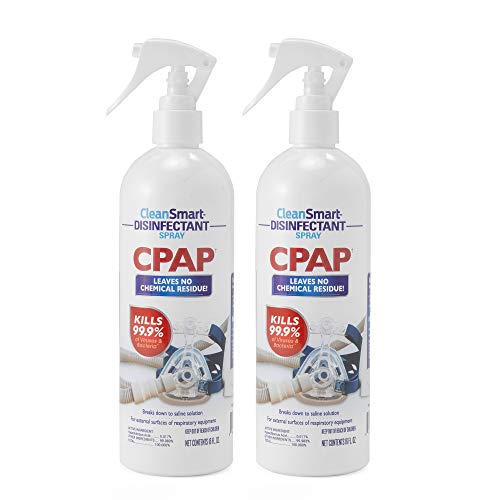
CleanSmart CPAP Disinfectant Spray for Face Mask and Hose, 16 oz (2 pack)
Included for 'Best CPAP Cleaners Reviewed: Features, Size & Value' because the listing specifies 16 oz (2 pack), details this guide uses to compare options.
View on Amazon
XL CPAP Mask Wipes - Unscented Cleaner Full Face & Nasal Masks - 150 Ct + 6
Included for 'Best CPAP Cleaners Reviewed: Features, Size & Value' because the listing specifies Unscented Cleaner Full Face & Nasal Masks and 150 Ct + 6, details this guide uses to compare options.
View on Amazon
Aveen CPAP Tube and Mask Cleaning Brush, Suitable for All CPAP Hoses and Masks, CPAP Hose Cleaning Brush Kit, Enhance Your CPAP Machine and CPAP mask, CPAP mask Cleaner.
Included for 'Best CPAP Cleaners Reviewed: Features, Size & Value' because the listing specifies Suitable for All CPAP Hoses and Masks and CPAP Hose Cleaning Brush Kit, details this guide uses to compare options.
View on Amazon
resplabs CPAP Mask Wipes, 110 Count Unscented - Safe for All CPAP Masks, Cushions, and Supplies - Daily Use Cleaning Wipes
Included for 'Best CPAP Cleaners Reviewed: Features, Size & Value' because the listing specifies 110 Count Unscented and Safe for All CPAP Masks, details this guide uses to compare options.
View on AmazonOzone vs. UV: What the Methods Mean for Your CPAP
| Method | How it works | Potential advantage | What to check before buying |
|---|---|---|---|
| Ozone (also called activated oxygen) | Uses ozone gas in a closed chamber or bag, sometimes circulated through a hose and mask. | May be marketed as a hands-off routine. | FDA warnings include possible harmful exposure and irritation. Residual ozone may remain in equipment. Check your device maker’s policy; do not assume an advertised cycle is approved or clinically validated. |
| UV-C light | Shines ultraviolet light on exposed surfaces inside a chamber. | A short cycle may suit small, line-of-sight objects. | Light may not reach shadowed surfaces or the inside of a hose. UV can damage some materials over time. Verify compatibility and avoid direct exposure to eyes or skin. |
| Soap and water | Hand-washes removable parts, followed by rinsing and air-drying. | Directly removes oils and residue; does not need a powered appliance. | Follow the CPAP manual for suitable soap, parts, and washing frequency. Never immerse the machine, humidifier base, or electrical components unless the manual explicitly allows it. |
Neither ozone nor UV should be treated as a shortcut around washing. A “sanitizing” label does not establish that a cleaner removes skin oils, reaches every interior surface, or is safe for a particular mask and hose. The FDA advises patients to discuss CPAP-cleaning products with a health professional and follow the device manufacturer’s cleaning instructions.
Best Choice by Situation
| Your situation | Best fit | Why |
|---|---|---|
| Daily home use, lowest ongoing cost | Manual washing setup | A dedicated basin or clean sink, mild soap, and a drying area cover routine care without an extra appliance or replacement parts. |
| Small apartment or shared bathroom | Compact drying setup, not a bulky cleaner | Allow a clean, ventilated surface for disassembled parts. A tray about 12 × 16 in (30 × 41 cm) can hold many mask pieces, but check your own components and keep them away from splash zones. |
| Frequent traveler | Lightweight wash kit and protective case | A small bottle of suitable soap, a clean cloth, and a separate pouch take less space than many powered units. Confirm airline and battery rules if traveling with an electronic device. |
| Ozone-sensitive household or respiratory concerns | Avoid ozone-generating cleaners | Ozone exposure may irritate airways. Ask your clinician about concerns and use the cleaning method specified by your CPAP maker. |
| Considering a UV device | Only a model explicitly compatible with your parts | Chamber dimensions and light coverage matter, but UV exposure alone does not demonstrate that tubing interiors or hidden surfaces are cleaned. |
What to Check Before Choosing a Cleaner
1. Compatibility with the exact CPAP system
Make a list of your machine, mask, cushion, headgear, hose, and humidifier parts. Then check each item’s manual or manufacturer support page. A cleaner may fit a standard hose but not a heated hose, a mask with soft silicone, or a component with a specific coating. “Universal” usually describes a connector or chamber size, not approval for every material or CPAP brand.
2. Actual capacity, not just the advertised cycle
Measure the largest part you intend to place inside. A chamber’s usable space can be smaller than its external dimensions, and masks may need to be disassembled to fit without blocking airflow or light. For a UV unit, ask whether all surfaces are exposed; for an ozone unit, a hose adapter does not resolve safety or manufacturer-compatibility concerns.
3. Counter space, weight, and travel fit
Measure the place where the unit would sit, including room to open its lid and route a hose. For example, a 10 × 12 ft bedroom has 120 sq ft of floor area, but a cleaner belongs on a stable, dry surface—not squeezed beside a humidifier or placed where it can be knocked over. For travel, compare packed dimensions and weight with your carry-on, and check whether the device needs an outlet, battery, or proprietary bag.
4. Total cost and upkeep
Powered cleaners can cost from roughly $50–$300 or more, depending on design and features; prices vary, and cost does not establish cleaning effectiveness. Add any replacement filters, bags, adapters, or batteries. A manual setup typically costs little beyond soap and a drying surface. If a device requires frequent accessories, compare its annual upkeep with the cost and effort of washing by hand.
A Practical Home-and-Travel Cleaning Routine
- Follow the manual first. Cleaning frequency and approved products vary by machine and component. Use the manufacturer’s schedule rather than a cleaner’s cycle as your guide.
- Separate washable parts. Remove the mask and other designated parts. Keep the CPAP machine and electrical connections away from water.
- Wash and rinse. Use the soap and water method specified in your instructions. Pay attention to skin-contact surfaces, where oils and residue build up.
- Air-dry fully. Place parts on a clean surface with enough space for air circulation. Reassemble only when components are dry.
- Pack clean and dry for travel. Keep dry parts in a clean pouch, separate from toiletries and damp clothing. At your destination, use the same approved washing routine.
Are CPAP Cleaners Worth Buying?
For most users, a dedicated cleaner is not necessary for routine care. A small powered device may seem convenient, but it does not eliminate the need to verify compatibility, follow the CPAP manual, or clean away visible residue. Ozone devices deserve particular caution because of FDA safety concerns; UV devices have their own limits, especially around shadows, tubing interiors, and material durability.
If you still want one, treat the purchase as an optional accessory—not a replacement for washing. The most useful buying decision is often choosing the right soap, a clean drying area, and a travel pouch. If you have a specific medical concern or are unsure whether a cleaner is safe with your equipment, ask your clinician and the CPAP manufacturer before using it.