Key takeaways
- Flatweave, under 0.15 inches: easiest for dining chairs, wheelchairs, rolling office chairs, and frequent moving; add a cushioned pad if comfort matters.
- Low pile, 0.15–0.4 inches: the most versatile choice for living rooms, pets, and open-plan spaces.
- Medium pile, 0.4–0.7 inches: warmer and more comfortable, but furniture may wobble slightly and doors may need extra clearance.
- Shag or high pile, above 0.75 inches: cozy for a low-traffic lounge, but difficult to vacuum and inconvenient beneath dining chairs.
The best 9×12 area rugs for large living rooms are low- to medium-pile rugs with a stable backing, stain-resistant fibers, and enough pattern or texture to hide everyday wear without competing with the furniture.
A 9×12 rug measures 108 by 144 inches, although many manufactured rugs are slightly smaller. It is large enough to anchor a generous seating arrangement, a six- to eight-person dining table, or an open-plan living zone. The right choice depends less on appearance alone than on pile height, fiber behavior, furniture placement, cleaning demands, and whether the rug must pass through a narrow doorway.
Quick picks by room and lifestyle
| Situation | Best rug type | Useful specifications | Main compromise |
|---|---|---|---|
| Busy family room | Machine-woven polypropylene or polyester | Low pile, approximately 0.2–0.4 inches | Less natural texture than wool |
| Kids and pets | Flatweave or low-pile washable synthetic | Color variation, tight weave, non-slip pad | Can feel less soft underfoot |
| Formal living room | Wool or wool-blend rug | Medium pile, approximately 0.35–0.6 inches | Higher cost and professional cleaning needs |
| Dining room | Low-pile polypropylene, wool, or flatweave | Chair-friendly pile under 0.4 inches | Thick plush rugs make chairs difficult to move |
| Rental or frequent movers | Lightweight flatweave or thin synthetic rug | Usually easier to roll and carry; use a separate pad | Needs more underlay for cushioning |
| Open-plan home | Textured low-pile rug with a defined border | Works with at least the front legs of seating on the rug | May not visually separate the zone as strongly as a bold pattern |
Best 9×12 area rugs by material
Polypropylene: best for practical everyday use
Polypropylene is usually the safest all-purpose choice when a rug must handle children, pets, food spills, and frequent vacuuming. The fiber resists many common stains, dries relatively quickly, and is widely available in traditional, geometric, and faded-vintage designs. A low-pile polypropylene rug is particularly effective beneath a dining table because chair legs can slide without catching.
Choose a tightly woven construction rather than a loose, shaggy surface. Inspect the edges for firm binding and check that the backing does not shed powder or fibers. Polypropylene is generally less luxurious than wool and may flatten in the main walking lanes, but a variegated pattern disguises that change better than a solid color.
Wool: best for comfort, insulation, and long-term appearance
Wool provides a softer, warmer feel and naturally resilient fibers that can recover from moderate furniture pressure. It is a strong choice for a living room where comfort and appearance matter more than the lowest price. Wool also has natural color variation, which can make a large rug look richer and less visually flat.
The trade-offs are cost, initial shedding, and cleaning. A new wool rug can release loose fibers for several weeks, so vacuum with the height set appropriately and avoid aggressive beater-bar use. Wool is not automatically stain-proof: blot spills promptly, keep moisture from soaking into the backing, and use a rug-care professional for significant stains.
Polyester: best for vivid color and a softer budget option
Polyester rugs often offer saturated colors and a soft hand at a lower price than wool. They work well in bedrooms, lightly used sitting rooms, and homes where visual style is the priority. However, polyester can show crushing or oily-looking traffic marks sooner than a good wool or tightly woven polypropylene rug. It is less persuasive for a heavily used open-plan walkway unless the pile is very low and the design is forgiving.
Jute and other natural plant fibers: best for texture
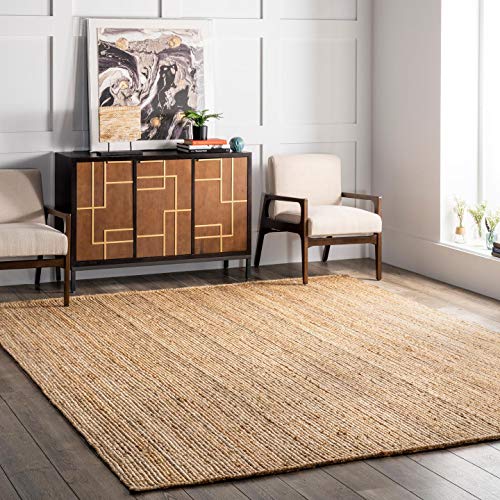
Jute, sisal, and seagrass bring substantial texture to coastal, rustic, and minimalist rooms. Their woven surfaces are effective at defining an open-plan zone without a busy print. They are also relatively firm underfoot and can be durable when kept dry.
These fibers are less suitable for frequent wet cleaning, muddy pets, or dining rooms where spills are likely. Jute may shed small fibers and can develop uneven coloration. Select a tightly woven, low-profile version and place it away from damp entrances or kitchens.
Pile height matters more than shoppers expect
For most large living rooms, a pile between 0.2 and 0.5 inches offers the best balance of comfort and usability. It is soft enough to make the seating area feel finished but low enough for robot vacuums, sofa legs, and occasional furniture rearrangement.
- Flatweave, under 0.15 inches: easiest for dining chairs, wheelchairs, rolling office chairs, and frequent moving; add a cushioned pad if comfort matters.
- Low pile, 0.15–0.4 inches: the most versatile choice for living rooms, pets, and open-plan spaces.
- Medium pile, 0.4–0.7 inches: warmer and more comfortable, but furniture may wobble slightly and doors may need extra clearance.
- Shag or high pile, above 0.75 inches: cozy for a low-traffic lounge, but difficult to vacuum and inconvenient beneath dining chairs.
Before ordering, measure the clearance beneath doors and nearby cabinets. A rug pad can add another 0.1–0.25 inches, while a thick shag pad may add considerably more. Avoid placing a tall-pile rug where a door needs to swing over it.
Will a 9×12 rug fit your room?
A 9×12 rug generally needs a room wider than 11 feet in both directions if you want a visible border around it. In a 12×14-foot room, it leaves approximately 18 inches on the 12-foot sides and 12 inches on the 14-foot sides, assuming the rug is centered. That can work, but the border may look tight around baseboards and furniture.
In a 10×12-foot room, a 9×12 rug leaves only about six inches on the two 12-foot sides and six inches on the 10-foot sides if rotated to fit, which is usually too cramped for a deliberate room border. It may still work when placed under most of the furniture, but a smaller 8×10 rug will often look more balanced.
For a living room, place at least the front legs of every main seating piece on the rug. With a 9×12 rug, a sofa and two lounge chairs can usually sit comfortably within one unified arrangement. Leaving every piece entirely off the rug can make a large room feel disconnected.
Living room, dining room, or open-plan placement
Living rooms
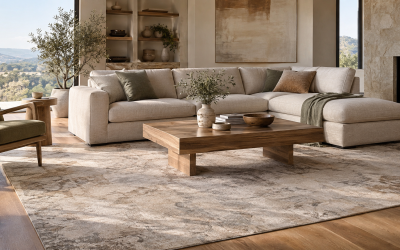
Measure the full seating footprint, not just the coffee table. The rug should extend beyond the sofa and chairs by roughly 6–18 inches where possible. Keep the front legs of seating on the rug and position the coffee table so its top is centered within the rug’s pattern. If the sofa sits against a wall, a 9×12 rug can extend well into the room while still connecting side chairs.
Dining rooms
A 9×12 rug is a good size for a rectangular table seating six to eight people, but only if it provides enough chair clearance. Aim for at least 24 inches of rug beyond each table edge; 30–36 inches is more comfortable. This lets diners pull chairs back without dropping two legs onto the floor. Choose a low pile, dense flatweave, or tight short-loop construction. Avoid long fringe, deep shag, and highly delicate fibers.
Open-plan spaces
Use the rug to define one activity zone rather than trying to cover the entire floor. In a combined living-and-dining area, a 9×12 rug can anchor the living room while the dining table remains on a separate surface. Align one edge with a sofa or console to create a visual boundary, and repeat one or two rug colors in nearby upholstery or curtains.
Construction details that affect durability
Machine-woven rugs usually offer consistent dimensions, lower prices, and predictable patterns. Hand-tufted rugs can feel plush but may shed more and require a stable backing. Hand-knotted rugs are often highly durable and repairable, though their price can rise substantially. Regardless of construction, the first areas to show wear are usually the routes between seating, doorways, and the space beneath a frequently used coffee table.
Use a rug pad sized about one inch smaller than the rug on every side. It reduces sliding, protects flooring, improves acoustics, and limits wrinkling. For a 9×12 rug, a pad that is approximately 107 by 143 inches is a practical starting point, then trim or exchange it for the exact rug dimensions. Do not assume a rug’s backing alone is sufficient on smooth wood, tile, or laminate.
Moving and maintenance realities
A 9×12 rug is bulky even when it is not especially heavy. A thin synthetic may weigh around 25–45 pounds, while a dense wool or natural-fiber rug can weigh 60–100 pounds or more. Rolled rugs commonly need a doorway at least 30–36 inches wide, and turning a stiff roll around a hallway corner can be harder than moving it through the entrance.
Vacuum both directions weekly in busy areas, lift furniture occasionally to check for trapped grit, and rotate the rug 180 degrees every six to twelve months when the design allows it. Blot spills instead of scrubbing, keep the pad dry, and follow the fiber-specific care label. For homes with pets, a medium-toned pattern and low pile typically conceal daily marks better than a white solid or deep high-pile surface.
Bottom line
Choose a low-pile polypropylene rug for the best combination of stain resistance, price, and easy maintenance. Choose wool when comfort, insulation, and long-term visual quality justify a higher budget. Choose a flatweave synthetic or natural-fiber rug for dining rooms and rentals, and prioritize a tightly woven, low-profile design for open-plan spaces. The most attractive 9×12 rug is the one that leaves sensible furniture clearance, supports the way people move through the room, and can be cleaned without turning ordinary life into a maintenance project.