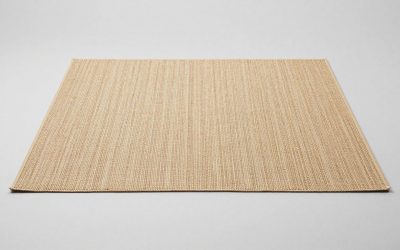
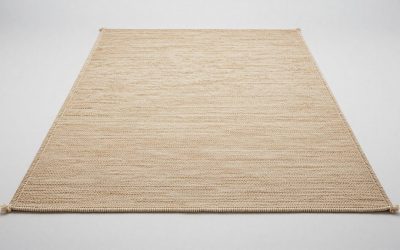
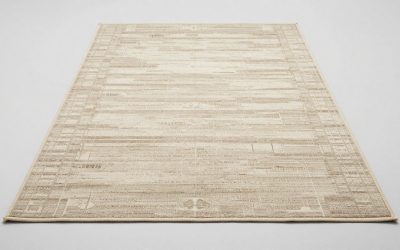
Our Top Picks
The best round area rugs match the rug diameter to the furniture footprint first, then balance fiber durability, pattern scale, edge construction, and the room’s proportions.
Quick Picks by Room and Use
| Situation | Recommended rug size | Best material type | Why it works |
|---|---|---|---|
| Small dining table for two to four | 6 ft round | Low-pile wool or washable synthetic | Allows chairs to pull out without overwhelming a compact room |
| Dining table for four to six | 8 ft round | Flatweave wool, polypropylene, or PET | Provides useful chair clearance around a typical 42–48 in table |
| Dining table for six to eight | 9–10 ft round | Dense low-pile wool or durable synthetic | Keeps all chair legs on the rug when guests sit down |
| Bedroom beneath a round bed | 8–10 ft round for a queen; 10–12 ft for a king | Soft wool, cotton, or plush synthetic | Creates a visible border around the bed and comfortable landing space |
| Small seating area | 6–8 ft round | Low- or medium-pile fiber | Fits a small sofa and two chairs while visually grouping them |
| Nursery or children’s room | 5–8 ft round | Washable polyester or polypropylene | Practical under play furniture and easier to spot-clean |
How Large Should a Round Dining Room Rug Be?
Measure the tabletop diameter and add at least 24 inches to both sides. This gives roughly 24 inches of rug beyond the table edge, enough for a dining chair to slide backward while its rear legs remain supported.
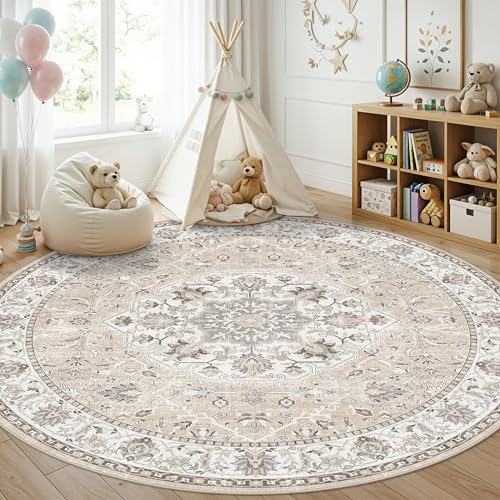
Washable 8ft Round Area Rug - Living Room Oriental Non Slip Soft Rugs Indoor Low Pile Stain Resistant Carpet for Bedroom Dining Room Farmhouse Distressed Thin Home Decor Floor Mat(8Round,Beige)
Chosen because it specifies Beige).
View on Amazon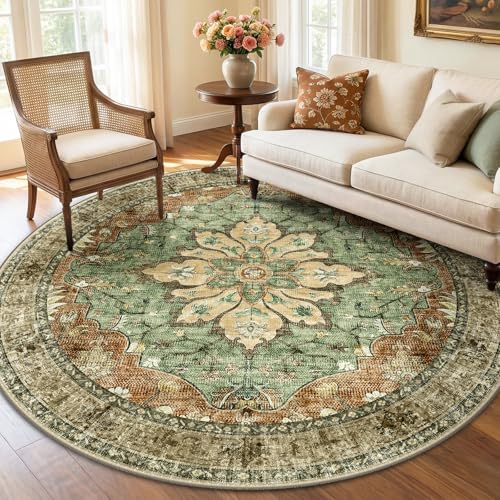
RELEANY Washable Area Rug, Round 6ft, Brick/Brown/Green
Chosen because it specifies Round 6ft and Brick/Brown/Green.
View on Amazon
OPPODREAM Vintage Blue Area Rugs 4' Round, Washable Rug for Living Room
Chosen because it specifies Washable Rug for Living Room.
View on Amazon
Ophanie Round Rugs 5Ft Ivory Circle Area Rug,Baby Nursery Living Room Bedroom Decor Circular Carpet 5 Foot,Fluffy Fuzzy Shag Plush Cream for Kids Boys Girls Teen with Over 99 pcs Pile fibers
Picked as a relevant option in this category.
View on AmazonFor example, a 42-inch round dining table needs at least an 8-foot rug: 42 inches plus 24 inches on each side equals 90 inches, or 7 feet 6 inches. An 8-foot rug provides a practical margin. A 48-inch table is more comfortable on a 9-foot rug, especially if the chairs have wide backs or arms.
- 36-inch table: choose a 6-foot rug for compact seating, or 7 feet for generous clearance.
- 42-inch table: an 8-foot rug is usually the safest choice.
- 48-inch table: choose 9 feet, particularly for six dining chairs.
- 60-inch table: look at 10 feet or larger, depending on chair depth.
Do not measure only the tabletop. Pull each chair out to the position used while eating, then measure the full furniture footprint. A rug that ends beneath the front chair legs can catch chair legs, create rocking, and wear quickly along the edge.
Room clearance matters too
Leave approximately 18–24 inches of exposed flooring between the rug edge and the nearest wall, cabinet, or major furniture piece when possible. In a 10 by 12-foot dining room, an 8-foot round rug leaves 24 inches on the 10-foot dimension and 12 inches on the 12-foot dimension if perfectly centered. That can look tight along the longer walls, so a 7-foot rug may create better visual breathing room if the table is small.
A round rug does not need to be centered in the entire room. Center it under the table and prioritize clear walking paths. Maintain about 30–36 inches for a comfortable route around dining furniture; narrower passages may work in a seldom-used area but will feel cramped in daily use.
Choosing a Round Rug for a Bedroom
In a bedroom, the rug size depends on whether it sits under the entire bed or only beside it. A round rug under a queen bed generally works best at 8–10 feet. A 10-foot rug creates a more visible border around a 60 by 80-inch queen mattress, while an 8-foot rug may be partly hidden and function mainly as a soft perimeter.
For a king bed, use a 10- or 12-foot round rug if the room can accommodate it. In a 12 by 14-foot bedroom, a 10-foot rug can provide a balanced border without reaching every wall. A 12-foot rug may look better in a larger room but can leave too little exposed flooring in a compact space.
For a smaller bedroom, place a 6- or 8-foot rug near the foot of the bed rather than forcing it underneath the full frame. Leave roughly 18–24 inches of rug visible where feet land. Low-pile construction is preferable if a door swings across the rug; measure the door’s clearance, including the thickness of the rug and pad.
Material Comparison: Softness Versus Practical Wear
| Material | Advantages | Limitations | Best location |
|---|---|---|---|
| Wool | Resilient, naturally insulating, comfortable, often hides minor soil | Usually costs more; may shed during early use; not ideal for repeated soaking | Dining rooms, bedrooms, formal seating areas |
| Polypropylene | Stain-resistant, colorfast, widely available, generally easy to clean | Can feel less soft and less breathable than wool; melted fibers are possible near heat | Dining areas, playrooms, busy family rooms |
| Polyester or PET | Soft hand, strong color options, often made partly from recycled plastic in PET versions | Oil-based stains can be difficult; plush piles may show crushing | Bedrooms and low- to moderate-traffic seating spaces |
| Cotton | Lightweight, casual, often washable in smaller sizes | Can wrinkle, fade, and wear faster under moving dining chairs | Bedrooms, nurseries, kitchens, seasonal use |
| Jute or sisal | Textured appearance, natural color, useful visual warmth | Rougher underfoot; difficult to clean deeply; edges can fray | Low-spill seating areas and decorative use |
For dining rooms, a low pile or flatweave is usually more functional than a deep shag. Chair legs move more easily, crumbs are easier to vacuum, and the edge is less likely to become a trip point. In a bedroom, medium pile can add comfort, but verify that drawers and doors still open freely.
Pattern Scale and Room Proportions
Choose pattern size in relation to both the rug diameter and the room. A large geometric motif can be attractive on a 9-foot rug but may appear chopped on a 5-foot rug. Small repeating patterns tend to look busier, yet they disguise crumbs, footprints, and minor marks better than a plain solid.
- Small room: use a restrained border, tonal pattern, or low-contrast design so the circular outline remains clear.
- Large room: a bold medallion or broad geometric design can anchor open space.
- Round table: echoing circular motifs creates cohesion, but a subtle stripe or angular pattern adds contrast without clashing.
- Rectangular furniture: a round rug softens the hard lines, so avoid pairing it with an equally busy pattern unless the rest of the room is quiet.
In a narrow room, a round rug can emphasize the room’s width if it extends close to both side walls. Keep enough visible floor around it to show that the shape is intentional rather than cut off by the architecture.
Edge Durability, Backing, and Pad Selection
The perimeter is often the first part of a round rug to show damage because chairs, shoes, vacuum heads, and door swings repeatedly contact the curved edge. Look for tightly bound edges, dense overlock stitching, and a backing that stays flat. Loose fringe is attractive but can catch chair legs and is less convenient beneath a dining table.
A rug pad should be slightly smaller than the rug—generally 1–2 inches inside the perimeter—so it does not create a visible lip. For dining rooms, choose a firm, low-profile pad that resists bunching. For bedrooms, a cushioned pad can improve softness, but avoid excessive thickness beneath doors or wheeled furniture.
Check the rug’s care label before buying. “Stain-resistant” does not mean stain-proof, and many natural fibers should be blotted rather than saturated. Rotate the rug 180 degrees every few months when furniture allows; this distributes fading and traffic wear around the circle.
Decision Guide for Common Buying Situations
| Your situation | Prioritize | Consider avoiding |
|---|---|---|
| Small apartment | 6–8 ft diameter, low pile, 18–24 in wall clearance | Oversized rugs that block walkways or door swings |
| Children and pets | Washable or easy-clean synthetic, low-contrast pattern, tight edge | Long shag, loose fringe, fibers requiring delicate cleaning |
| Rental home | Non-damaging pad, lightweight construction, reversible or portable style | Adhesive-backed products that may mark flooring |
| Back or knee discomfort | Stable pad, low-to-medium pile, smooth chair movement, soft wool or dense synthetic | Thick edges, unstable layers, or rugs that make chairs difficult to pull out |
| High-traffic dining room | Flatweave wool or durable polypropylene, dark or mixed pattern | Delicate cotton, high pile, and pale solid colors |
Before Ordering: A Practical Size Test
Use painter’s tape or folded newspaper to mark the proposed circle on the floor. Place the table in the center, pull every chair out as if someone were seated, and check the following:
- All chair legs remain on the rug in the normal sitting position.
- At least 30 inches of walking space remains where people pass frequently.
- Doors, drawers, and nearby cabinets open without catching the rug.
- The rug edge stays at least 18 inches from walls where the room allows it.
- The pattern will not be hidden entirely by the table or bed.
Market pricing varies by fiber, construction, diameter, and whether the rug is handwoven or machine-made. As a broad 2026 guide, smaller synthetic round rugs may cost about $80–$250, mid-size durable rugs commonly fall around $200–$600, and larger wool or artisan-made rugs can range from $600 to well above $1,500. The right size and construction usually matter more than choosing the lowest initial price: replacing a worn rug after repeated chair damage costs more than selecting a properly sized, tightly finished one at the start.