Key takeaways
- Confirm the use rating: Get written confirmation that the exact product and finish are approved for kitchens.
- Read the water instructions: Find out what the warranty says about spills, standing water, and appliance leaks.
- Compare the wear surface: Check finish type, wear-layer details, recoat options, and approved cleaners.
- Inspect the subfloor requirements: Identify flatness tolerances, moisture limits, underlayment rules, and any adhesive restrictions.
- Plan fixed edges: Decide how the floor meets cabinets, island panels, doorways, and transitions without trapping a floating installation.
- Buy extra from the same batch: Keep spare material for repairs; cork’s pattern and color can vary between production runs.
- Budget for installation: Material prices vary by construction and finish, while glue-down work can cost more because preparation and finishing are labor-intensive. Get local quotes rather than comparing material price alone.
Best Cork Flooring for Kitchens: Durable, Comfortable Picks
The best cork flooring for a kitchen is an engineered floating plank with a dense cork core, a factory-applied, water-resistant finish, and sealed joints—provided you wipe up spills promptly and keep standing water away. For a kitchen prone to leaks or frequent splashes, choose glue-down cork with a compatible commercial-grade polyurethane finish, or consider waterproof flooring instead; cork is water-resistant when properly finished, not waterproof.
Quick picks by kitchen and household
| Kitchen situation | Best-fit cork construction | Why it fits | Key compromise |
|---|---|---|---|
| Busy family kitchen with routine spills | Engineered floating plank, factory-finished, sealed click joints | Comfortable underfoot and quicker to install than glue-down | Spills must be wiped up before they reach seams |
| Kitchen with a dishwasher, ice maker, or sink leak concern | Glue-down cork with a compatible, continuous polyurethane finish | No floating perimeter for water to travel beneath; finish can protect the surface | Subfloor preparation and installation are less forgiving |
| Open-plan kitchen and living area | Engineered cork with a durable, repairable finish and matching transition plan | Reduces footfall noise and feels warmer than tile | Sunlight and heavy furniture can cause fading or indentations |
| Rental or short-term renovation | Floating click-lock cork, if the landlord permits it and the subfloor is suitable | Usually avoids adhesive and may be removable | Not appropriate over every existing floor; removal may still damage materials |
| Kitchen with frequent standing and cooking | Either construction, selected for finish and subfloor—not softness alone | Cork gives underfoot cushioning compared with hard tile | It is not a medical solution for foot, knee, or back pain |
What matters most in kitchen-ready cork
Water resistance: surface protection is not flood protection
Cork naturally resists some moisture, but an unfinished or poorly sealed floor can absorb spills. Kitchen suitability depends on the whole assembly: surface finish, plank or tile seams, perimeter expansion gap, and how the floor meets cabinets, walls, and appliances. A coated surface can still let water enter through damaged finish or open joints.
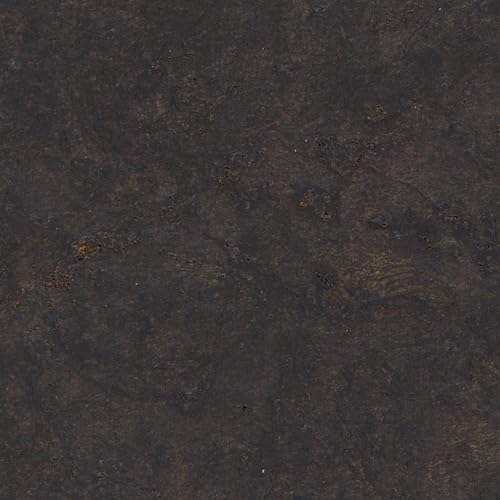
Go4Cork Concrete Midnight Cork Flooring Tiles, PVC-Free, 905 x 295 x 10.5mm
Included for 'Best Cork Flooring for Kitchens: Durable, Comfortable Picks' because the listing specifies PVC-Free and 905 x 295 x 10.5mm, details this guide uses to compare options.
View on AmazonLook for manufacturer documentation that specifically permits kitchen use, explains the finish and seam protection, and gives care instructions. Avoid assuming that “water-resistant” means safe from a dishwasher leak. Use a pan beneath a refrigerator or dishwasher where practical, and repair plumbing leaks promptly.
Finish and stain protection
Factory-finished cork is convenient and consistent, but finish types differ in how they handle abrasion, stains, and repairs. A polyurethane topcoat generally provides a more protective wear layer than a simple oil or wax finish, though the exact product specification matters more than the label. Oil and wax can be easier to refresh locally but may need more frequent care and can be less forgiving around cooking grease.
Ask whether the finish is suitable for kitchens, which cleaners are allowed, and whether the floor can be recoated. Avoid abrasive pads, steam mops, and strong solvents unless the manufacturer explicitly approves them. Grit is a common source of surface wear, so use entry mats and sweep regularly.
Comfort, dents, and the trade-off with hardness
Cork compresses slightly underfoot and absorbs some sound, making it feel less cold and hard than ceramic tile. That same give means narrow furniture feet, dropped heavy cookware, or appliance wheels can leave dents. Use broad, non-staining furniture glides and do not drag a refrigerator across the finished floor; protect the route with rigid panels and follow the flooring maker’s moving instructions.
Floating plank or glue-down tile?
| Factor | Floating engineered cork | Glue-down cork |
|---|---|---|
| Typical build | Wear layer over a cork or composite core, with click-lock edges | Cork tile bonded directly to a prepared subfloor |
| Spill management | Sealed joints help, but liquid can migrate through seams or edges | Fewer raised joints; surface finish and perimeter sealing remain essential |
| Subfloor demands | Flat, stable, dry surface; underlay only if the product permits it | Very smooth, clean, dry subfloor and correct adhesive application |
| Cabinets and appliances | Must retain the specified expansion gap; avoid trapping the floating floor under fixed cabinetry | Can be installed around fixed cabinets, with careful cuts and edge sealing |
| Repair considerations | A damaged plank may require lifting several courses or disassembling from an edge | A tile may be replaceable, but matching finish and color can be difficult |
For most kitchen renovations, an engineered floating plank is the easier balance of comfort, speed, and daily durability. Choose glue-down when a qualified installer can prepare the subfloor and apply a finish system suited to the kitchen, especially when you want to minimize movement at seams. Neither method makes cork a good choice for a room where water routinely pools.
Measure before buying: cabinets, appliances, and floor height
Check the installation guide for the exact expansion gap, underlayment rules, and permitted room dimensions. As a planning example—not a substitute for the product instructions—many floating floors call for about 1/4 inch of clearance at fixed vertical edges. The gap is normally concealed by baseboard or trim; it should not be filled with hard grout or caulk unless the manufacturer specifies a flexible sealing detail.
| Planning check | Example measurement | Why it matters |
|---|---|---|
| Perimeter gap for a floating floor | Often around 1/4 inch; confirm the product’s required figure | Allows the floor to expand without buckling |
| Door clearance after installation | Measure the existing gap, then subtract the full floor build-up; for example, a 3/8-inch gap with 5/16-inch flooring leaves only 1/16 inch | A door may scrape unless it can be trimmed safely |
| Appliance opening | Measure opening width and height; compare with the appliance dimensions and new finished-floor height | A raised floor can make a dishwasher difficult to remove or reinstall |
| Room-area order quantity | A 10 × 12 ft kitchen is 120 sq ft; add roughly 8–10% for cuts, or about 130–132 sq ft | Extra material helps with trimming and future repairs |
Floating floors generally should not be locked beneath fixed cabinets or islands unless the manufacturer explicitly allows it. Installing cabinets on top can pin the floor and prevent normal movement. Plan the floor-to-cabinet sequence before work begins, and check whether the appliance can still pass over the finished floor and through the doorway.
Buying checklist for the best cork flooring for kitchen use
- Confirm the use rating: Get written confirmation that the exact product and finish are approved for kitchens.
- Read the water instructions: Find out what the warranty says about spills, standing water, and appliance leaks.
- Compare the wear surface: Check finish type, wear-layer details, recoat options, and approved cleaners.
- Inspect the subfloor requirements: Identify flatness tolerances, moisture limits, underlayment rules, and any adhesive restrictions.
- Plan fixed edges: Decide how the floor meets cabinets, island panels, doorways, and transitions without trapping a floating installation.
- Buy extra from the same batch: Keep spare material for repairs; cork’s pattern and color can vary between production runs.
- Budget for installation: Material prices vary by construction and finish, while glue-down work can cost more because preparation and finishing are labor-intensive. Get local quotes rather than comparing material price alone.
Is cork the right kitchen floor?
Choose cork if warmth, sound reduction, and a softer standing surface matter, and you can keep the floor clean, maintain its finish, and respond quickly to spills. A factory-finished engineered plank is the practical starting point for many households; glue-down cork is worth considering when you want a more integrated installation and have a suitable subfloor and installer.
Choose another material if your kitchen regularly floods, you cannot control leaks, or you need a floor that tolerates standing water with minimal upkeep. Cork can work well in a kitchen, but its durability comes from the right construction, careful installation around fixed cabinets and appliances, and consistent spill care—not from the material alone.