Key takeaways
- You want fewer parts to break and no cord to hide. Manual recliners are lighter (typically 75–110 lbs boxed vs. 95–150 lbs for power) and easier to move through a standard 29–32 inch doorway.
- Your outlet is not near the chair. Power models need a low-profile plug and often a 5 ft cord that creates a trip hazard if stretched across a walkway.
- You need to keep costs down during clearance sales. The same frame in manual is often $150–$300 less than its power twin.
What's inside
- Manual vs. Power Recline: Which Mechanism Saves You More?
- Leather vs. Fabric: Durability You Can Feel in Two Years
- Weight Limits, Room Fit, and Clearance: The Numbers to Measure Before You Buy
- What to Inspect When Recliners Are on Clearance or Seasonal Sale
- Decision Matrix: Which Recliner on Sale Fits Your Situation
- Assembly, Moving, and What Wears First
Recliners on sale are worth buying when you prioritize the right mechanism, upholstery, and frame weight limit for your space and body, not just the lowest sticker price — a manual wall-hugger in performance fabric often beats a cheap power leather model on long-term durability and fit.
- Manual vs. Power Recline: Which Mechanism Saves You More?
- Leather vs. Fabric: Durability You Can Feel in Two Years
- Weight Limits, Room Fit, and Clearance: The Numbers to Measure Before You Buy
- What to Inspect When Recliners Are on Clearance or Seasonal Sale
- Decision Matrix: Which Recliner on Sale Fits Your Situation
- Assembly, Moving, and What Wears First
Discount events make it easy to overpay for features you don’t need or miss flaws that matter later. Use the criteria below to compare recliners on sale by what actually determines comfort, how long they last, and whether they fit your room and doorways.
Manual vs. Power Recline: Which Mechanism Saves You More?
The recline mechanism affects price, reliability, placement, and how you use the chair daily. Both have a place, but they fail differently and cost differently to own.
| Feature | Manual Recline (Handle or Push-Back) | Power Recline (Button / Power Headrest) |
|---|---|---|
| Typical Sale Price Range | usually $300–$600 | usually $500–$1,100 |
| Power Needed | No | Yes, within 5–6 ft of outlet; motor draws 2–4 amps |
| Recline Positions | 2–3 fixed positions | Infinite positions, stops anywhere |
| Wall Clearance Needed | 4–8 inches for wall-hugger; 12–18 inches for standard | 4–8 inches for wall-hugger; 12–20 inches for standard |
| Common Failure Point | Cable and spring tension after 3–5 years | Motor, hand control, and power supply after 4–7 years |
| Repair Cost | usually $25–$80 for cable/spring kit | usually $90–$250 for motor or transformer |
| Best For | Renters, rooms with few outlets, lower budgets | Limited mobility, back pain, precise leg support needs |
Choose manual if:
- You want fewer parts to break and no cord to hide. Manual recliners are lighter (typically 75–110 lbs boxed vs. 95–150 lbs for power) and easier to move through a standard 29–32 inch doorway.
- Your outlet is not near the chair. Power models need a low-profile plug and often a 5 ft cord that creates a trip hazard if stretched across a walkway.
- You need to keep costs down during clearance sales. The same frame in manual is often $150–$300 less than its power twin.
Choose power if:
- You need smooth, controlled recline for back or knee pain. Power lets you stop at any angle instead of fighting a spring-loaded footrest.
- You want power headrest and lumbar. Look for independent headrest motors, not just a single motor that moves back and footrest together.
- Multiple users share the chair. Power is easier for older adults or anyone who struggles to close a manual footrest, which can require 15–25 lbs of leg pressure to shut.
When inspecting recliners on sale, test the mechanism five times in the store. On manual, the handle should return smoothly without grinding, and the footrest should lock without sagging. On power, listen for a quiet, even hum — clicking or stuttering signals a strained motor. Recline fully and check that the footrest stays level under pressure from your legs.
Leather vs. Fabric: Durability You Can Feel in Two Years
Upholstery determines how a recliner ages, cleans, and feels in summer and winter. Sale tags rarely explain the trade-offs.
| Material | Feel and Temperature | Durability (Martindale / Real Life) | Cleaning | Price on Sale |
|---|---|---|---|---|
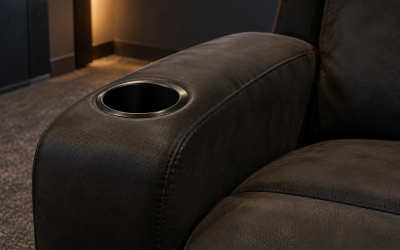
| Top-Grain Leather | Cool at first, warms with body heat; natural grain varies | High abrasion resistance; resists punctures but shows scratches; can last 7–12 years with conditioning | Wipeable; condition every 6–12 months; keep away from direct sun to prevent fading | usually $700–$1,400 |
| Faux Leather (PVC / Polyurethane) | Uniform look, less breathable, can peel in heat | Moderate; surface cracking/peeling often in 2–4 years in warm, sunny rooms | Wipeable, but avoid harsh cleaners that accelerate peeling | usually $350–$650 |
| Performance Fabric (Polyester Blend, Microfiber) | Soft, warm, breathable; resists pilling | 30,000–50,000+ Martindale rubs; resists stains and pet hair | Most are water-repellent; blot spills, vacuum weekly | usually $400–$800 |
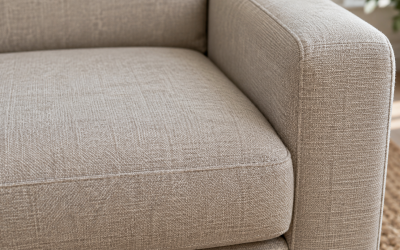
| Woven Fabric (Linen-look, Cotton Blend) | Textured, matte; comfortable but snags easier | 15,000–25,000 Martindale; susceptible to pilling and pet claws | Spot clean; professional cleaning for deep stains | usually $300–$600 |
Foam and suspension matter as much as the cover. For daily use, look for seat foam density of 1.8–2.2 lbs per cubic foot and sinuous springs or pocket coils, not just elastic webbing. Low-density foam (below 1.5 PCF) feels plush in the showroom but compresses by 1–2 inches within 18 months. Ask for the spec sheet — reputable brands list foam density and frame material.
Frame construction is the other hidden cost. Kiln-dried hardwood or hardwood-plywood frames hold screws and weight best. Particleboard or low-grade engineered wood frames found in ultra-cheap clearance models loosen at joints and squeak when you recline.
Weight Limits, Room Fit, and Clearance: The Numbers to Measure Before You Buy
A recliner that does not fit your body or room will not feel comfortable at any discount.
Weight capacity and seat dimensions
- Standard recliners: usually rated 250–300 lbs. Large or heavy-duty models: 350–500 lbs, with wider seats (23–26 inches wide vs. 19–22 inches standard) and reinforced steel recline mechanisms.
- Seat height: 18–20 inches from floor suits most adults 5’4″ to 6’0″. If you are under 5’4″, look for 17–18 inches to keep feet flat without pressure behind knees. If you are over 6’2″, 20–21 inches prevents a deep sink.
- Seat depth: 20–22 inches is standard. Shallow 19–20 inches is better for shorter legs; deeper 22–24 inches supports taller users but can strain lower backs if you cannot sit fully back.
Room size and clearance
- Full footprint reclined: A typical 36″W x 38″D recliner needs about 65–72 inches of total depth when fully reclined. Measure from the wall to the front of the footrest, not just the chair back.
- Side clearance: Leave at least 6–8 inches on each side for the handle or power buttons and to avoid rubbing walls or side tables.
- Traffic path: Keep 30–36 inches of walkway in front of a reclined footrest so you do not block doorways.
- In a 10×12 ft bedroom or small living room: limit recliner width to 32–35 inches and choose a wall-hugger (requires only 4–6 inches behind). A 40+ inch oversized recliner will dominate the room and leave no space for a side table or lamp.
- Doorway and hallway: Measure your narrowest doorway and stairwell turn. Most recliners ship in two boxes (back detached). Box 1 is often 30″W x 30″D x 26″H and 70–90 lbs. If your doorway is under 30 inches, confirm the back removes and the base fits through on its side.
What to Inspect When Recliners Are on Clearance or Seasonal Sale
Clearance often means floor models, discontinued colors, or returns. Seasonal sales (Presidents Day, Memorial Day, Labor Day, Black Friday) usually offer new stock with better warranties. Inspect differently for each.
- Check the warranty tag. New-on-sale recliners should include at least 1-year parts/labor and 3–5 years on frame and mechanism. Floor model clearance may be marked “as-is” with no returns — ask for that in writing.
- Look under and behind. Lift the footrest and inspect the mechanism for rust, bent scissor linkages, or loose bolts. On the back, zip open the dust cover and confirm the frame is wood/plywood, not exposed particleboard.
- Test for even wear. Press the seat cushion center and edges. If one side sinks more than 0.5–1 inch lower, springs or foam are already uneven — common on floor models sat in for 8+ months.
- Sniff and feel. Musty odor signals storage moisture; rough, peeling patches on faux leather mean the topcoat is already failing.
- Ask about parts. For power recliners, confirm the transformer model number and whether the retailer stocks replacement hand controls and motors. If parts are discontinued, a future repair can cost more than the discount saved.
- Verify recline on your floor type. On carpet, manual footrests can drag; on hard floors, lightweight recliners slide when you push back. Ask for non-slip furniture grippers if needed.
Decision Matrix: Which Recliner on Sale Fits Your Situation
| Your Situation | Best Pick on Sale | Why It Works |
|---|---|---|
| Small apartment or 10×12 ft room | Manual wall-hugger, 32–35″W, performance fabric | Needs only 4–6″ behind wall, lighter to move, fabric breathes in tight spaces |
| Kids and pets | Power or manual with 50,000+ rub performance fabric, 1.9+ PCF foam | Stain-resistant, no peeling like faux leather, holds up to jumping and claws |
| Renter who moves often | Manual, two-piece back, under 100 lbs | No outlet dependency, fits 29″ doorways, lower risk of motor damage in transit |
| Back pain or limited leg strength | Power with infinite positions + power headrest, seat height 19–20″ | Precise angle stops reduce lumbar strain, easier to close without leg pressure |
| Tall or heavy user (over 6’1″ or 300+ lbs) | Heavy-duty frame rated 350–500 lbs, seat 23″+ wide, 21″ deep | Reinforced mechanism prevents sag, taller back supports shoulders |
| Want leather look on budget | Top-grain leather on sale over cheap faux leather | Real leather lasts 2–3x longer; faux leather peeling negates initial savings |
Assembly, Moving, and What Wears First
Most recliners on sale require 10–20 minutes of assembly: slide the back onto the base brackets and connect the power cable if applicable. No tools are usually needed, but you need two people to lift a boxed recliner — boxes weigh 75–150 lbs and are awkward to carry alone.
What wears first is predictable: seat cushion foam softens, then the footrest cable stretches (manual) or the hand control cord frays (power), then the arm fabric pills or leather creases. To extend life, rotate cushions if removable, tighten exposed bolts every 6 months, and keep recliners out of direct sunlight which fades both leather and fabric by 1–2 shades over a year. For power models, use a surge protector; voltage spikes are a leading cause of motor failure.
Before you pay, sit for at least 10 minutes, recline fully, and stand up without using the armrests for leverage. If you have to rock forward to exit, the seat is too deep or too low for your height — a common reason recliners end up unused despite a good sale price.