Key takeaways
- Pros: Soft foam conforms quickly to the foot with minimal break-in; arch support is integrated without a rigid plastic shell.
- Cons: Foam loses resilience faster than denser materials, making these a short-lifespan option for heavy hikers.
What's inside
Long trail days punish your feet in ways that go beyond sore arches. Hot spots become blisters, thin midsoles transfer every root and rock into your joints, and by mile ten you start shortening your stride without realizing it. The right insole or cushioning layer inside a hiking boot addresses all three problems at once, but the difference between a worthwhile insert and a gimmicky foam wedge comes down to material density, arch geometry, and whether the product actually fits the volume of your boot without stealing space your toes need.
This roundup compares eight products on published specifications, listed prices, and aggregated owner feedback across hiking forums and retail reviews. For 2026, the most common complaint pattern in low-rated products is identical across brands: the insole works initially but compresses within a few months, leaving the foot unsupported exactly when endurance matters most.
As an Amazon Associate we earn from qualifying purchases at no extra cost to you. Product prices and availability are accurate as of the date shown and are subject to change.



Quick Picks
| Product | Best for | Price |
|---|---|---|
| Dr. Scholl’s Walk Longer | All-day comfort on maintained trails | $14.97 |
| Hiking Boot Insoles (Arch Support) | Budget-conscious hikers with flat arches | $34.99 |
| Superfeet Hike Cushion | Max cushioning without sacrificing stability | $50 |
| Oboz Unisex Trail Insole | Hikers wanting boot-integrated brand match | $40 |
| Superfeet Hike Support (Men’s) | Technical terrain with firm support needs | $59.95 |
| Superfeet Hike Support (Women’s) | Women with high arches on rugged trails | $59.95 |
| Niorasen Merino Wool Socks | Layered cushioning and blister prevention | $12.98 |
| Wuru Blister Prevention Fleece | Targeted friction relief on problem spots | $11.95 |
How We Picked
We evaluated these products against four criteria that consistently appear in owner complaints and praise: cushioning material that holds its shape over repeated compression cycles, arch geometry matched to real foot shapes rather than generic templates, moisture management to keep the foot environment dry (a prerequisite for blister prevention), and a sizing or fit system that works across common hiking boot volumes without creating a cramped toe box.
The 8 Best Hiking Boot Cushions in 2026
Dr. Scholl’s Walk Longer Shoe Insoles for Women
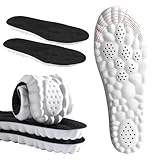
These plush foam inserts target hikers and walkers who prioritize immediate comfort over structural support, particularly those standing or walking on packed trails all day. The advertised claim of walking 50% longer without muscle fatigue centers on cushioning rather than rigid correction.
- Pros: Soft foam conforms quickly to the foot with minimal break-in; arch support is integrated without a rigid plastic shell.
- Cons: Foam loses resilience faster than denser materials, making these a short-lifespan option for heavy hikers.
Skip these if you need structural correction or plan to use them across multiple seasons of rough terrain.
Hiking Boot Insoles for Men & Women – Arch Support Inserts
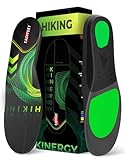
This mid-range option serves hikers who know they need arch support but want to spend less than premium brands. The unisex sizing and straightforward design make it a practical swap-in for factory boot insoles.
- Pros: Arch support structure at a fraction of premium brand pricing; works in both men’s and women’s boots.
- Cons: Published specs lack detail on material density or expected lifespan, making long-term value uncertain.
Skip these if you need a proven material composition or already own high-volume boots where added thickness could crowd the fit.
Superfeet Hike Cushion Insoles
The Superfeet Hike Cushion targets hikers who want maximum shock absorption without giving up the stability their boots were designed to provide. The dual-density construction pairs a softer top layer with a firmer base across the available size range.
- Pros: Cushioning and structural support coexist without the soft layer bottoming out; Superfeet’s sizing covers the most common boot sizes in this category.
- Cons: At $50, the cost is noticeable if you only hike a handful of weekends per year.
Skip these if your boots already feel too tight or shallow; the added volume may push your foot above the collar.
Oboz Unisex Trail Insole, Green, M
Oboz designed this insole as a replacement for the factory footbed in their own boots, so it fits their volume and arch shape precisely. Hikers loyal to Oboz get an integrated system rather than a third-party compromise.
- Pros: Formed to match Oboz boot lasts for a seamless fit; mid-range pricing undercuts Superfeet while maintaining brand-specific engineering.
- Cons: Only available in Medium, severely limiting who can use it; the unisex shape may not suit narrow or wide feet equally.
Skip these if you do not own Oboz boots or need a size outside Medium.
Superfeet Hike Support Insoles (Men’s)
The Hike Support line is firmer than the Hike Cushion, built for hikers who carry loads, traverse uneven terrain, or prefer a stable platform underfoot. The sizing runs 9.5 to 11 in men’s.
- Pros: Rigid arch structure resists collapse under heavy backpack loads; durable materials outlast cushioned alternatives over multiple seasons.
- Cons: The firmness requires a break-in period and may feel harsh on smooth, well-maintained trails where extra cushioning would be welcome.
Skip these if your primary activity is light day-hiking on packed gravel; the support may be more structure than necessary.
Superfeet Hike Women’s Support Insoles
Women’s-specific geometry distinguishes this from the men’s version: a narrower heel cup and different arch placement reflect average female foot shape. Sizing runs 6.5 to 8 in women’s, suiting those who need firm support without wearing a men’s insole that leaves gaps at the arch.
- Pros: Anatomically shaped heel cup reduces side-to-side slippage inside the boot; same durable construction as the men’s version at identical pricing.
- Cons: The size range tops out at 8, leaving women with larger feet without a direct option in this specific model.
Skip these if you wear women’s sizes above 8 or prefer a softer ride on non-technical terrain.
Niorasen Merino Wool Hiking Crew Socks
Not an insole, but a critical layer in the cushioning system. Thick merino wool crew socks provide padding, moisture wicking, and seamless construction that reduces friction points. Sold in three-pair packs, they offer a practical rotation for multi-day trips.
- Pros: Merino manages moisture and temperature across seasons better than synthetic or cotton; three pairs cover a rotation without re-buying.
- Cons: Wool blends thin at the heel and ball over time, losing cushioning thickness before the sock visually wears out.
Skip these if you need a thin liner sock to pair with a thick insole; the combined bulk may overfill a snug boot.
Wuru Blister Prevention Merino Wool Fleece
This is a targeted spot-treatment product rather than a full-foot solution. The 0.75 oz merino fleece padding goes over hot spots or seams inside a boot to reduce friction before a blister forms. It works across hiking, running, boots, and dance shoes.
- Pros: Natural fiber avoids adhesive irritation common with synthetic blister patches; a little material stretches across many outings at low cost.
- Cons: Requires the user to identify and protect problem spots before a hike begins; it does not address systemic fit issues.
Skip these if your blister problem is broad rather than localized; a full sock or insole is a more appropriate fix.
Buying Guide
Cushioning Material and Compression Resistance
Plush foam feels great in the store and flattens after a few hundred miles. The best cushioning materials hold their loft because they are high-density EVA, dual-layer constructions pairing a soft top sheet with a firm base, or natural fibers like merino wool that compress and recover repeatedly. If you plan to keep one set of insoles for more than a season, prioritize materials with a documented compression rating or a brand known for structural longevity.
Arch Geometry and Boot Volume
An insole that lifts your arch by even a few millimeters also raises your entire foot inside the boot. In a low-volume hiking boot, this can push your toes into the front wall or lift your heel above the collar, creating new pressure points that negate the cushioning benefit. Check your boot’s interior depth before ordering rigid arch-support insoles. Soft foam inserts with minimal thickness changes are safer for boots that already fit snugly.
Moisture Management as a Cushioning Factor
A damp foot swells, increasing effective volume inside the boot and raising friction per step. Cushioning that absorbs moisture—wool, certain open-cell foams—maintains its protective function longer than cushioning that traps sweat against the skin. This is why merino wool socks appear alongside insoles in a complete blister-prevention strategy: the two layers address the same problem from different angles.
Our Verdict
The Superfeet Hike Cushion is the top pick for most hikers because it delivers both shock absorption and structural stability in a single product, covers common boot sizes, and uses materials that resist bottoming out. For a budget-conscious buyer, the Dr. Scholl’s Walk Longer at $14.97 is the best entry point for short trail days and standing-focused use, accepting a shorter lifespan in exchange for low initial cost. If you already hike in Oboz boots and wear a Medium, the Oboz Unisex Trail Insole wins on fit precision because it was shaped to that brand’s last rather than a generic template.
FAQ
Can I use insoles and thick cushioned socks together?
Yes, but you must check total volume first. A firm arch-support insole combined with thick merino socks can raise your foot enough to create heel lift or toe-box pressure. Start with one intervention at a time and add the second only if the first resolves your issue without leaving a comfort gap.
How long do hiking insoles typically last?
Most owner reports point to 500 to 800 miles for foam-based inserts and significantly longer for rigid-arch designs made from durable polymer bases. Hiker weight, terrain roughness, and frequency of use compress that range. When visible creasing or a noticeably flatter profile appears, the insole has passed its effective service life.
Are merino wool socks better than synthetic for cushioning?
Merino wool outperforms synthetic blends in moisture management and odor resistance, which indirectly preserves cushioning effectiveness by preventing the swelling that dampness causes. Synthetics may dry faster and cost less, but they tend to feel clammy against skin in warm conditions, reducing the comfort advantage of their padding.
Do I need men’s or women’s insoles if I have a narrow foot?
Width matters more than gendered marketing for heel-cup fit. If you have a narrow heel and standard-length foot, a women’s insole in a larger size often fits better than a men’s option in a smaller size. Check the brand’s width and heel-profile specifications before assuming gendered labels are the right filter.