Key takeaways
- Measure the reclined depth, not the upright depth: A chair that is 34 inches deep closed can still push past 60 inches open. Tape the full reclined footprint on your floor before committing, and check that it clears your coffee table by at least 14 inches.
- Confirm true zero clearance: Marketing language varies. Look for stated wall gaps of three to six inches; anything above eight inches is a standard recliner in disguise and will break your wall line.
- Match seat scale to your body: Compact recliners often have 18 to 20 inch seat heights and shallower depths. Taller sitters need a longer footrest; petite sitters need their feet to reach the floor when upright.
- Decide power versus manual: Power recline gives infinite positions and a slimmer side profile without a bulky lever, but you need an outlet within cord reach. Plan that before you choose the wall.
- Choose upholstery for visual weight: In a narrow room, light neutrals and low-contrast fabrics recede, while dark leather anchors a corner. Performance fabric wears best in high-traffic apartments; faux leather wipes clean fastest.
What's inside
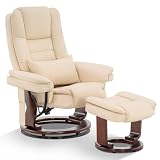
The QicoFelix Wall Hugger Recliner is the best overall choice for tight spaces, thanks to a zero-clearance mechanism that reclines fully with roughly three inches of wall gap, while the EONIX Zero Clearance Power Recliner in Navy Blue is the runner-up for small-scale rooms on a tighter budget.
Here is the styling problem nobody warns you about: you finally find a recliner you love, then discover it needs eight to twelve inches of breathing room behind it. In a narrow living room, that means your seating floats awkwardly in the middle of the floor, traffic paths collapse, and the whole room reads cramped instead of cozy. Wall-hugger recliners solve this by sliding the seat forward as the back tilts, keeping the frame nearly flush to the wall. This guide covers the six models worth considering, how to measure before you buy, and which pick suits apartments, RVs, home theater walls, and petite frames.
As an Amazon Associate we earn from qualifying purchases at no extra cost to you. Product prices and availability are accurate as of the date shown and are subject to change.




Quick Comparison
| Product | Best For | Standout Feature | Rating |
|---|---|---|---|
| QicoFelix Wall Hugger Recliner | Overall value in small living rooms | Zero-wall power recline with USB ports | See card above |
| EONIX Zero Clearance Recliner (Navy Blue) | Budget-conscious apartment buyers | Compact footprint in a saturated color | See card above |
| EONIX Zero Clearance Recliner (Cream White) | Light, elevated interiors | Neutral upholstery that visually expands a room | See card above |
| Cfvyne Zero Wall Power Recliner | Petite and shorter-legged sitters | Scaled-down seat depth in faux leather | See card above |
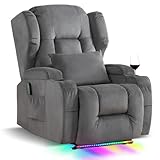
| SAMERY Power Recliner with Massage and Heat | Home theater corners | Heat, massage, LED surround lighting, cup holders | See card above |
How to Choose a Wall-Hugger Recliner for Tight Spaces and Narrow Living Rooms
- Measure the reclined depth, not the upright depth: A chair that is 34 inches deep closed can still push past 60 inches open. Tape the full reclined footprint on your floor before committing, and check that it clears your coffee table by at least 14 inches.
- Confirm true zero clearance: Marketing language varies. Look for stated wall gaps of three to six inches; anything above eight inches is a standard recliner in disguise and will break your wall line.
- Match seat scale to your body: Compact recliners often have 18 to 20 inch seat heights and shallower depths. Taller sitters need a longer footrest; petite sitters need their feet to reach the floor when upright.
- Decide power versus manual: Power recline gives infinite positions and a slimmer side profile without a bulky lever, but you need an outlet within cord reach. Plan that before you choose the wall.
- Choose upholstery for visual weight: In a narrow room, light neutrals and low-contrast fabrics recede, while dark leather anchors a corner. Performance fabric wears best in high-traffic apartments; faux leather wipes clean fastest.
The Best Wall-Hugger Recliners for Tight Spaces and Narrow Living Rooms Reviewed
Best Overall: QicoFelix Wall Hugger Recliner for Small Spaces
This is the pick I would put in most narrow living rooms: a genuine zero-wall power mechanism, USB charging built into the side, and a dark gray fabric that hides wear in busy households. Best for renters and small-home owners who want one chair to handle reading, movies, and naps without redesigning the floor plan.
Best Budget: EONIX Zero Clearance Power Recliner, Navy Blue
EONIX keeps the footprint genuinely small and skips the extras, which is exactly why the price stays reasonable. Best for first apartments, guest rooms, or anyone adding a second chair without doubling their furniture budget; the navy also grounds a room full of pale walls and light wood.
Best Premium: EONIX Zero Clearance Power Recliner, Cream White
The same compact frame in cream white reads far more designed, blending into light walls so the chair almost disappears in a tight room. Best for style-led buyers with low-traffic spaces who are willing to maintain a pale upholstery for a brighter, larger-feeling room.
Best for Petite Sitters: Cfvyne Zero Wall Power Recliner
Most recliners are built for a six-foot frame, which leaves shorter sitters perched with dangling feet. The scaled-down Cfvyne in light brown faux leather fits smaller bodies properly and wipes clean in seconds, making it a strong choice for compact dens and easy-care households.
Best for Home Theater Setups: SAMERY Power Recliner with Massage and Heat
Heat, massage, cup holders, USB, and LED surround lighting turn a single chair into a full media station that still sits tight to the wall. Best for movie-night households and anyone building theater seating along a short wall where a full sectional would never fit.
Also Worth Considering: cinkehome Wall Hugger Power Recliner
A clean, modern silhouette with USB power that suits RVs and studio apartments where every inch counts. Best for buyers who prioritize a streamlined look over recline gadgetry.
Frequently Asked Questions
How much space does a wall-hugger recliner really need behind it?
Most models need three to six inches of clearance rather than the eight to twelve a traditional recliner demands. Always confirm the manufacturer’s stated gap, and leave a little extra for baseboards and cords.
Do wall-hugger recliners recline as far as standard recliners?
Slightly less in many cases. The mechanism trades a small amount of backrest angle for a shorter footprint, so you get a comfortable lounge position but usually not a fully flat sleep position.
Are power recliners worth it in a small room?
Yes, generally. Power models avoid the side lever and let you stop at any angle, which matters when you are inches from a wall or side table. The tradeoff is needing an accessible outlet.
Can a wall-hugger recliner work in an RV or camper?
Several of these picks are marketed for RV use because of their compact frames and USB ports. Verify weight, doorway width, and whether your rig’s outlets can handle the motor draw.
Final Thoughts
For most narrow living rooms, the QicoFelix Wall Hugger Recliner delivers the best balance of true zero clearance, comfort, and price. Choose the EONIX Zero Clearance Recliner if you want the smallest possible footprint on a budget, or the SAMERY Power Recliner with Massage and Heat if that single chair needs to double as your home theater seat.