Key takeaways
- Measure indoor humidity on several floors before buying; one room may be comfortable while another is noticeably dry.
- Use a whole-house HVAC unit for consistent coverage, and reserve portable models for zones, rentals, or homes without compatible ductwork.
- Schedule filter, water-panel, tank, and drain maintenance before winter rather than waiting for a warning light.
- Watch windows and exterior walls for condensation. If moisture persists, lower the humidistat and improve ventilation.
What's inside
Indoor humidity is one of those invisible design factors that quietly affects how a home feels. Air that is too dry can make wood furniture, flooring, instruments, and trim more vulnerable to cracking, while overly damp rooms may feel clammy and encourage condensation. The right whole-house humidifier can improve comfort without adding another bulky appliance to a carefully styled room.
This guide explains how to choose the best whole-house humidifier for 2026, from steam and bypass systems to large-room portable models. You’ll learn how to match capacity to your home, understand installation and maintenance needs, and choose equipment that supports both healthier-feeling air and the longevity of your furnishings.
As an Amazon Associate we earn from qualifying purchases.


🛒 Best Price Today on Amazon
Prime members get fast, free shipping on everything above, plus member-only deals. New members get a 30-day free trial — cancel anytime.
Our Recommended Picks
Start With the Right Type of Humidifier
There are three broad categories to consider. Bypass and fan-powered evaporative humidifiers connect to a forced-air HVAC system and add moisture as air passes over a water panel. They are usually efficient and unobtrusive, but they depend on compatible ductwork and regular filter changes. A steam humidifier boils water and introduces controlled vapor into the air stream. It typically offers the most precise output and can work well in larger or tightly sealed homes, though installation and energy use are generally higher.
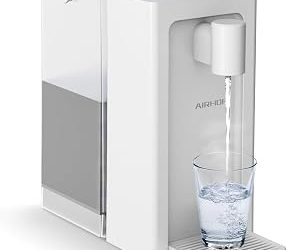
Portable ultrasonic units are easier to place and require no HVAC connection. They can be useful for apartments, additions, bedrooms, or homes without central air circulation. Large-capacity examples such as the AreShark 4.2 Gal/16L Humidifier and the Lacidoll 16L/4.2Gal Whole House Humidifier are best viewed as room or zone solutions rather than automatic replacements for a professionally installed whole-house system.
Match Capacity to Your Home and Climate
Square-footage claims are a starting point, not a guarantee. A home with open stairwells, high ceilings, leaky windows, or frequent door opening loses moisture faster than a compact, well-sealed space. Climate matters too: cold winter air becomes especially dry once it is heated indoors, while a mild, damp climate may need little added humidity.
For a central system, ask an HVAC professional to calculate the required moisture output in gallons per day or pounds of steam per hour. For portable models, compare the manufacturer’s room-size rating with the actual area you want to treat, then leave a margin for ceilings, drafts, and connected rooms. A 15L model rated for 800 square feet may be practical for a defined zone, but it will not necessarily humidify an entire multi-level home evenly.
Choose Controls That Prevent Over-Humidifying
The most important control is a humidistat, which measures indoor relative humidity and cycles the system on and off. Look for automatic control, adjustable target settings, and a sensor that can account for outdoor temperature. A fixed setting can be misleading because the ideal indoor level changes with the weather.
For most homes, a winter target around 30–40% relative humidity is a sensible starting range, lowered if windows begin to collect condensation. A small hygrometer on each floor can reveal differences that a single thermostat cannot. Wi-Fi features, such as those offered by the hOmeLabs dehumidifier for moisture control, are useful when you want remote monitoring; remember that a dehumidifier removes moisture and is a companion device, not a humidifier.
Consider Installation, Water Quality, and Maintenance
A central humidifier usually needs a water supply, drain connection, electrical access, and integration with the HVAC controls. Steam units may require a dedicated electrical circuit and professional installation. Before buying, confirm that your furnace or air handler can accommodate the unit and that there is enough service clearance. A clean, accessible installation is far more appealing than equipment squeezed behind storage boxes or furniture.
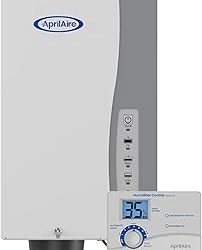
Water quality affects upkeep. Hard water can leave mineral deposits, especially in steam and ultrasonic systems. Evaporative units need a replacement water panel, while portable units require frequent emptying, rinsing, and disinfecting according to the manual. The AprilAire 4792 Maintenance Kit, which includes Water Panel Model No. 10, is designed for compatible AprilAire 500-series humidifiers and illustrates why replacement parts should be checked before purchase.
Think About Furniture, Finishes, and Placement
Humidity should support your interiors, not create new problems. Keep portable humidifiers on a level, water-resistant surface with open space around the mist outlet. Do not aim mist directly at upholstered furniture, artwork, wood cabinetry, electronics, or a wall. Even a well-designed unit can cause spotting or swelling if moisture settles repeatedly on one surface.
Ultrasonic models are quiet and visually discreet, but they can disperse minerals from untreated tap water as fine white dust. Distilled or filtered water may reduce that issue, depending on the appliance. Warm-mist and steam models can also become hot, so position them away from children, pets, curtains, and high-traffic paths. In a polished room, a simple location beside a plant stand or low console is usually better than hiding the unit where airflow is restricted.
Tips
- Measure indoor humidity on several floors before buying; one room may be comfortable while another is noticeably dry.
- Use a whole-house HVAC unit for consistent coverage, and reserve portable models for zones, rentals, or homes without compatible ductwork.
- Schedule filter, water-panel, tank, and drain maintenance before winter rather than waiting for a warning light.
- Watch windows and exterior walls for condensation. If moisture persists, lower the humidistat and improve ventilation.
Frequently Asked Questions
What is the best whole-house humidifier for a large home?
For a large home with a compatible HVAC system, a professionally installed steam model is often the most adaptable choice. The AprilAire 800 Whole-House Steam Humidifier is designed for homes up to 10,300 square feet, but actual performance depends on insulation, climate, airflow, and installation. A capacity rating should never replace a proper load assessment.
Are portable humidifiers suitable for an entire house?
Usually, no. Portable units can add meaningful moisture to one large room or a connected zone, but air does not circulate evenly through a whole home without intentional airflow. They are useful for bedrooms, offices, additions, and smaller residences where central installation is impractical.
Should I choose cool mist, warm mist, or steam?
Cool-mist evaporative units are generally practical for everyday room use, while warm mist and steam can offer controlled output but require more attention to heat, energy use, and mineral buildup. For a central system, the key decision is usually evaporative versus steam rather than mist temperature alone.
How often should a whole-house humidifier be cleaned?
Follow the manufacturer’s schedule, but inspect portable tanks weekly during heavy use and clean them before refilling whenever possible. HVAC-connected evaporative systems commonly need seasonal water-panel replacement, while steam units require periodic cylinder or canister service. Hard-water homes may need more frequent maintenance.
Conclusion
The best whole-house humidifier is the one that matches your home’s size, HVAC setup, water quality, and daily habits while keeping humidity under automatic control. Central evaporative and steam systems deliver the most even coverage; large portable models offer flexibility with more hands-on care. Choose measured performance over oversized claims, plan for replacement parts, and place the equipment thoughtfully so your rooms—and the furniture within them—stay comfortable and beautifully preserved.