Key takeaways
- Memory foam layers: 2–4 inches of gel-infused or graphite-infused foam for temperature regulation
- Coil base layer: independently pocketed, gauge appropriate for body weight
- Edge reinforcement: flexible (not rigid steel rod) perimeter support
- Overall profile: 10–14 inches for most standard adjustable bases
What's inside
An adjustable bed changes the way your bedroom works — and the way you sleep, read, recover, and unwind. But the moment you start shopping, you realize the mattress sitting on your current stationary frame probably won’t survive the bend. Rigid innerspring units buckle, cheap foam loses its shape, and anything too thick simply won’t flex. Choosing the right mattress isn’t just about comfort anymore; it’s about mechanical compatibility, durability under repeated articulation, and sleep quality at every angle.
This guide walks you through exactly what matters when pairing a mattress with an adjustable base — foam density, coil construction, thickness limits, cooling, and real-world performance — so you can invest once and sleep well for years. Along the way, we’ll reference current models that handle the flex without compromise, giving you a shortlist worth serious consideration.
As an Amazon Associate we earn from qualifying purchases.


Why Your Mattress Needs to Be “Adjustable-Friendly”
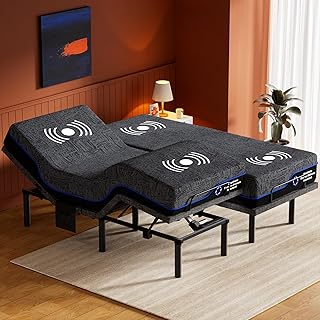
Not every mattress bends without consequences. A traditional pillow-top with thick steel coil layers will crease, develop permanent pressure ridges, and void most warranties the moment you raise the head section. Adjustable-compatible mattresses are engineered differently: they use flexible coil systems, layered foam constructions, or hybrid designs that distribute stress across multiple pliable components. The Amada Split King set, for example, ships as a matched pair — frame and 14-inch cooling gel memory foam mattress — specifically because the manufacturer tested that exact foam-to-motor coordination. When a brand bundles both pieces, you eliminate guesswork.
What to Look For: The Five Non-Negotiables
Thickness matters most. Anything over 14 inches creates leverage problems at deep bends. Most adjustable bases perform optimally with mattresses between 10 and 14 inches. The Mielmoon 10-inch Hybrid and the Liberty Hybrid at 11 inches sit in that sweet spot, offering enough cushion depth for side sleepers without exceeding the motor’s flex range. If you’re pairing a thicker mattress, verify that the base includes head and foot incline limits that protect the foam from over-bending.
Coil design must be pocket-based. Bonnell or continuous-coil systems don’t bend cleanly. Pocket coils — individually encased springs — move independently, letting the mattress contour to the frame’s curve without structural resistance. The Liberty Hybrid’s graphite memory foam pocket coil design and the Marsail NS1’s cooling gel memory foam pocket coil construction both demonstrate how pocket-based systems retain shape under flex while still providing traditional bounce.
- Memory foam layers: 2–4 inches of gel-infused or graphite-infused foam for temperature regulation
- Coil base layer: independently pocketed, gauge appropriate for body weight
- Edge reinforcement: flexible (not rigid steel rod) perimeter support
- Overall profile: 10–14 inches for most standard adjustable bases
Cooling is non-negotiable. Memory foam’s biggest weakness — heat retention — gets worse when your mattress is bent because airflow channels compress. Every model worth recommending here addresses this: cooling gel infusions (Amada, Marsail NS1, EGOHOME), graphite technology (Liberty Hybrid), or open-cell foam structures. If you sleep warm, prioritize this feature even over firmness preferences.
Firmness, Flex, and Your Sleep Position
Medium firm tends to be the universal recommendation for adjustable beds — and there’s real logic behind it. Softer mattresses exaggerate the “hammock effect” when the base is raised, pulling your hips toward the lowest point. Firmer constructions resist sagging and maintain spinal alignment across positions. The Mielmoon Split Queen and EGOHOME Split King both land in medium-firm territory, giving back and stomach sleepers genuine support while remaining pliable enough to articulate. The Serta Perfect Sleeper Hybrid 12-inch takes a slightly different approach, using its hybrid coil-and-foam architecture to deliver medium support with adaptive top layers that cushion shoulders in side-sleeping positions.
Hot sleepers and back-pain sufferers should pay extra attention: the Mielmoon’s design specifically targets neck and back pain relief, while the EGOHOME includes zero-gravity presets that elevate your legs above your heart — a position that genuinely reduces lower-back compression and improves circulation.
Split vs. Unified: Choosing the Right Size Configuration
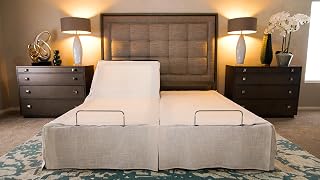
A split configuration gives each partner independent head and foot control — essential if one person reads while the other sleeps, or if you snore and your partner doesn’t. The Amada, EGOHOME, and Marsail NS1 all ship as split king setups with dual motors and independent remotes. A unified mattress on a single base costs less but limits customization. If you’re furnishing a master bedroom for two adults, split is almost always worth the premium. For solo sleepers, a full-size queen like the Serta Perfect Sleeper offers better value.
Practical Tips
- Measure your bedroom twice. Adjustable bases extend beyond the mattress footprint when fully raised — add at least 6 inches of clearance at the foot and behind the headboard.
- Check the return window before committing. Mattress comfort is subjective. Most reputable brands offer 90–365 night trials; keep the packaging until you’re certain.
- Use a mattress retainer bar. Even well-fitted mattresses slowly migrate downhill on adjustable frames. Retainer bars (usually included, but verify) prevent this without adding bulk.
- Invest in a waterproof mattress protector designed for adjustable beds. Stiff protectors crack at fold points. Flexible, stretch-knit covers move with the mattress and protect against spills without compromising the bend.
Frequently Asked Questions
Can I use my existing mattress on an adjustable base?
Probably not without issues. Innerspring mattresses with rigid coil structures, thick pillow-tops, and any mattress over 14 inches will likely develop damage, lose warranty coverage, or simply not flex properly. If your current mattress is a thin, all-foam model under 12 inches and feels comfortable when you manually fold it, it might work temporarily — but purpose-built adjustable mattresses last significantly longer.
Do adjustable bed mattresses cost more than regular ones?
Not necessarily. Models like the Mielmoon 10-inch Hybrid or the Liberty Hybrid 11-inch are competitively priced compared to comparable stationary-bed mattresses. The bigger investment is usually the base itself. Bundled sets — like the Amada, EGOHOME, or Marsail packages that include both frame and mattress — often deliver better value than buying separately.
Will an adjustable base void my mattress warranty?
It depends on the manufacturer. Many modern mattress brands explicitly approve adjustable-base use, but some still don’t. Before purchase, check the warranty terms for the phrase “non-sleep surface foundation” or equivalent language. Hybrid and foam mattresses marketed for adjustable beds — all the models referenced in this guide — are designed with this use case in mind.
How long do adjustable-bed-compatible mattresses last?
A quality hybrid or foam mattress rated for adjustable use should deliver 7–10 years of consistent support, comparable to stationary-bed mattresses. The key difference is that cheap foam will degrade faster under repeated flexing. That’s why higher-density foams and pocket coil bases matter — they’re engineered for the mechanical stress of articulation, not just static weight.
Conclusion
Finding the right mattress for an adjustable bed comes down to matching engineered flexibility with your personal comfort needs — and resisting the temptation to repurpose whatever you already own. Prioritize pocket coil construction, appropriate thickness, active cooling, and a medium-firm feel, then choose between split and unified configurations based on whether you sleep alone or share the bed. The models highlighted here — from bundled sets like the Amada and EGOHOME to individually engineered pieces like the Liberty Hybrid and Mielmoon — represent where smart design meets real-world adjustable-bed performance in 2026.