Key takeaways
- Map cabinets, workbenches, drains, and door swings before ordering so you do not overbuy or block access.
- Use lighter flooring in garages with limited natural light, and add bright, even overhead fixtures to reveal spills quickly.
- Place a dedicated absorbent mat beneath vehicles that regularly leak oil, coolant, or water.
- Keep a soft-bristle broom, neutral cleaner, and small wet vacuum nearby for routine maintenance.
What's inside
A garage floor does more than catch oil drips and tire marks. It sets the visual tone for the entire space, whether you are creating a polished home gym, a tidy workshop, a gear room, or a parking area that feels like an intentional extension of the house. The right surface can also make sweeping easier, reduce slip hazards, soften noise, and protect the concrete underneath.
This guide explains how to choose the best garage flooring for your climate, habits, layout, and budget. You will learn when tiles make more sense than a roll, how to compare drainage and load capacity, what installation details matter, and which maintenance features are worth prioritizing. Our recommended picks below cover several useful styles, from modular polypropylene tiles to large PVC parking mats.
As an Amazon Associate we earn from qualifying purchases.




🛒 Best Price Today on Amazon
Prime members get fast, free shipping on everything above, plus member-only deals. New members get a 30-day free trial — cancel anytime.
Start with the Garage’s Main Job
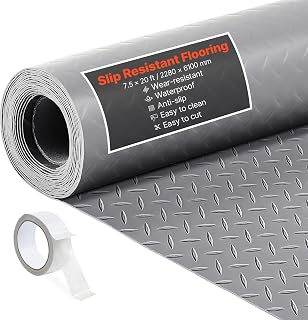
Think about how you use the room before choosing a finish. A garage that stores one family car has different needs from a workshop with a rolling tool chest or a home gym with heavy equipment. For straightforward parking and occasional maintenance, a solid roll or oversized mat offers broad coverage with very few seams. A roll such as the VEVOR Garage Floor Roll uses a diamond-plate PVC surface that is easy to wipe clean and visually resembles commercial flooring. The 8×20 FT Garage Floor Mat is another useful roll-style option when you want a thickened, non-slip surface beneath a vehicle.
Modular tiles are better suited to spaces that need drainage, ventilation, or a more finished architectural look. They can be lifted individually for cleaning, and damaged sections can usually be replaced without removing the whole floor. They are especially appealing if your garage doubles as a recreation or hobby area, since the tile pattern gives the room a deliberate, designed quality.
Choose Between Tiles and Rolls
Interlocking tiles are the most flexible choice for unevenly shaped rooms. You can work around cabinets, posts, floor drains, and door tracks, and many systems install without adhesive. The 12×12 Garage Floor Tiles, sold in a 48-pack, provide a classic modular format with an antislip, oil- and stain-resistant surface. For a more premium appearance, Swisstrax Ribtrax PRO tiles use a larger 15.75-inch format and a commercial-grade polypropylene construction. Their Pearl Grey color is a smart interior-styling choice: lighter than black, but forgiving enough for a working garage.
Roll flooring creates a quieter, more continuous visual field and is often faster to lay in an open rectangular garage. It can also stop small spills from reaching the concrete, particularly when the mat is positioned under the car. However, rolls are less convenient around corners and may need time to flatten after unboxing. Plan for careful measuring, clean edges, and secure perimeter placement.
Consider Drainage, Spills, and Climate
Open-grid tiles are valuable in wet or snowy climates because water, melted ice, and road grit can pass below the walking surface rather than pooling on top. SnapLock RaceDeck Free-Flow tiles are designed around this idea, with a self-draining grid and a high rolling-load rating. They are a strong option for a garage where wet tires are common, although the concrete below still needs a suitable slope, drain, or cleaning plan.
Solid surfaces are preferable when you want to contain oil, road salt, and fine dust above the slab for easy removal. Absorbent parking mats, such as the Oversize Garage Floor Parking Mat, are particularly practical beneath a vehicle. They provide generous coverage while helping collect drips and everyday grime. Remember that no floor covering replaces prompt spill cleanup: oil left sitting for long periods can stain both the covering and the concrete beneath it.
Check Load Capacity and Installation
Look beyond appearance and compare the flooring’s rolling-load rating with your heaviest equipment. Cars, SUVs, motorcycles, tool cabinets, lifts, and loaded storage carts all create different pressure points. A product rated for heavy rolling loads offers more reassurance than one intended only for foot traffic. SnapLock RaceDeck Free-Flow, for example, lists an 80,000-pound rolling-load capacity, while the 12×12 modular tiles list a 40,000-pound capacity.
Before installation, sweep and degrease the concrete thoroughly, then allow it to dry. Measure the room in several places because garage walls are rarely perfectly parallel. Leave the expansion clearance recommended by the manufacturer, especially where seasonal temperature swings are significant. For rolls, double-sided tape or perimeter restraint can help prevent shifting; the VEVOR mat includes double-sided tape, while the 8×20 FT mat includes multiple tape pieces for securing the installation. Avoid placing any covering over active moisture problems or a slab that is still curing.
Match the Finish to Your Interior Style
Black flooring hides tire marks and creates a dramatic workshop look, but it can make a dim garage feel smaller. Pearl grey, silver grey, and medium grey surfaces reflect more light and coordinate easily with white cabinetry, natural wood shelving, or stainless-steel tools. A restrained color is also easier to live with if the garage serves as an entryway or visible storage room.
Use the floor as the foundation for a cohesive scheme. Pair patterned diamond-plate rolls with simple cabinetry, or let modular tiles provide the visual interest while walls and storage remain quiet. If you want a showroom effect, keep tile orientation consistent and finish the perimeter neatly. The best-looking garage floors are not necessarily the brightest; they are the ones that make the room feel clean, purposeful, and easy to maintain.
Tips
- Map cabinets, workbenches, drains, and door swings before ordering so you do not overbuy or block access.
- Use lighter flooring in garages with limited natural light, and add bright, even overhead fixtures to reveal spills quickly.
- Place a dedicated absorbent mat beneath vehicles that regularly leak oil, coolant, or water.
- Keep a soft-bristle broom, neutral cleaner, and small wet vacuum nearby for routine maintenance.
Frequently Asked Questions
What is the easiest garage flooring to install?
Interlocking tiles are usually the most forgiving for do-it-yourself installation because they can be assembled in sections without glue and trimmed around obstacles. Rolls are also simple in an open, rectangular room, but they require more care when flattening, aligning, and securing broad edges.
Are garage floor tiles better than a mat?
Neither is universally better. Tiles offer ventilation, replaceable sections, and a more finished built-in appearance. A mat is generally faster and less expensive for protecting the area directly beneath a car. Choose tiles for a multipurpose garage and a mat for targeted spill and parking protection.
Can garage flooring go over cracked concrete?
Minor cosmetic cracks may be acceptable, but major cracks, raised edges, crumbling areas, and moisture intrusion should be repaired first. Flooring can hide a problem temporarily without solving it, and movement in the slab may cause tiles to separate or rolls to buckle.
How do you clean modular garage tiles?
Sweep or vacuum loose grit, then use a mild detergent solution and a soft brush or mop. For open-grid tiles, lift sections occasionally to remove debris beneath them. Avoid harsh solvents unless the manufacturer specifically approves them, since they may discolor or weaken the plastic.
Conclusion
The best garage flooring is the surface that fits both the work your garage performs and the atmosphere you want it to have. Choose open-grid tiles for drainage, solid modular tiles for flexible styling and repairability, or a broad PVC roll or parking mat for straightforward protection. Measure carefully, prepare the concrete, and prioritize traction, cleanup, and load capacity over a purely decorative finish. With those fundamentals in place, even a hardworking garage can look considered, comfortable, and genuinely useful.