Key takeaways
- Take a photo of the mattress label and condition before wrapping it, especially during a rental move.
- Use a clean tarp or moving blanket under the mattress when carrying it across a garage, driveway, or pavement.
- Keep the bag’s zipper and handles accessible, but do not pull sharply on a loaded handle.
- Let a compressed or damp mattress fully expand and dry in a ventilated room before covering it with bedding.
What's inside
Moving a king-size mattress is less about brute strength than planning. Its width, flexible edges, and awkward weight make it difficult to steer through doorways, stairwells, and tight hallways—and dragging it unprotected can leave you with torn fabric, dirt, or a mattress that no longer sits squarely on the bed frame.
This guide explains the safest, least stressful way to move one, from measuring the route and choosing a protective cover to lifting, loading, and storing the mattress. I’ll also point out which features are genuinely useful when comparing moving gear, so the job feels more like a controlled furniture project than a wrestling match.
As an Amazon Associate we earn from qualifying purchases.


🛒 Best Price Today on Amazon
Prime members get fast, free shipping on everything above, plus member-only deals. New members get a 30-day free trial — cancel anytime.
1. Prepare the mattress and the route
Start by clearing the bed completely. Remove sheets, mattress toppers, protectors, pillows, and anything stored beneath the bed. Vacuuming the mattress surface before wrapping it is worthwhile: trapped dust and grit can rub against the fabric during transport.
Next, measure both the mattress and the route. A standard king mattress is approximately 76 inches wide by 80 inches long, though thickness varies considerably. Measure door openings, stair turns, elevator entrances, and the clearance inside your vehicle. Remove doors from their hinges if necessary, and protect sharp corners with moving blankets or cardboard.
Plan the direction in which the mattress will travel. It is usually easier to carry a king mattress on its side, with two people positioned at opposite ends. Mark the destination room and clear its floor before carrying begins; you do not want to balance the mattress while moving boxes out of the way.
2. Use a proper mattress bag
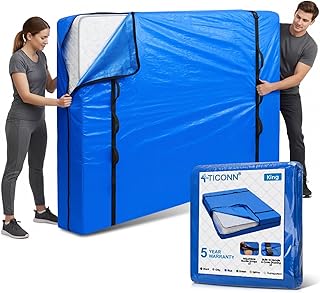
A mattress bag is the most useful single purchase for this job. Choose a king-size cover with a strong closure, durable plastic, and handles that are attached to the bag rather than simply punched through it. A zipper is especially convenient because it closes more securely than tape and can be reused for future moves or storage.
The King Mattress Bags for Moving with 12 Reinforced Handles is designed around frequent carrying, with multiple grip points and a waterproof outer layer. The additional handles can make a difference when navigating a landing or adjusting your hold. The SGPAC Heavy Duty Mattress Bags emphasizes extra-thick material, reinforced handles, and a zipper closure—useful qualities if the mattress will be loaded into a truck with other furniture.
For a simpler carrying setup, the TICONN Mattress Bags for Moving uses a full-around handle and adjustable buckles. The Nordic Elk King Size Mattress Bags offers eight reinforced handles and a strong zipper, making it a practical middle ground for moving and later storage. Whichever style you choose, check the listed dimensions against your mattress’s length, width, and thickness before ordering.
3. Wrap, lift, and carry correctly
Slide the bag over the mattress while it is still lying flat. If the cover is snug, have one person lift a long edge slightly while another pulls the bag into place. Close the zipper or secure the opening fully, then add packing tape around the closure only if you need extra protection from dust or rain. Do not rely on thin plastic alone to protect against sharp corners or truck-floor hardware; use moving blankets around the covered mattress when appropriate.
For the lift, bend at the knees and keep the mattress close to your body. Two strong adults are the minimum for most king mattresses, while a third person is helpful for stairs, tight turns, or uneven ground. Communicate before every movement: agree on commands such as “lift,” “stop,” and “turn.” Never twist while carrying; pivot with your feet instead.
Handles are helpful but are not indestructible. Keep your hands underneath the mattress or use the handles only to guide it, rather than hanging the full weight from one strap. If the mattress feels unstable, set it down and reset your grip instead of trying to correct it mid-step.
4. Load and secure it in the vehicle
Keep the mattress on its side whenever possible, supported along its broad edge. This saves floor space and reduces the chance of bending it around obstacles. Some mattress manufacturers specify that a mattress should remain flat, so check the care instructions—particularly for thick foam or hybrid designs.
Place the mattress away from wet, dirty, or sharp items. In a moving truck, secure it against a wall or other large, stable furniture with ratchet straps or rope. The restraint should be firm without crushing the mattress. Avoid placing heavy boxes on top, as concentrated weight can deform the comfort layers and leave pressure marks.
If the move includes rain, use the mattress bag as a moisture barrier, but do not assume it makes the mattress permanently waterproof. Cover the wrapped mattress with a clean moving blanket, keep it off a wet vehicle floor, and inspect it promptly after unloading.
5. Know when replacement is the better option
Moving is also a useful moment to assess whether the mattress is worth transporting. Deep sagging, exposed coils, persistent odors, damaged seams, or uncomfortable pressure points may justify replacing it rather than paying to move and store it.
If you are comparing replacements, the King Size Mattress 14-Inch Medium-Firm Hybrid combines memory foam with individually pocketed coils and advertises fiberglass-free construction, edge support, and zoned support. The 14-Inch Hybrid Memory Foam Mattress in a Box is another medium-firm, fiberglass-free option, with pocket springs, motion isolation, and cooling features. These products are separate buying considerations—not substitutes for a moving cover—so allow adequate expansion time after delivery before sleeping on a bed-in-a-box mattress.
Tips
- Take a photo of the mattress label and condition before wrapping it, especially during a rental move.
- Use a clean tarp or moving blanket under the mattress when carrying it across a garage, driveway, or pavement.
- Keep the bag’s zipper and handles accessible, but do not pull sharply on a loaded handle.
- Let a compressed or damp mattress fully expand and dry in a ventilated room before covering it with bedding.
Frequently Asked Questions
Can one person move a king-size mattress?
It is possible in limited situations, but it is not advisable for stairs, long distances, or tight doorways. A king mattress is wide and difficult to control alone. Two adults, a clear route, and a mattress bag with sturdy handles are considerably safer.
Should a king mattress be moved flat or on its side?
Sideways is generally easier for carrying and usually takes less vehicle space. However, follow the manufacturer’s instructions. Some foam and hybrid mattresses should not be folded or left on their side for extended periods.
How do I protect a mattress during long-term storage?
Use a correctly sized, sealed mattress bag and store the mattress in a cool, dry environment away from direct sunlight. Keep it elevated from concrete floors and avoid stacking heavy furniture on top.
Is a mattress bag reusable?
Many heavy-duty bags are reusable if the zipper, seams, and plastic remain intact. Clean and dry the bag before folding it for storage, and inspect it for small punctures before the next move.
Conclusion
The best way to move a king-size mattress is to measure first, protect it with a properly sized heavy-duty bag, and carry it with coordinated help rather than force. Reinforced handles, a reliable zipper, moving blankets, and secure vehicle tie-downs turn an awkward piece of furniture into a manageable one. Take the time to prepare the route, and both your mattress and your walls will be better for it.