Key takeaways
- Cooling type: A compressor-based AC requires hot-air exhaust, while an evaporative cooler is truly ventless but works best in dry climates and needs water or ice.
- Room size: Match the advertised BTU or coverage area to the room, then allow extra capacity for sunlight, high ceilings, electronics, or poor insulation.
- Humidity: Evaporative models add moisture, which can feel clammy in humid regions. A compressor AC with dehumidifying mode is usually the more comfortable choice there.
- Noise and controls: Look for sleep-friendly operation, a timer, remote control, oscillation, and accessible buttons that will not disrupt a calm bedroom or work zone.
- Placement: Measure floor space and check cord length, airflow clearance, water access, and whether a hose can be routed discreetly if you choose a true portable AC.
What's inside
Cooling a room without a usable window is a surprisingly tricky design problem. Traditional portable air conditioners need an exhaust hose, while many “windowless AC” products are evaporative coolers that lower perceived temperature rather than removing heat from the room. That distinction matters when you are furnishing a bedroom, office, basement, or apartment where a window kit is impractical.
This guide to the Best Ventless Air Conditioner No Window (2026) compares genuine portable AC units with vent-free evaporative alternatives. I’m focusing on cooling performance, room coverage, moisture handling, noise, controls, and how gracefully each option can fit into a thoughtfully styled interior.
As an Amazon Associate we earn from qualifying purchases.


🛒 Best Price Today on Amazon
Prime members get fast, free shipping on everything above, plus member-only deals. New members get a 30-day free trial — cancel anytime.
How to Choose a Ventless Air Conditioner No Window (2026)
- Cooling type: A compressor-based AC requires hot-air exhaust, while an evaporative cooler is truly ventless but works best in dry climates and needs water or ice.
- Room size: Match the advertised BTU or coverage area to the room, then allow extra capacity for sunlight, high ceilings, electronics, or poor insulation.
- Humidity: Evaporative models add moisture, which can feel clammy in humid regions. A compressor AC with dehumidifying mode is usually the more comfortable choice there.
- Noise and controls: Look for sleep-friendly operation, a timer, remote control, oscillation, and accessible buttons that will not disrupt a calm bedroom or work zone.
- Placement: Measure floor space and check cord length, airflow clearance, water access, and whether a hose can be routed discreetly if you choose a true portable AC.
The Best Ventless Air Conditioner No Window (2026)s Reviewed
12000 BTU Portable Air Conditioner, 550 Sq. Ft.
This 12,000 BTU portable AC is a strong choice for larger bedrooms, studios, and open living areas, with cooling, fan, and dehumidifying modes in one compact unit. Its self-evaporating operation and remote control simplify daily use, although the included window kit means it is not genuinely ventless; it needs an appropriate exhaust route to deliver true air conditioning.
SereneLife 8000 BTU Portable Air Conditioner With WiFi
Designed for rooms up to 350 square feet, the SereneLife combines cooling, fan, and dehumidifier functions with WiFi control and a 24-hour timer. It suits a bedroom or home office where app-based convenience is valuable, but buyers should plan for window or alternative exhaust installation rather than treating it as a no-vent cooler.
Windowless Portable Evaporative Air Cooler With Ice Packs
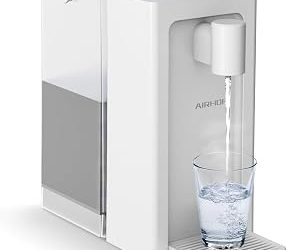
This white three-in-one evaporative cooler is the most straightforward option for a room with no window connection. Four ice packs, 70-degree oscillation, a seven-hour timer, and fan-style cooling make it useful beside a desk or lounge chair, particularly in dry weather; it will not chill an entire humid room like a compressor AC.
25.3-Inch Windowless Evaporative Air Cooler With Remote
The taller 25.3-inch design offers 90-degree oscillation, multiple speeds, four operating modes, a timer, and remote control. Its vertical profile can tuck neatly beside a sofa, bed, or cabinet, making it an appealing furniture-friendly pick when gentle spot cooling matters more than whole-room temperature reduction.
Shinco 12,000 BTU Portable Air Conditioner
Shinco’s portable unit offers cooling, dehumidifying, and fan modes for rooms up to 450 square feet, along with a remote, 24-hour timer, and installation kit. It is a practical choice for warmer, more humid spaces, but like other compressor models in this roundup, it needs exhaust ventilation to function as an air conditioner rather than simply circulating air.
Frequently Asked Questions
Can a portable air conditioner work without a window?
A compressor-based portable AC must discharge the heat it removes, typically through a window hose. Without an exhaust path, the room will not receive effective net cooling. For completely windowless use, choose an evaporative cooler or arrange a suitable wall, door, or drop-ceiling vent solution.
Are ventless evaporative coolers as cold as air conditioners?
No. Evaporative coolers blow air across water or ice, creating a cooling sensation rather than extracting heat from the room. They perform best in dry climates and near the user, while conventional AC is more dependable for lowering the room’s actual temperature.
Which type is best for a humid bedroom?
A compressor-based portable AC with a dehumidifying mode is generally the better fit. Evaporative cooling can increase indoor moisture, potentially making a humid bedroom feel warmer and less comfortable.
Where should I place a windowless air cooler?
Position it a few feet from the seating or sleeping area with unobstructed airflow around the intake and outlet. Keep evaporative models near a water source, avoid placing them directly against upholstered furniture, and leave clearance for oscillation.
Final Thoughts
For genuine temperature reduction, the 12000 BTU Portable Air Conditioner and Shinco 12,000 BTU Portable Air Conditioner are the most capable choices when you can create an exhaust route. If “no window” is non-negotiable, the Windowless Portable Air Cooler With Ice Packs offers the simplest, most decor-friendly solution for dry-weather spot cooling.