Key takeaways
- Capacity: Check the stated load per shelf and the total capacity, then leave a sensible margin for unevenly distributed items such as toolboxes, hardware, and filled storage totes.
- Dimensions: Measure wall width, ceiling height, and door clearance before buying. Deep shelving offers more volume, but it can make a narrow garage feel crowded and hide smaller items at the back.
- Adjustability: Movable shelf levels are valuable when your storage mix changes. Look for designs that can accommodate both low, heavy containers and taller equipment.
- Construction: Steel frames generally provide the best long-term rigidity, while plastic shelving resists rust and is easier to move. Feet, braces, and shelf surfaces matter as much as the headline weight rating.
- Assembly: Boltless systems can be quick to install, but they still require careful leveling. Consider whether you have enough room to assemble the unit safely and whether wall anchoring is recommended.
What's inside
Garages rarely become chaotic overnight. More often, a few seasonal bins, garden tools, paint cans, and oversized boxes gradually consume the floor until parking, maintenance, and even simple access become frustrating. The right shelving system turns that unused vertical space into a practical storage wall, but capacity, depth, adjustability, and assembly quality vary widely between models.
This guide compares the strongest garage shelving options for 2026, from compact utility racks to broad, industrial-style units. I’m looking at them through an interior-styling lens as well as a practical one: the best shelf should hold serious weight, suit the room’s proportions, and make everyday storage look intentional rather than improvised.
As an Amazon Associate we earn from qualifying purchases.




How to Choose a Storage Shelves For Garage (2026)
- Capacity: Check the stated load per shelf and the total capacity, then leave a sensible margin for unevenly distributed items such as toolboxes, hardware, and filled storage totes.
- Dimensions: Measure wall width, ceiling height, and door clearance before buying. Deep shelving offers more volume, but it can make a narrow garage feel crowded and hide smaller items at the back.
- Adjustability: Movable shelf levels are valuable when your storage mix changes. Look for designs that can accommodate both low, heavy containers and taller equipment.
- Construction: Steel frames generally provide the best long-term rigidity, while plastic shelving resists rust and is easier to move. Feet, braces, and shelf surfaces matter as much as the headline weight rating.
- Assembly: Boltless systems can be quick to install, but they still require careful leveling. Consider whether you have enough room to assemble the unit safely and whether wall anchoring is recommended.
The Best Storage Shelves For Garage (2026)s Reviewed
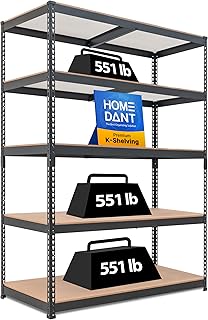
46-Inch Adjustable Wood-and-Steel Shelving
This five-tier unit is a versatile choice for garages that need substantial storage without taking over an entire wall. Its wood shelf surfaces soften the look of the metal frame, making it particularly appealing for a tidy workshop, utility room, or organized mudroom-style garage.
CX Craftsman 5-Tier Plastic Storage Shelves
The CX Craftsman rack is a practical pick for lighter, everyday organization, especially where rust resistance and easy cleaning are priorities. Its black-and-red finish has a distinctly workshop-oriented character, while the generous shelf rating makes it suitable for bins, cleaning supplies, and household equipment.
71.3-Inch Wide Industrial Garage Shelving
With its broad footprint and deep shelves, this heavy-duty metal rack is designed for large garages, workshops, basements, and storage areas where volume matters most. It is best suited to homeowners who want one substantial storage zone for bulky totes, machinery, and renovation materials rather than several small freestanding shelves.
47.7-Inch Deep Boltless Metal Shelving
This adjustable five-tier unit brings a useful balance of reach and flexibility. The deep format can accommodate oversized containers, while the boltless construction is convenient for reconfiguring a garage, pantry, basement, or utility space as needs evolve.
71-Inch Tall Adjustable Utility Rack
The tall, relatively narrow profile makes this shelving unit a smart option for using vertical space along a side wall. Its proportions work well in garages where floor area is limited, and the neutral metal construction can look surprisingly streamlined when paired with matching bins and clearly labeled containers.
Frequently Asked Questions
How deep should garage shelving be?
For most household garages, shelves between roughly 16 and 24 inches deep offer a useful compromise. Choose deeper shelving for large totes and equipment, but avoid depth that prevents you from seeing or safely reaching stored items.
Do garage shelves need to be anchored?
Anchoring is strongly advisable for tall or heavily loaded units, particularly in homes with children, pets, uneven floors, or seismic activity. Follow the manufacturer’s instructions and use hardware appropriate for the wall material.
Are metal or plastic shelves better for a garage?
Metal is usually the better choice for heavy tools, paint, machinery, and dense storage bins. Plastic can be preferable in damp environments or for lighter supplies because it will not rust and is often easier to reposition.
How can I make garage shelving look more organized?
Group items by task, keep frequently used supplies between waist and eye level, and use matching containers where possible. Leave a little visual breathing room rather than filling every shelf to its maximum capacity.
Final Thoughts
For a balanced garage setup, the 46-Inch Adjustable Wood-and-Steel Shelving is an appealing all-rounder, while the CX Craftsman plastic rack suits lighter, low-maintenance organization. If maximum capacity is the priority, the 71.3-Inch Wide Industrial Shelving is the standout; for tighter footprints, the tall 71-Inch Utility Rack makes excellent use of vertical space.