Key takeaways
- Tooth count: Blades with 60 to 100 teeth generally produce smoother crosscuts in furniture parts, while lower counts remove material faster on framing lumber.
- Tooth geometry: An ATB grind is a strong all-around choice for wood crosscuts; TCG teeth are especially useful when cutting aluminum, laminates, or abrasive sheet goods.
- Blade diameter and arbor: Match the blade diameter and arbor hole to your saw exactly. A 10-inch blade normally uses a 5/8-inch arbor, while many 12-inch saws use a 1-inch arbor.
- Material: Confirm that the blade is intended for your workpiece. Solid wood, plywood, MDF, laminate, and nonferrous metals each place different demands on carbide teeth.
- Speed and kerf: Check the maximum RPM against your saw and consider kerf width. A thinner kerf can reduce waste and strain, while a heavier plate may feel steadier on demanding cuts.
What's inside
Choosing a miter-saw blade for furniture projects is less straightforward than it looks. Tooth count, grind style, arbor size, kerf, and material compatibility all affect whether a cut leaves a polished edge or a ragged one. The wrong blade can turn carefully selected timber into a splintered, tear-out-prone mess.
This guide focuses on blades that suit home workshops, cabinetry, trim, shelving, and other furniture-making tasks. We compare fine-finish specialists, versatile multi-packs, and blades suited to plywood, MDF, laminate, aluminum, and everyday dimensional lumber, with an eye toward clean results and sensible value.
As an Amazon Associate we earn from qualifying purchases.


How to Choose a Saw Blade For Miter Saw (2026)
- Tooth count: Blades with 60 to 100 teeth generally produce smoother crosscuts in furniture parts, while lower counts remove material faster on framing lumber.
- Tooth geometry: An ATB grind is a strong all-around choice for wood crosscuts; TCG teeth are especially useful when cutting aluminum, laminates, or abrasive sheet goods.
- Blade diameter and arbor: Match the blade diameter and arbor hole to your saw exactly. A 10-inch blade normally uses a 5/8-inch arbor, while many 12-inch saws use a 1-inch arbor.
- Material: Confirm that the blade is intended for your workpiece. Solid wood, plywood, MDF, laminate, and nonferrous metals each place different demands on carbide teeth.
- Speed and kerf: Check the maximum RPM against your saw and consider kerf width. A thinner kerf can reduce waste and strain, while a heavier plate may feel steadier on demanding cuts.
The Best Saw Blade For Miter Saw (2026)s Reviewed
WEN BL1080 10-Inch 80-Tooth Blade
The WEN BL1080 is a dependable fine-finish option for common furniture work, including crosscutting boards, trim, and plywood. Its 80 carbide-tipped teeth favor a smooth edge over rapid stock removal, making it a sensible upgrade for a general-purpose 10-inch miter saw.
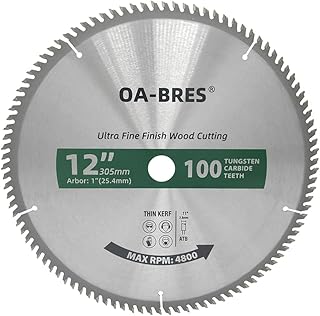
12-Inch 100-Tooth Ultra Fine Finish Blade
This 12-inch blade is aimed at detail-focused projects where the cut edge will remain visible, such as face frames, furniture aprons, and hardwood trim. Its 100-tooth ATB design should help minimize splintering, provided the workpiece is supported and the saw is properly aligned.
10-Inch 120-Tooth TCG Aluminum Working Blade
The 120-tooth TCG profile makes this blade distinctive among the wood-focused choices. It is designed for ultra-fine cuts and aluminum work, so it is worth considering for makers who move between laminate panels, nonferrous metal components, and highly finished wood parts.
KENDO 10-Inch Circular Saw Blade Set
KENDO’s two-blade set offers practical flexibility: the 40-tooth blade handles faster ripping, while the 60-tooth blade is better suited to plywood, MDF, laminate, and cleaner crosscuts. It is a smart workshop pairing for anyone who prefers changing blades to forcing one blade to do every job.
10-Inch 3-Pack: 32T, 60T, and 80T Blades
This three-pack covers the broadest range of tasks, from quick framing cuts with the 32-tooth blade to refined furniture work with the 80-tooth option. It is particularly appealing for new workshops, although the finish and longevity of each blade should be judged against the demands of your materials.
Frequently Asked Questions
What tooth count is best for a miter saw?
For furniture and interior woodwork, 60 to 80 teeth is a useful starting point on a 10-inch blade. Choose 80 to 100 or more when prioritizing an exceptionally clean crosscut, and use fewer teeth when speed matters more than surface finish.
Can I use a table-saw blade on a miter saw?
Often, yes, if the diameter, arbor, RPM rating, and intended material all match your saw. Always follow the manufacturer’s instructions, and avoid any blade that is not approved for the tool’s operating speed or cutting direction.
Is a higher tooth count always better?
No. More teeth can improve finish quality, but they cut more slowly and may struggle with thick stock or long rip cuts. A balanced tooth count, sharp carbide, stable blade plate, and controlled feed rate usually matter more than the largest number printed on the packaging.
How can I reduce tear-out on a miter saw?
Use a sharp blade suited to the material, clamp the work securely, and support the fibers near the cut line. A zero-clearance insert or sacrificial fence can also help, especially when cutting veneered plywood, molding, or delicate hardwood.
Final Thoughts
For a polished everyday furniture blade, the WEN BL1080 is an easy recommendation. The 12-inch 100-tooth blade is better for exceptionally refined large-saw crosscuts, while the KENDO set offers the most useful flexibility for a growing home workshop.