Key takeaways
- Navigation: LiDAR and laser mapping generally create more orderly routes and help the vacuum recognize furniture, walls, and room boundaries.
- Furniture clearance: Measure the space beneath sofas, beds, and cabinets before buying; a slim profile is often more useful than headline suction.
- Pet-hair performance: Look for strong suction, a brushroll designed to resist tangles, and an accessible dustbin or self-emptying base.
- Maintenance: Consider how often you want to empty the bin, clean filters, remove wrapped hair, and replace consumable parts.
- Smart features: App scheduling, room selection, no-go zones, and voice-assistant support are worthwhile when they simplify everyday cleaning rather than add setup complexity.
What's inside
A robot vacuum can make a room feel consistently pulled together, but choosing one is less effortless than using one. Buyers must sort through suction claims, navigation systems, dustbin capacity, app features, and models that quietly bundle in a mop you may never use. For homes with rugs, timber floors, pets, or carefully arranged furniture, the right vacuum should clean thoroughly without becoming another appliance to manage.
This guide focuses on robot vacuums that are practical for dry cleaning, with attention to low-profile furniture, mapping, pet hair, noise, maintenance, and the visual clutter of charging stations. A few listed models are vacuum-and-mop hybrids, so they are included only with a clear note for shoppers who want a flexible alternative rather than a strictly vacuum-only machine.
As an Amazon Associate we earn from qualifying purchases.




🛒 Best Price Today on Amazon
Prime members get fast, free shipping on everything above, plus member-only deals. New members get a 30-day free trial — cancel anytime.
How to Choose a Robot Vacuum Without Mop (2026)
- Navigation: LiDAR and laser mapping generally create more orderly routes and help the vacuum recognize furniture, walls, and room boundaries.
- Furniture clearance: Measure the space beneath sofas, beds, and cabinets before buying; a slim profile is often more useful than headline suction.
- Pet-hair performance: Look for strong suction, a brushroll designed to resist tangles, and an accessible dustbin or self-emptying base.
- Maintenance: Consider how often you want to empty the bin, clean filters, remove wrapped hair, and replace consumable parts.
- Smart features: App scheduling, room selection, no-go zones, and voice-assistant support are worthwhile when they simplify everyday cleaning rather than add setup complexity.
The Best Robot Vacuums Without Mops (2026), Reviewed
eufy 11S MAX
The eufy 11S MAX is a sensible choice for shoppers who want a discreet, uncomplicated vacuum for hard floors and medium-pile carpets. Its super-thin design suits homes with low furniture, while self-charging and quiet operation make it easy to run in the background. It lacks the advanced mapping found on newer premium models, so it is best for straightforward layouts rather than multi-room precision cleaning.
iRobot Roomba 105 Vac with AutoEmpty Dock
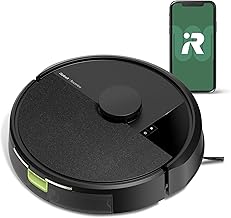
For a more hands-off setup, the Roomba 105 Vac with AutoEmpty Dock combines LiDAR navigation, neat-row cleaning, and an AutoEmpty dock designed to hold debris for up to 75 days, depending on use. Its orderly approach should appeal to interiors enthusiasts who prefer a predictable cleaning pattern, particularly in open-plan rooms where loose objects and furniture placement need careful consideration.
iRobot Roomba 105 Vac
The standard Roomba 105 Vac offers the same general appeal in a simpler package, with LiDAR navigation, power-lifting suction, multi-surface cleaning, and self-charging. Without the AutoEmpty dock, it requires more regular bin attention, but that can be a virtue for smaller homes where a large base would compete visually with a console, plant stand, or entryway storage.
Shark AV2501S AI Ultra
The Shark AV2501S AI Ultra is particularly attractive for households managing frequent shedding. Its Matrix Clean system, 360-degree LiDAR mapping, self-cleaning brushroll, and HEPA bagless self-empty base are geared toward thorough, repeatable cleaning, while the 30-day capacity reduces daily maintenance. The dark-grey base has a substantial presence, so plan its position as deliberately as you would any other visible utility item.
Q10 Pro Robot Vacuum and Mop
The Q10 Pro is not a strict mop-free model, but its 8,000Pa suction, laser navigation, smart mapping, long runtime, scheduling, and app or Alexa control make it a useful hybrid for buyers who may occasionally want wet cleaning. Choose it only if you are comfortable maintaining the additional mop components; for a purely dry-cleaning routine, a dedicated vacuum is usually the tidier fit.
Frequently Asked Questions
Are robot vacuums without mops better?
Not universally. A vacuum-only model is often simpler to maintain, easier to store, and less likely to introduce moisture around delicate flooring. Hybrid models can be useful, but their extra features may be unnecessary if dry debris is your only priority.
Can a robot vacuum clean beneath furniture?
Yes, provided its height fits beneath the furniture. Measure the lowest clearance, allowing a small margin rather than assuming the stated product height will work perfectly on uneven flooring or thick rugs.
Do I need LiDAR navigation?
LiDAR is helpful for accurate mapping, room-by-room cleaning, and more consistent routes. It is less essential in a compact, open room, where a simpler robot may deliver good results at a lower cost.
How often should I run a robot vacuum?
Several short cleaning cycles each week usually prevent dust and hair from accumulating. Homes with pets, children, or high-traffic entrances may benefit from daily runs, while quieter bedrooms can be scheduled less often.
Final Thoughts
The eufy 11S MAX is the understated pick for simple spaces, the Roomba 105 with AutoEmpty Dock is a strong choice for low-effort mapped cleaning, and the Shark AV2501S AI Ultra stands out for pet-focused performance. Choose the model whose dock, maintenance routine, and height make sense for both your floor plan and your interior.