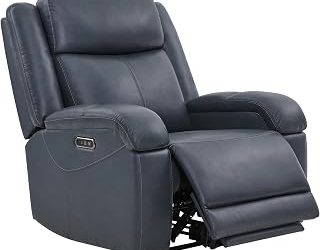
Key takeaways
- Lumbar Support Architecture: Look for recliners with adjustable or built-in lumbar zones rather than a flat backrest. Power recliners with dedicated lumbar motors — like the CHITA Triple Motor model — let you dial in the exact pressure point your lower spine needs without relying on a throw pillow that shifts overnight.
- Recline Range and Lift Function: A near-flat recline distributes body weight more evenly across the discs, reducing localized strain. Power lift mechanisms are critical for anyone who struggles to stand from a seated position, because the jerking motion of pushing up manually can aggravate inflamed joints.
- Seat Depth and Width: Too shallow and your knees ride up, tilting your pelvis backward. Too deep and you can’t reach the backrest properly. Measure from the back of your knees to the seat edge while seated — you want roughly two to three fingers of clearance. Wider seats suit larger frames but should still cradle, not swallow, the hips.
- Motor Count and Quiet Operation: Single-motor recliners move the back and seat in tandem, which limits customization. Dual or triple-motor designs let you adjust headrest, recline, and lumbar independently. Quieter motors also matter if you’re using the recliner during nighttime pain flare-ups without waking a partner.
- Material Breathability and Firmness: Genuine leather and high-density foam retain shape longer than bonded leather over polyester fill, which compresses unevenly under daily use. Breathable upholstery prevents the sweating that makes you shift position constantly — a subtle but real factor in back comfort during extended sitting.
What's inside
Shopping for a recliner when your back hurts is a uniquely frustrating experience. Every online listing claims to be “ergonomic” or “supportive,” yet once the box arrives and you settle in, you realize the lumbar contour hits the wrong vertebra, the recline angle forces your neck forward, or the cushioning bottoms out after two weeks. For people dealing with herniated discs, sciatica, chronic stiffness, or post-surgical recovery, a bad choice doesn’t just waste money — it actively sets healing back.
That’s exactly why we put this guide together. We evaluated recliners through the lens of spinal alignment, material durability, motor reliability, and real-world usability for people whose backs demand more than a marketing slogan. Below you’ll find our curated picks, a straightforward buying framework, and answers to the questions that matter most before you click “Add to Cart.”
As an Amazon Associate we earn from qualifying purchases.


🛒 Best Price Today on Amazon
Prime members get fast, free shipping on everything above, plus member-only deals. New members get a 30-day free trial — cancel anytime.
How to Choose a Recliner for Bad Backs (2026)
- Lumbar Support Architecture: Look for recliners with adjustable or built-in lumbar zones rather than a flat backrest. Power recliners with dedicated lumbar motors — like the CHITA Triple Motor model — let you dial in the exact pressure point your lower spine needs without relying on a throw pillow that shifts overnight.
- Recline Range and Lift Function: A near-flat recline distributes body weight more evenly across the discs, reducing localized strain. Power lift mechanisms are critical for anyone who struggles to stand from a seated position, because the jerking motion of pushing up manually can aggravate inflamed joints.
- Seat Depth and Width: Too shallow and your knees ride up, tilting your pelvis backward. Too deep and you can’t reach the backrest properly. Measure from the back of your knees to the seat edge while seated — you want roughly two to three fingers of clearance. Wider seats suit larger frames but should still cradle, not swallow, the hips.
- Motor Count and Quiet Operation: Single-motor recliners move the back and seat in tandem, which limits customization. Dual or triple-motor designs let you adjust headrest, recline, and lumbar independently. Quieter motors also matter if you’re using the recliner during nighttime pain flare-ups without waking a partner.
- Material Breathability and Firmness: Genuine leather and high-density foam retain shape longer than bonded leather over polyester fill, which compresses unevenly under daily use. Breathable upholstery prevents the sweating that makes you shift position constantly — a subtle but real factor in back comfort during extended sitting.
The Best Recliners for Bad Backs (2026) Reviewed
MCombo Power Lift Recliner 7040
This mid-size power lift recliner strikes a practical balance between therapeutic features and everyday convenience. Built-in heat and massage targeting the lumbar and thigh zones provide genuine pain relief during flare-ups, while the dual USB-and-Type-C charging ports mean you won’t twist to reach an outlet — a small detail that matters more when your back is already compromised. The FSC and OEKO-TEX certifications also appeal to buyers sensitive about off-gassing from synthetic materials.
FUNECORP Big Man Power Lay Flat Recliner
Designed for larger body types, the FUNECORP addresses a common gap in the back-pain recliner market: width without sacrificing support. Its 28-inch seat and dual-motor heat-vibration system deliver therapeutic warmth to broader frames that often feel squeezed by standard recliners. The lay-flat positioning is particularly beneficial for those who need to elevate their legs fully to reduce spinal compression, and the flip-arm storage keeps essentials within arm’s reach so you’re not leaning and twisting for the remote.
CHITA Wall Hugger Power Recliner
Space-conscious buyers dealing with back issues will appreciate how the CHITA Wall Hugger reclines fully while sitting just inches from the wall, eliminating the need to rearrange an entire room. The genuine saddle-brown leather ages gracefully and resists the flattening that plagues upholstered alternatives, while the adjustable power headrest lets you maintain a neutral cervical spine position for reading or watching television — an angle most fixed-back recliners get wrong.
CHITA Triple Motor Swivel Rocker Recliner
This is the most back-focused recliner in the roundup. The triple-motor configuration gives you independent control over headrest angle, recline depth, and lumbar support depth — meaning you can fine-tune each zone without compromising the others. The swivel-rocker base adds gentle movement that research consistently links to reduced muscle guarding and stiffness, making it an excellent choice for people who find that staying completely still actually worsens their pain.
MAMAZING Lullapod Power Nursery Rocking Chair
Don’t let the “nursery” label fool you — the Lullapod’s 270-degree swivel, triple-motor recline, and HugAssist armrest design make it a surprisingly strong option for anyone managing back pain who also needs a functional, quiet rocker. The built-in storage pockets reduce the need to reach and twist, and the quiet rocking mechanism supports the gentle rhythmic motion that many physical therapists recommend for decompressing the lower spine.
Frequently Asked Questions
What type of recliner is best for lower back pain?
Power recliners with adjustable lumbar support and independent motor controls are generally best for lower back pain. They allow you to customize the recline angle and lumbar pressure to match your specific condition rather than adapting your body to a fixed position. Models with a near-flat recline option help distribute weight evenly across the spine.
Should I choose a lift recliner if I have back problems?
If standing from a seated position causes pain or difficulty, a power lift recliner is worth the investment. The gradual tilt-forward motion reduces the strain that bending and pushing off places on lumbar discs and facet joints. Even if you don’t need the lift function daily, having it available during high-pain days prevents compensatory movements that can worsen injury.
How long do power recliner motors typically last?
Quality power recliner motors are rated for roughly 30,000 to 50,000 cycles under normal use, which translates to approximately eight to fifteen years depending on frequency. Dual and triple-motor systems from established brands tend to be more durable than single-motor designs because the workload is distributed across separate mechanisms rather than forced through one unit.
Is genuine leather better than faux leather for a recliner I use daily?
For daily, extended use — especially if you deal with back pain and spend long hours seated — genuine leather generally outperforms faux alternatives. It conforms to your body over time, breathes better to reduce heat-related discomfort and shifting, and maintains its structural integrity significantly longer. Faux leather tends to crack and compress under sustained body weight, reducing the consistent support your back relies on.
Final Thoughts
For most people dealing with chronic or acute back pain, the CHITA Triple Motor Swivel Rocker Recliner stands out as the best overall pick thanks to its independent lumbar, headrest, and recline controls. If you need a lift function combined with therapeutic heat and massage, the MCombo Power Lift Recliner 7040 delivers strong value in a certified, mid-size package. Buyers with larger frames who need genuine width alongside lay-flat capability should look closely at the FUNECORP Big Man before defaulting to a standard-width chair that doesn’t truly fit.