Key takeaways
- Power vs. Manual Mechanism: Power recliners offer smooth, one-touch positioning and often include USB charging, but they require proximity to an outlet and add mechanical complexity. Manual recliners are lighter, more affordable, and have fewer parts that can break — ideal if you want simplicity and portability.
- Wall-Hugger Design: If your living room is tight, a wall-hugger recliner needs only 4 to 6 inches of clearance behind it, gliding forward instead of pushing back. Standard recliners typically need 12 to 18 inches, which can dominate a small footprint quickly.
- Upholstery Material: Genuine leather ages beautifully and breathes well but demands occasional conditioning. Faux leather is budget-friendly and low-maintenance yet can peel under heavy use. Fabric options like corduroy or performance weave add texture and warmth but may trap stains more readily.
- Seat Depth and Width: A recliner’s comfort lives or dies at the seat. Look for a minimum seat depth of 20 inches for full thigh support, and check whether the armrest height allows your shoulders to relax without hunching — especially critical for taller users over six feet.
- Extra Features and Storage: Built-in cup holders, hidden armrest compartments, and ambient LED lighting can elevate a recliner from furniture to experience. Prioritize features you’ll use daily rather than novelty add-ons that collect dust.
What's inside
Finding a recliner couch that actually fits your space, your body, and your daily habits is harder than most furniture brands make it look. Between power mechanisms that quit after a year, leather that cracks by winter, and “universal fit” recliners that eat your living room whole, the market is flooded with options that promise comfort but underdeliver in craftsmanship.
This guide cuts through the noise. I’ve evaluated six strong contenders across manual, power, and hybrid reclining styles — comparing build quality, materials, smart features, and real-world spatial footprint — so you can land on the recliner couch that earns its square footage in 2026.
As an Amazon Associate we earn from qualifying purchases.


How to Choose a Recliner Couch (2026)
- Power vs. Manual Mechanism: Power recliners offer smooth, one-touch positioning and often include USB charging, but they require proximity to an outlet and add mechanical complexity. Manual recliners are lighter, more affordable, and have fewer parts that can break — ideal if you want simplicity and portability.
- Wall-Hugger Design: If your living room is tight, a wall-hugger recliner needs only 4 to 6 inches of clearance behind it, gliding forward instead of pushing back. Standard recliners typically need 12 to 18 inches, which can dominate a small footprint quickly.
- Upholstery Material: Genuine leather ages beautifully and breathes well but demands occasional conditioning. Faux leather is budget-friendly and low-maintenance yet can peel under heavy use. Fabric options like corduroy or performance weave add texture and warmth but may trap stains more readily.
- Seat Depth and Width: A recliner’s comfort lives or dies at the seat. Look for a minimum seat depth of 20 inches for full thigh support, and check whether the armrest height allows your shoulders to relax without hunching — especially critical for taller users over six feet.
- Extra Features and Storage: Built-in cup holders, hidden armrest compartments, and ambient LED lighting can elevate a recliner from furniture to experience. Prioritize features you’ll use daily rather than novelty add-ons that collect dust.
The Best Recliner Couch (2026) Reviews
Genuine Leather Power Recliner Sofa (3-Seater)
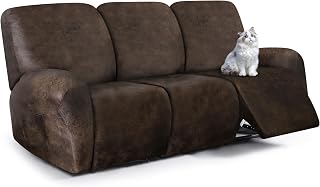
This full-grain leather three-seater brings a surprisingly refined silhouette to the power recliner category — a rarity at its price tier. The dual-motor reclining system operates quietly, the hidden cup holders sit flush when not in use, and the integrated USB port eliminates the scramble for a wall adapter during movie nights. It’s a genuine workhorse wrapped in a living-room-worthy shell.
Watson & Whitely Leather Wall Hugger Reclining Sofa
Watson & Whitely designed this navy wall-hugger specifically for people who refuse to sacrifice seating for square footage. The adjustable power headrest is the standout feature here, letting you dial in neck support independently from the backrest angle — a game-changer for reading or watching from a low media console. Dual USB and Type-C ports keep every device charged without trailing cables across the floor.
50-Inch Oversized Corduroy Chaise Lounge
Blurring the line between chaise lounge and sleeper sofa, this boneless corduroy piece delivers a cloud-like sit that practically begs you to cancel plans. At 50 inches wide with a deep seat and no assembly required, it’s an effortless anchor for a reading nook or studio apartment. The corduroy upholstery adds rich tactile dimension, and the lack of a rigid frame means it conforms to your body rather than forcing a position.
Classic Leather Manual Recliner Chair
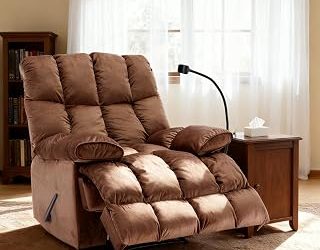
Sometimes the smartest technology is no technology at all. This traditional manual recliner leans into overstuffed arms and a deeply tufted backrest, delivering old-school comfort through sheer padding density. The concealed cup holders are a thoughtful touch that keeps the clean lines intact, and the nut-brown leather develops a warm patina that improves with every season of use.
Electric Power Recliner Chair with USB Ports
Built with home-theater enthusiasts in mind, this breathable leather recliner packs cup holders, hidden arm storage, and a smooth electric reclining motor into a compact single-seat frame. The breathable upholstery prevents the sticky-back sensation that plagues many leather recliners during long viewing sessions, and the concealed compartment in the armrest is genuinely useful for remotes, snacks, or a tablet.
Frequently Asked Questions
What is the difference between a power recliner and a manual recliner?
A power recliner uses an electric motor to adjust positions with the push of a button, offering smooth and precise control. A manual recliner relies on a lever or your own body weight to shift positions. Power recliners tend to cost more and need an outlet, but they’re easier to operate and often include features like USB charging ports and power headrests.
How much space do I need behind a recliner couch?
Standard recliners need roughly 12 to 18 inches of clearance from the wall to fully recline. Wall-hugger models are designed to operate with as little as 4 to 6 inches of space, making them significantly more practical for smaller rooms or furniture arrangements where every inch counts.
Is genuine leather worth the extra cost for a recliner?
Genuine leather offers superior durability, breathability, and aesthetic aging compared to faux alternatives. It typically lasts 15 years or more with proper care, while faux leather may begin peeling within three to five years under regular use. If you’re investing in a recliner you plan to keep long-term, genuine leather generally pays for itself over time.
Can a recliner couch work in a small living room?
Absolutely — if you choose wisely. Look for wall-hugger models, single-seat recliners, or compact chaise-style options that minimize rear clearance. Avoid oversized multi-seat reclining sofas in rooms under 200 square feet, and measure your doorway dimensions before ordering, since recliners are often delivered fully assembled and may not fit through narrow hallways.
Final Thoughts
If I were furnishing my own living room in 2026, I’d gravitate toward the Watson & Whitely Wall Hugger for its smart space-saving design and independent headrest control, the Genuine Leather Power Recliner Sofa for households needing a full-size three-seater that still looks polished, and the 50-Inch Corduroy Chaise Lounge as a textural statement piece for anyone who prioritizes lounging over formality. Each solves a different living-room problem without compromising on the comfort a recliner should deliver.