Key takeaways
- Mechanism type: Pushback recliners are compact and simple, ideal for smaller rooms or renters who don’t want bulky levers; manual lever or power recliners suit those who recline often and want a dedicated footrest position.
- Upholstery material: Faux leather wipes clean and suits high-traffic households, while performance fabric or tufted textiles feel warmer and pair better with traditional or mid-century interiors.
- Frame and leg style: Solid wood legs and wingback silhouettes read more “furniture” than “recliner,” which matters if the chair lives in a living room rather than a den.
- Added features: Massage and heat functions add genuine value for anyone with back pain or long work-from-home days, but check that they’re removable or battery-powered so cords don’t dictate placement.
- Room clearance: Wall-hugger and pushback designs need far less rear clearance than traditional recliners — measure your space before assuming a classic recliner will fit against a wall.
What's inside
Shopping for a recliner used to mean choosing between “looks nice” and “actually comfortable enough to nap in.” That compromise has mostly disappeared, but the sheer number of styles — pushback, power, rocker, wingback, faux leather, performance fabric — makes it easy to buy the wrong chair for your space. Add in mismatched dimensions, flimsy footrest mechanisms, and recliners that scream “man cave” in a living room that deserves better, and the search gets frustrating fast.
This guide narrows the field down to six recliner armchairs worth your attention in 2026, chosen for build quality, style versatility, and how well they balance comfort with actual design sense. Below, we break down what separates a great recliner from a mediocre one, review our top picks in detail, and answer the questions we hear most from readers furnishing a living room, bedroom, or home office.
As an Amazon Associate we earn from qualifying purchases.


How to Choose a Recliner Armchair (2026)
- Mechanism type: Pushback recliners are compact and simple, ideal for smaller rooms or renters who don’t want bulky levers; manual lever or power recliners suit those who recline often and want a dedicated footrest position.
- Upholstery material: Faux leather wipes clean and suits high-traffic households, while performance fabric or tufted textiles feel warmer and pair better with traditional or mid-century interiors.
- Frame and leg style: Solid wood legs and wingback silhouettes read more “furniture” than “recliner,” which matters if the chair lives in a living room rather than a den.
- Added features: Massage and heat functions add genuine value for anyone with back pain or long work-from-home days, but check that they’re removable or battery-powered so cords don’t dictate placement.
- Room clearance: Wall-hugger and pushback designs need far less rear clearance than traditional recliners — measure your space before assuming a classic recliner will fit against a wall.
The Best Recliner Armchairs (2026) Reviewed
IPKIG Wingback Pushback Recliner
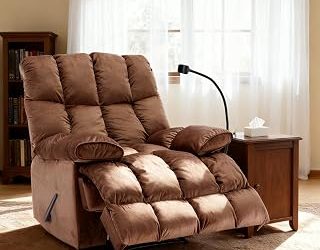
This one earns its spot through sheer versatility — the button-tufted back and rivet trim give it a genuine mid-century presence, while the built-in massage and heat functions push it well past what most pushback recliners offer at this size. Solid wood legs keep it visually light, making it a smart choice for anyone who wants recliner comfort without the bulky look.
Ashley Tulen Rocker Recliner
Ashley’s Tulen brings dependable manual rocking-and-reclining function in a gray upholstery that reads more sofa-adjacent than “recliner corner,” which is exactly the appeal. It’s a safe, well-built pick for buyers who want proven reliability over novelty features.
Terni Wood Arm Push Back Recliner
The Terni stands out for its performance fabric — a sea oat beige that resists stains and fading far better than standard upholstery — paired with exposed wood arms that give it a tailored, furniture-store finish. It’s the pick for anyone whose recliner needs to double as a design statement.
Faux Leather Manual Recliner (Brown)
Straightforward and sturdy, this brown faux leather recliner leans into comfort first, with a noticeably thicker backrest that supports taller or larger-framed sitters better than slimmer competitors. It’s a strong budget-conscious option for a bedroom or den.
Chocolate Pushback Recliner with Rivet Trim
The rivet detailing elevates what could otherwise be a generic faux leather recliner into something with real visual interest, and the compact pushback mechanism means it slides neatly into tighter living rooms. Chocolate brown hides wear well, making it a practical pick for households with kids or pets.
Frequently Asked Questions
Are pushback recliners as comfortable as lever or power models?
Yes, for most users — pushback mechanisms simply require body weight to recline rather than a separate lever, which many people find more intuitive once they adjust to it.
How much space does a recliner armchair need behind it?
Traditional recliners typically need 8–12 inches of rear clearance to fully recline, while wall-hugger and pushback designs can often sit within a few inches of a wall.
Is faux leather or fabric better for a recliner?
Faux leather is easier to clean and more durable against spills, while fabric tends to feel warmer and pairs more naturally with soft, layered living room décor.
Do massage and heat functions actually help?
For people with chronic back tension or long sedentary hours, the low-level vibration massage and heat features common in recliners like the IPKIG can meaningfully ease discomfort, though they’re not a substitute for medical treatment.
Final Thoughts
For most buyers, the IPKIG Wingback Pushback Recliner offers the best balance of style, comfort, and features, with the Terni Wood Arm Push Back Recliner a close second for anyone prioritizing design, and the Ashley Tulen Rocker Recliner remaining the dependable, no-fuss choice for traditional comfort seekers.