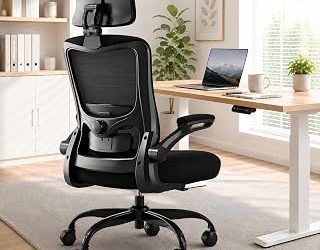
Key takeaways
- Weight Capacity: Look for a minimum 400-pound rating, but don’t treat it as a ceiling—chairs rated at 500 to 650 pounds typically feature reinforced steel bases and thicker gas cylinders that benefit everyone, not just heavier users.
- Seat Depth and Width: A tall frame needs a pan that’s at least 20 inches deep and wide enough that your thighs aren’t pinched at the edges. Shallow seats force an awkward angle that compounds lower-back strain over a full workday.
- Lumbar Adjustability: Fixed lumbar curves are a gamble. Seek chairs with dedicated adjustable lumbar support that lets you position the pad precisely at your natural curve—ideally L3 to L5—rather than hoping the manufacturer guessed your anatomy correctly.
- Backrest Height and Headrest: The backrest should reach at least to your shoulder blades, and a headrest that actually supports your neck (not just your skull’s base) is non-negotiable for anyone over 6’1″.
- Armrest Flexibility: Flip-up or 5D-adjustable arms matter more than people realize. Fixed arms on a wide seat can make it impossible to slide close to your desk, while adjustable arms let you set the exact height where your elbows rest at ninety degrees without shrugging your shoulders.
What's inside
Most office chairs marketed for tall people fall into one of two traps: they look premium on paper but buckle after six months, or they technically support higher weight limits while ignoring the proportions that actually matter—seat depth, backrest height, and armrest positioning that don’t leave a six-footer hunched like a question mark. If you’ve ever returned a chair because your knees pressed against a pan too shallow or your shoulders cleared the headrest entirely, you already know the frustration.
This guide cuts through the noise. We evaluated every contender in the big-and-tall category for genuine structural integrity, ergonomic adjustability for frames over six feet, and long-day comfort that holds up past the four-hour mark. Here are the six chairs that earned their place, along with the criteria you should use to decide which one fits your body and your workspace.
As an Amazon Associate we earn from qualifying purchases.


🛒 Best Price Today on Amazon
Prime members get fast, free shipping on everything above, plus member-only deals. New members get a 30-day free trial — cancel anytime.
How to Choose an Office Chair Tall Person (2026)
- Weight Capacity: Look for a minimum 400-pound rating, but don’t treat it as a ceiling—chairs rated at 500 to 650 pounds typically feature reinforced steel bases and thicker gas cylinders that benefit everyone, not just heavier users.
- Seat Depth and Width: A tall frame needs a pan that’s at least 20 inches deep and wide enough that your thighs aren’t pinched at the edges. Shallow seats force an awkward angle that compounds lower-back strain over a full workday.
- Lumbar Adjustability: Fixed lumbar curves are a gamble. Seek chairs with dedicated adjustable lumbar support that lets you position the pad precisely at your natural curve—ideally L3 to L5—rather than hoping the manufacturer guessed your anatomy correctly.
- Backrest Height and Headrest: The backrest should reach at least to your shoulder blades, and a headrest that actually supports your neck (not just your skull’s base) is non-negotiable for anyone over 6’1″.
- Armrest Flexibility: Flip-up or 5D-adjustable arms matter more than people realize. Fixed arms on a wide seat can make it impossible to slide close to your desk, while adjustable arms let you set the exact height where your elbows rest at ninety degrees without shrugging your shoulders.
The Best Office Chair Tall Person (2026) Reviews
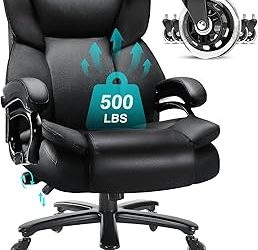
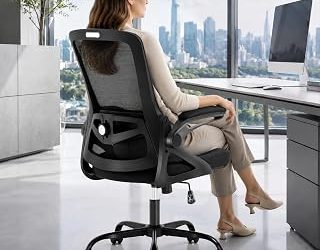
500lbs Big and Tall Office Chair with Quiet Rubber Wheels
This is the entry point that doesn’t feel like a compromise. The pocket-spring cushion distributes weight far more evenly than standard foam, and the adjustable lumbar support hits a sweet spot that pricier chairs sometimes miss. Quiet rubber casters make it a solid pick for shared spaces or hardwood floors where clattery wheels become a daily annoyance.
600LBS Large Heavy Duty Chair with 5D Flip Arms
Stepping up to the 600-pound class brings noticeably sturdier construction without bloating the footprint. The 5D flip arms are genuinely useful—they swing completely out of the way for side-entry, which tall users often need, and lock back into multiple positions for typing or armrest-free tasks. Dual rubber wheels roll smoothly even on medium-pile carpet.
650lbs Big and Tall Leather Executive Chair
The heaviest-rated option in this lineup, and it shows in the base and cylinder quality. The padded leather surface resists the compression fatigue that plagues mesh after eight-hour days, and the rubber casters are whisper-quiet. If you need a chair rated for extended daily sessions and you don’t want to think about durability, this is the insurance policy pick.
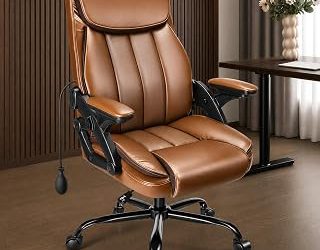
Big and Tall Executive Leather Chair with Extra Padding
Striking the balance between executive aesthetics and genuine ergonomics, this chair wraps a high back in clean black leather while packing an extra-padded seat that doesn’t bottom out. The lumbar support is less granular than some competitors, but the overall proportions—seat width, backrest height, armrest range—feel designed by someone who actually measured a tall person first.
Big and Tall Extra Wide PU Leather Chair with Flip-Up Arms
Widest seat in the group, which makes it the most forgiving for broader frames. Flip-up arms keep the profile streamlined when you need to push close to a desk or tuck the chair under. Rated at 400 pounds, it sits at the lower end of the capacity range here, but the smooth caster wheels and padded armrests make it genuinely comfortable for its price tier.
Frequently Asked Questions
What height is considered “tall” for an office chair?
Generally, anyone 5’10” or taller starts running into standard chair limitations—particularly seat depth and headrest placement. Chairs specifically designed for tall users typically accommodate frames up to 6’5″ with appropriately scaled dimensions.
Do pocket spring cushions really make a difference?
Yes, especially for longer sessions. Pocket springs allow each compression zone to react independently, which distributes pressure more evenly than a solid foam block. You’ll notice less thigh numbness and fewer postural shifts throughout the day.
Are rubber caster wheels better than nylon ones?
Rubber wheels produce less noise, grip harder surfaces more reliably, and are less likely to leave marks on hardwood or vinyl flooring. Nylon casters are cheaper but tend to skid and squeak, particularly under heavier loads.
How do I know if a chair will last beyond a year?
Check the weight rating relative to your own weight—aim for at least a 50% buffer above your body weight. A chair rated at 500 pounds for a 180-pound user will typically outlast one rated at 200 pounds for the same person. Also look for steel bases and SGS-certified gas cylinders as signs of build quality.
Final Thoughts
For most tall shoppers, the 600LBS Large Heavy Duty Chair with 5D Flip Arms offers the best blend of capacity, adjustability, and day-to-day comfort. If maximum durability is your priority, the 650lbs Big and Tall Leather Executive Chair is worth every penny of its premium. And for anyone on a tighter budget who still refuses to settle, the 500lbs Big and Tall Office Chair with Quiet Rubber Wheels punches well above its price point.