Key takeaways
- Weather Exposure: Furniture sitting under a covered porch can get away with lighter 600D canvas, while fully exposed pieces demand at minimum 900D-rated fabric or powder-coated aluminum to withstand rain, wind-blown debris, and relentless afternoon sun.
- UV Resistance: Look for solution-dyed or UV-stabilized materials — the color should be locked into the fiber itself, not just coated on top. Fabrics marketed as UV-resistant without specifying the dye method tend to chalk and fade within a single summer.
- Maintenance Commitment: Aluminum frames wipe clean in seconds; woven vinyl mesh dries almost instantly after rain; upholstered canvas cushions need periodic washing. Be honest about how much upkeep you’ll realistically do.
- Comfort vs. Durability Trade-Off: Thick, generously padded cushions feel incredible but absorb moisture and are harder to store during harsh winters. Sling-style mesh offers less plushness but dries quickly and requires virtually zero storage planning.
- Intended Use and Traffic: A conversation set used daily by a family of five needs heavier-gauge material than a pair of accent chairs used for weekend morning coffee. Match the material’s weight rating to how hard the furniture will actually work.
What's inside
Shopping for outdoor patio furniture material in 2026 feels a bit like navigating a fabric maze — aluminum frames promise longevity but can scorch in direct sun, solution-dyed acrylics resist fading yet demand a premium price, and the sheer number of waterproof canvas and vinyl mesh options on the market can paralyze even the most decisive buyer. Add shifting UV indices and increasingly unpredictable weather patterns into the mix, and the stakes of picking the wrong material suddenly feel personal: sagging cushions, cracked surfaces, and replacement costs that add up fast.
This guide cuts through that noise. We evaluated the most popular outdoor furniture materials on the market right now — from heavy-duty 900D polyester canvas to woven sling vinyl mesh — weighing durability, water resistance, UV performance, and ease of maintenance. Whether you’re outfitting a full sectional for the deck or reupholstering a beloved sling chair, the breakdown below will point you toward the material that actually earns its spot in your outdoor space.
As an Amazon Associate we earn from qualifying purchases.


How to Choose Material For Outdoor Patio Furniture (2026)
- Weather Exposure: Furniture sitting under a covered porch can get away with lighter 600D canvas, while fully exposed pieces demand at minimum 900D-rated fabric or powder-coated aluminum to withstand rain, wind-blown debris, and relentless afternoon sun.
- UV Resistance: Look for solution-dyed or UV-stabilized materials — the color should be locked into the fiber itself, not just coated on top. Fabrics marketed as UV-resistant without specifying the dye method tend to chalk and fade within a single summer.
- Maintenance Commitment: Aluminum frames wipe clean in seconds; woven vinyl mesh dries almost instantly after rain; upholstered canvas cushions need periodic washing. Be honest about how much upkeep you’ll realistically do.
- Comfort vs. Durability Trade-Off: Thick, generously padded cushions feel incredible but absorb moisture and are harder to store during harsh winters. Sling-style mesh offers less plushness but dries quickly and requires virtually zero storage planning.
- Intended Use and Traffic: A conversation set used daily by a family of five needs heavier-gauge material than a pair of accent chairs used for weekend morning coffee. Match the material’s weight rating to how hard the furniture will actually work.
The Best Material For Outdoor Patio Furniture (2026) Reviewed
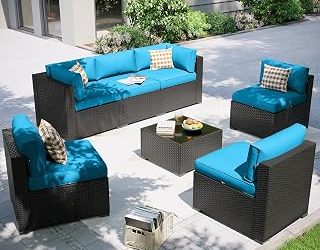
Aluminum 5-Piece Patio Conversation Set with Washable Cushions
This graphite-finished aluminum sectional set is a strong pick for anyone who wants a ready-made outdoor living room without worrying about frame corrosion. The powder-coated aluminum stays cool enough to touch on most days, and the thick, washable cushions hit a sweet spot between sink-in comfort and practical maintenance. Ideal for porches, balconies, and covered decks where you want both style and substance.
Waterproof Canvas Fabric 600D in Khaki
This 600D polyester canvas is the workhorse of DIY outdoor upholstery — tough enough for everyday chair cushions and patio seat covers, yet supple enough to cut and sew without industrial equipment. The khaki tone reads neutral and warm against both wood and metal furniture, and the water-resistant coating handles light rain without soaking through. A solid mid-tier option for projects that need reliability without overspending.
SL003 Beige Woven Sling Vinyl Mesh Fabric
If you’re refreshing a sling-style dining or chaise lounge chair, this woven vinyl mesh is purpose-built for the job. The beige color blends with nearly any outdoor palette, and the open weave promotes airflow that keeps you cool on hot days while allowing water to pass straight through — no pooling, no mildew. It installs taut and clean, giving older chairs an instant facelift.
900D Waterproof Upholstery Canvas in White
Stepping up to 900-denier weight means noticeably greater tear resistance and a more substantial hand-feel compared to lighter canvases. This white option leans modern and bright, though it does require occasional spot-cleaning to stay pristine. The UV-resistant and waterproof rating makes it one of the most protective fabric choices available for high-exposure patio cushions and furniture covers.
SmoothNovelty Vinyl Woven Mesh Sling Fabric in Beige
Sold by the 2-yard roll, this smooth-finish vinyl sling material is a favorite among DIYers replacing worn-out chair panels. It has a slightly sleeker texture than standard woven mesh, which gives it a more refined look once stretched across a frame. Waterproof and easy to trim to size, it’s a practical, budget-conscious solution for patio furniture repair projects.
Frequently Asked Questions
What is the most durable material for outdoor patio furniture frames?
Powder-coated aluminum consistently ranks highest for long-term durability because it resists rust, won’t warp in heat, and weighs significantly less than steel or wrought iron. Teak and eucalyptus hardwood frames also perform well but require annual oiling to maintain their appearance.
How often should outdoor furniture fabric be replaced?
With proper care — regular cleaning, winter storage, and prompt treatment of stains — high-quality outdoor fabric like 900D canvas or woven vinyl mesh can last five to seven years before showing significant wear. Budget materials in harsh climates may need replacing every two to three years.
Can I sew outdoor upholstery fabric at home?
Most 600D and 900D canvas fabrics can be sewn with a heavy-duty home sewing machine and a size 16 or 18 needle. Vinyl mesh is trickier because it can stick to a standard presser foot, so a Teflon foot or walking foot attachment is recommended for clean, even stitches.
Is aluminum patio furniture comfortable enough for daily use?
Aluminum frames on their own are firm and unyielding, but pairing them with thick, quick-dry cushions — like those included with many modern conversation sets — makes them genuinely comfortable for extended sitting. The key is choosing cushions with removable, washable covers for easy upkeep.
Final Thoughts
For most outdoor spaces, the strongest strategy in 2026 is pairing a rust-proof aluminum frame with a heavy-duty fabric upgrade. The Aluminum 5-Piece Conversation Set delivers that combination out of the box for anyone furnishing a full patio, while the 900D Waterproof Canvas stands out as the best fabric for DIY cushion and cover projects that demand serious weather resistance. If sling chairs are in the mix, the SL003 Woven Vinyl Mesh offers the cleanest blend of comfort, airflow, and longevity.