Key takeaways
- Joinery Method: Look for mortise-and-tenon or dovetail connections rather than cam-lock bolts disguised as traditional joinery. Authentic interlocking joints distribute weight evenly and eliminate the metallic creaking that plagues cheaper hardware-dependent frames.
- Wood Species & Finish: Solid rubberwood and walnut are the two dominant choices right now. Rubberwood offers surprising density at a lower price point, while walnut delivers richer grain variation. Avoid anything labeled “wood composite” — it will not age gracefully.
- Weight Capacity & Certification: A serious Japanese joinery bed frame should support at least 1,200 lbs on a queen platform. SGS or IAS certification confirms the frame has passed independent stress testing, which matters if you share the bed with a partner, kids, or a very large dog.
- Storage & Tech Integration: Headboard shelves, under-bed drawers, and USB-A/C ports have moved from novelty to expectation in 2026. Decide which features serve your nightly routine — a built-in charging shelf beats a cluttered nightstand, but extra drawers only help if your bedroom has clearance on both sides.
- Assembly Complexity: True no-tool designs use pre-assembled interlocking components that snap together in under 20 minutes. Frames requiring an Allen wrench and 47 numbered bags technically count as “easy assembly,” but they are not the same experience. Check the warranty length — a 10-year coverage window signals the manufacturer trusts its own engineering.
What's inside
Finding a bed frame that marries traditional Japanese joinery with modern bedroom demands is trickier than it sounds. Shoppers scroll through dozens of listings that all claim “no-tool assembly” and “Japandi minimalism,” yet vary wildly in wood quality, weight capacity, and whether that sleek headboard actually holds a book and a phone charger. The wrong pick leaves you with a wobbly frame, a missing slat system, or a piece that clashes with the calm aesthetic you were chasing.
This guide narrows the field to six standout options, then walks you through exactly what separates a genuinely well-built Japanese joinery bed frame from the marketing fluff. You will find a curated buying checklist, hands-on-style reviews of each frame, and answers to the questions shoppers ask most before clicking “Add to Cart.”
As an Amazon Associate we earn from qualifying purchases.


How to Choose a Japanese Joinery Bed Frame (2026)
- Joinery Method: Look for mortise-and-tenon or dovetail connections rather than cam-lock bolts disguised as traditional joinery. Authentic interlocking joints distribute weight evenly and eliminate the metallic creaking that plagues cheaper hardware-dependent frames.
- Wood Species & Finish: Solid rubberwood and walnut are the two dominant choices right now. Rubberwood offers surprising density at a lower price point, while walnut delivers richer grain variation. Avoid anything labeled “wood composite” — it will not age gracefully.
- Weight Capacity & Certification: A serious Japanese joinery bed frame should support at least 1,200 lbs on a queen platform. SGS or IAS certification confirms the frame has passed independent stress testing, which matters if you share the bed with a partner, kids, or a very large dog.
- Storage & Tech Integration: Headboard shelves, under-bed drawers, and USB-A/C ports have moved from novelty to expectation in 2026. Decide which features serve your nightly routine — a built-in charging shelf beats a cluttered nightstand, but extra drawers only help if your bedroom has clearance on both sides.
- Assembly Complexity: True no-tool designs use pre-assembled interlocking components that snap together in under 20 minutes. Frames requiring an Allen wrench and 47 numbered bags technically count as “easy assembly,” but they are not the same experience. Check the warranty length — a 10-year coverage window signals the manufacturer trusts its own engineering.
The Best Japanese Joinery Bed Frames (2026) Reviewed
FLEXISPOT Hako G2 Japanese Joinery Bed Frame (Queen)
The Hako G2 is the frame I recommend when someone wants a clean Japandi look without a single tool in hand. Its solid rubberwood slats lock into the headboard through genuine interlocking joinery, and the built-in storage shelf holds pillows, remotes, or a small stack of vinyl. At 1,500 lbs capacity with IAS and SGS certifications, it is structurally overbuilt for most households — exactly what you want from furniture you will sleep on every night.
Softa Mikor Japanese Joinery Bed Frame (Queen)
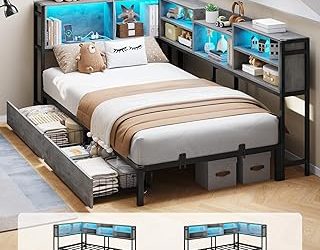
Softa Mikor quietly improves on the formula by embedding USB-A and USB-C ports directly into the headboard’s storage shelf, eliminating the need for dangling cables across your nightstand. The rubberwood construction feels dense and solid underfoot, and the no-tool setup genuinely takes under 20 minutes. If bedside charging matters to you, this is the one to shortlist.
Thor Premium Solid Wood Bed Frame (King, Walnut)
The Thor Premium in walnut brings a warmth that lighter rubberwood frames simply cannot match. Wood slat support keeps the mattress breathable without a box spring, and the platform sits low enough to channel that grounded, wabi-sabi sensibility. Assembly is straightforward despite the king-size footprint, and the walnut finish deepens beautifully over months of natural light exposure.
Rattan Headboard Platform Bed with Storage Drawers
This frame stands apart visually: natural rattan caning on the headboard introduces a textural layer that softens the room instantly. Four wooden storage drawers slide out from the light-oak base on metal runners, giving you real organizational space without sacrificing the airy look. The bamboo-and-metal hybrid construction is lighter than full hardwood alternatives, which makes repositioning during a room refresh far less painful.
LIFEMENT Classic Wood Platform Bed Frame (King, Cherry)
LIFEMENT targets the essentials and nails them. The cherry-finished platform is noise-free from night one — no mattress-shifting, no rail squeak — and the generous under-bed clearance accommodates storage bins for seasonal bedding. It is not trying to be a tech hub or a design statement; it is a reliable, good-looking frame that disappears into a well-curated bedroom exactly the way the best Japanese-inspired furniture should.
Frequently Asked Questions
Do Japanese joinery bed frames really need no tools?
Several models in this roundup — including the FLEXISPOT Hako G2 and Softa Mikor — use interlocking joint systems that assemble entirely by hand. Others, like the Thor Premium, require minimal hardware but remain straightforward. Always check the product listing for confirmation before purchasing.
Can I use a Japanese joinery frame without a box spring?
Yes. Every frame reviewed here is designed as a complete platform with wood slat support, meaning the mattress sits directly on the slats. A box spring is unnecessary and will actually raise the sleeping surface above the intended profile.
How much weight can these frames hold?
The FLEXISPOT and Softa Mikor both list 1,500 lbs capacity on queen sizes. The king versions from Thor and LIFEMENT support comparable loads. Always verify the specific size you are ordering, as capacity can differ between queen and king configurations.
Is Japanese joinery more durable than standard metal-frame beds?
Properly constructed wooden joinery distributes stress across interlocking surfaces rather than concentrating it at a few bolt points. Over years of use, this means fewer loose connections and less creaking. The tradeoff is weight — solid wood frames are heavier to move, but they stay planted once positioned.
Final Thoughts
For most shoppers, the FLEXISPOT Hako G2 delivers the best balance of authentic joinery, storage, and worry-free assembly. If bedside charging is non-negotiable, the Softa Mikor edges ahead with its integrated ports. And for anyone prioritizing a rich, warm wood tone that elevates the entire bedroom, the Thor Premium in walnut is the pick that looks twice its price tag. Any of these three will anchor a calm, considered bedroom for years to come.