Key takeaways
- Footprint: Measure the intended area and leave clearance around the gazebo for doors, pathways, furniture, and anchoring. A listed size describes the overall structure, not always the open seating area.
- Roof construction: Soft tops are lighter and often easier to replace, while hardtops offer a more permanent look and stronger protection from sun and rain. Double roofs can also improve airflow.
- Weather performance: Look for sturdy frames, secure anchoring points, water-resistant materials, and UV protection. No gazebo should be treated as storm-proof without following the manufacturer’s wind guidance.
- Comfort features: Mesh sides help keep insects out, curtains add privacy, and vented roofs reduce trapped heat. Built-in lighting and speakers are useful extras for evening hosting, but they should not outweigh structural quality.
- Style and upkeep: Choose a finish that complements your outdoor furniture. Wood brings warmth and character, metal feels crisp and architectural, and neutral fabric blends easily with changing cushions and accessories.
What's inside
Choosing a backyard gazebo sounds simple until you compare pop-up canopies, hardtop shelters, cedar structures, and feature-packed models with lights or speakers. The wrong pick can feel cramped, difficult to assemble, vulnerable to wind, or visually out of step with the furniture and planting around it.
This guide focuses on the details that matter in real outdoor living: usable shade, weather protection, ventilation, privacy, setup, and design presence. Whether you want a flexible canopy for weekend entertaining or a more permanent garden-room feel, these recommendations make it easier to match the gazebo to your space and decorating style.
As an Amazon Associate we earn from qualifying purchases.


🛒 Best Price Today on Amazon
Prime members get fast, free shipping on everything above, plus member-only deals. New members get a 30-day free trial — cancel anytime.
How to Choose a Gazebo For Backyard (2026)
- Footprint: Measure the intended area and leave clearance around the gazebo for doors, pathways, furniture, and anchoring. A listed size describes the overall structure, not always the open seating area.
- Roof construction: Soft tops are lighter and often easier to replace, while hardtops offer a more permanent look and stronger protection from sun and rain. Double roofs can also improve airflow.
- Weather performance: Look for sturdy frames, secure anchoring points, water-resistant materials, and UV protection. No gazebo should be treated as storm-proof without following the manufacturer’s wind guidance.
- Comfort features: Mesh sides help keep insects out, curtains add privacy, and vented roofs reduce trapped heat. Built-in lighting and speakers are useful extras for evening hosting, but they should not outweigh structural quality.
- Style and upkeep: Choose a finish that complements your outdoor furniture. Wood brings warmth and character, metal feels crisp and architectural, and neutral fabric blends easily with changing cushions and accessories.
The Best Gazebo For Backyard (2026)s Reviewed
CROWN SHADES 13×13 Pop Up Gazebo
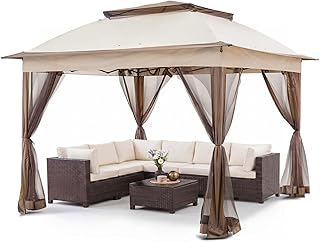
This spacious beige-and-coffee pop-up gazebo is a practical choice for homeowners who want generous shade without committing to a permanent structure. Its wheeled STO-N-Go cover bag makes transport and storage considerably more manageable, while the neutral palette works well with teak, wicker, or contemporary patio furniture.
Patio Gazebo 11’x13′ with LED Lights & Bluetooth Speaker
Designed for entertaining, this soft-top gazebo combines a metal frame with LED lights, a Bluetooth speaker, netting, curtains, and a double-roof design. It has a lively, resort-inspired feel, making it particularly appealing for dining areas and evening gatherings where ambiance matters as much as shelter.
Modern Shade Wood Gazebo 12×16
For a backyard that calls for a more built-in architectural feature, this cedar gazebo offers an attractive step up from temporary canopies. The double galvanized steel roof adds visual polish and durability, while mosquito-net rods and sturdy hooks make it easier to create a comfortable, layered outdoor room.
Aoxun 12’x16′ Outdoor Gazebo
The Aoxun pairs a brown hardtop metal frame with a double polycarbonate roof, giving it a clean, substantial presence suited to larger patios and garden seating zones. Mosquito netting and privacy curtains let you shift from open-air lounging to a more enclosed setting as the weather or occasion changes.
COOS BAY 11×11 Pop Up Gazebo
This compact pop-up model is a smart fit for smaller patios, decks, and flexible seating arrangements. With mesh netting, water-resistant shelter, and UPF 50+ UV protection, it concentrates on the essentials while providing 121 square feet of coverage for a bistro table, chairs, or a compact conversation set.
Frequently Asked Questions
What size gazebo is best for a backyard?
That depends on both the available footprint and how you plan to use it. An 11×11 or similar model suits a small dining or lounge arrangement, while 12×16 and larger gazebos are better for sectional seating, dining tables, or entertaining groups.
Are pop-up gazebos suitable for permanent use?
Pop-up gazebos are convenient, portable, and often less expensive, but they generally need more careful anchoring and seasonal storage than hardtop models. They are best for flexible use unless the manufacturer specifically supports extended installation.
Is a hardtop gazebo better than a soft-top gazebo?
Neither is universally better. Hardtops typically offer a more permanent appearance and stronger long-term weather protection, while soft-tops are lighter, easier to install, and often simpler to replace or move.
How can I keep a gazebo comfortable in summer?
Choose a vented or double-roof design, use mesh panels for airflow, and position the gazebo to take advantage of prevailing breezes. Light-colored upholstery, outdoor curtains, and a ceiling fan rated for exterior use can further improve comfort.
Final Thoughts
For easy seasonal flexibility, the CROWN SHADES 13×13 Pop Up Gazebo is a strong all-around choice, while the COOS BAY 11×11 works well in tighter spaces. If you want a more permanent focal point, the Modern Shade Wood Gazebo 12×16 brings the most design character, and the Aoxun 12’x16′ is a compelling hardtop option for privacy and year-round backyard presence.