Key takeaways
- Choose the right diameter: Oversized rooms generally benefit from blades measuring 65 to 96 inches, while very large open spaces may call for a 120-inch HVLS model. The goal is broad, gentle circulation rather than a concentrated blast.
- Check downrod compatibility: A high ceiling usually needs a longer downrod so the blades sit at an effective height. Look for included or compatible extension options, and confirm the manufacturer’s recommended clearance.
- Prioritize motor quality: Quiet DC and PMSM motors typically offer smooth operation, multiple speeds, efficient performance, and convenient reverse settings for seasonal air circulation.
- Match the room’s style: A dual-finish blade can bridge modern and traditional interiors, while aluminum blades suit industrial spaces. Consider the fan from floor level, where its scale and silhouette will be especially visible.
- Consider lighting and location: Integrated dimmable LEDs are useful in living spaces, but fans without lights may be preferable where architectural lighting already does the work. For patios, verify that the fan is rated for covered outdoor or damp locations.
What's inside
High ceilings can make a room feel impressively open, but they also create a practical cooling problem: warm air gathers overhead while standard fans struggle to circulate air effectively from a distance. The wrong size can look underscaled, spin inefficiently, or leave the seating area feeling noticeably still.
This guide compares standout large ceiling fans for lofts, great rooms, covered patios, garages, gyms, barns, and commercial spaces. I’m focusing on visual proportion, airflow, motor design, lighting, controls, mounting flexibility, and the details that matter when a fan becomes a major part of the room’s architecture.
As an Amazon Associate we earn from qualifying purchases.


🛒 Best Price Today on Amazon
Prime members get fast, free shipping on everything above, plus member-only deals. New members get a 30-day free trial — cancel anytime.
How to Choose a Ceiling Fan For High Ceilings (2026)
- Choose the right diameter: Oversized rooms generally benefit from blades measuring 65 to 96 inches, while very large open spaces may call for a 120-inch HVLS model. The goal is broad, gentle circulation rather than a concentrated blast.
- Check downrod compatibility: A high ceiling usually needs a longer downrod so the blades sit at an effective height. Look for included or compatible extension options, and confirm the manufacturer’s recommended clearance.
- Prioritize motor quality: Quiet DC and PMSM motors typically offer smooth operation, multiple speeds, efficient performance, and convenient reverse settings for seasonal air circulation.
- Match the room’s style: A dual-finish blade can bridge modern and traditional interiors, while aluminum blades suit industrial spaces. Consider the fan from floor level, where its scale and silhouette will be especially visible.
- Consider lighting and location: Integrated dimmable LEDs are useful in living spaces, but fans without lights may be preferable where architectural lighting already does the work. For patios, verify that the fan is rated for covered outdoor or damp locations.
The Best Ceiling Fan For High Ceilings (2026)s Reviewed
65-Inch Farmhouse Ceiling Fan with Light
This 65-inch model is a strong choice for a large living room that needs both airflow and a decorative focal point. Its textured glass shade, dual-finish blades, six-speed reversible DC motor, remote, and included 6- and 12-inch downrods give it appealing flexibility, while the E26 base makes the light component especially adaptable.
AA-Orion 120-Inch HVLS Industrial Fan
For a barn, gym, warehouse, or expansive workshop, the AA-Orion’s 120-inch span is built for serious air movement. Its PMSM motor, 28,000 CFM rating, six speeds, reversible operation, and remote control make it a practical high-volume option, though its industrial appearance is best embraced as part of the room’s architecture.
96-Inch Industrial Aluminum-Blade Fan
This 96-inch fan offers a clean, utilitarian solution for garages, porches, shops, and high-ceilinged recreation spaces. Eight reversible aluminum blades and six remote-controlled speeds emphasize broad circulation, and the absence of a light keeps the profile focused for rooms that already have a strong lighting plan.
TCL 72-Inch White Large Ceiling Fan
The TCL combines generous proportions with a lighter, more contemporary look that can sit comfortably in a bright living room or covered patio. Its integrated dimmable LED, three color-temperature settings, quiet operation, reversible dual-side blades, and remote make it one of the more versatile options for style-conscious spaces.
ZMISHIBO 72-Inch Ceiling Fan with Light
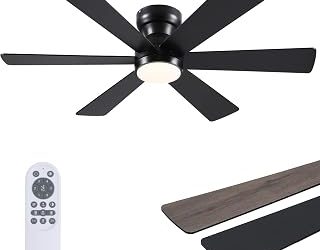
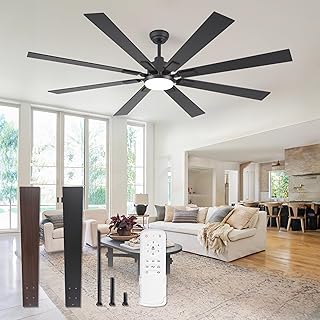
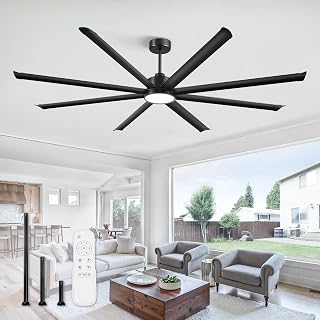
With a black finish, dual-sided blades, powerful airflow, and a quiet DC motor, this ZMISHIBO model brings a confident modern-industrial presence to large interiors. Its 24W three-color-temperature LED, six speeds, remote, and damp rating make it particularly appealing for living rooms, covered outdoor areas, and gazebos.
Frequently Asked Questions
What size ceiling fan is best for a high ceiling?
Ceiling height alone does not determine fan diameter; room area and layout matter just as much. In broad rooms, a fan around 65 to 96 inches often provides better visual balance and circulation than a standard 52-inch model, while 120-inch fans are intended for especially large open areas.
How far should a ceiling fan hang from a high ceiling?
The blades should hang low enough to circulate air effectively without compromising safety or sightlines. A longer downrod is usually needed for a tall ceiling, but the exact length depends on ceiling height, blade clearance, and the manufacturer’s mounting guidance.
Are large ceiling fans noisy?
Not necessarily. Blade balance, motor construction, installation quality, and speed all affect noise. Quiet DC and PMSM motors are generally attractive for living spaces, but an improperly secured mount can create vibration even with a well-designed fan.
Can these fans be used outdoors?
Some can, particularly models identified as damp rated and intended for covered patios, gazebos, or similar protected locations. They should not be installed in exposed areas unless the manufacturer specifically approves that use; always follow the product’s location and wiring requirements.
Final Thoughts
For a polished living-room centerpiece, the 65-inch farmhouse fan is a versatile pick; the TCL 72-inch suits a brighter contemporary scheme, while the AA-Orion 120-inch is the standout for genuinely expansive commercial or barn-like spaces. Whichever direction you choose, prioritize proportional scale, proper mounting height, and airflow suited to the room rather than selecting by diameter alone.