Key takeaways
- Blade length: Match the exact length specified by your saw, allowing for the manufacturer’s acceptable tolerance. A blade that is even slightly too long or short may not tension correctly.
- Width and thickness: Wider blades track more steadily for straight resawing, while narrower blades make tighter curves. Thickness should suit the wheel size and tensioning capacity of your machine.
- Tooth count: Higher TPI generally produces smoother cuts in thinner stock. Lower TPI clears chips more effectively in thick material and is usually better for fast rough cuts.
- Tooth pattern: Regular, raker, and wavy sets distribute teeth differently across the cut. Variable-pitch blades can reduce vibration and are useful when working with changing material thicknesses.
- Blade material: Bimetal blades combine a tough backing with wear-resistant teeth. They cost more than basic carbon-steel blades but typically last longer and handle demanding workshop use better.
What's inside
Choosing a band saw blade can feel surprisingly complicated. Tooth count, blade width, thickness, set, rake, length, and material all affect how cleanly and safely a saw cuts. A blade that performs beautifully on a stationary woodworking saw may be completely unsuitable for a compact portable model, while the wrong tooth pattern can leave rough edges, vibrate, or wear out quickly.
This guide focuses on practical buying decisions for furniture makers, DIY renovators, and workshop owners who want dependable results without turning blade selection into a research project. We compare versatile bimetal blades, portable replacement packs, and heavy-duty options, with attention to furniture-friendly cuts, machine compatibility, durability, and value.
As an Amazon Associate we earn from qualifying purchases.


How to Choose a/an Band Saw Blades (2026)
- Blade length: Match the exact length specified by your saw, allowing for the manufacturer’s acceptable tolerance. A blade that is even slightly too long or short may not tension correctly.
- Width and thickness: Wider blades track more steadily for straight resawing, while narrower blades make tighter curves. Thickness should suit the wheel size and tensioning capacity of your machine.
- Tooth count: Higher TPI generally produces smoother cuts in thinner stock. Lower TPI clears chips more effectively in thick material and is usually better for fast rough cuts.
- Tooth pattern: Regular, raker, and wavy sets distribute teeth differently across the cut. Variable-pitch blades can reduce vibration and are useful when working with changing material thicknesses.
- Blade material: Bimetal blades combine a tough backing with wear-resistant teeth. They cost more than basic carbon-steel blades but typically last longer and handle demanding workshop use better.
The Best Band Saw Blades (2026)s Reviewed
Lenox Classic Tuff Tooth 93-Inch Blade
The Lenox Classic Tuff Tooth is a robust bimetal choice for compatible 93-inch stationary saws. Its 3/4-inch width, positive rake, and 18 TPI wavy-set tooth design make it especially appealing for controlled cuts where a clean, refined edge matters, including furniture components and detailed joinery stock. Confirm your saw’s wheel and guide specifications before choosing this relatively substantial blade.
FOXBC 44-7/8-Inch Portable Bandsaw Blades
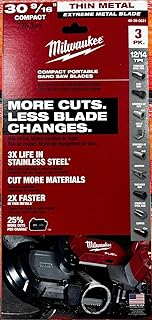
This five-pack is a practical pick for owners of compatible portable band saws, including models that use the Milwaukee 48-39-0511 or DeWalt DW3982 blade size. The 14 TPI configuration offers a useful middle ground for general metal cutting and workshop repairs, while the multipack keeps a fresh blade close at hand for mobile projects.
Lenox Classic Pro Vari-Raker 111.25-Inch Blade
For larger stationary machines, the Lenox Classic Pro Vari-Raker provides a versatile 5-8 TPI range that suits thicker material and varied cutting duties. Its 1-inch width supports stable, straighter tracking, making it a strong candidate for substantial stock preparation, rough furniture parts, and resawing tasks where control is more important than tight curves.
Lenox Diemaster 2 93-Inch Blade
The Lenox Diemaster 2 combines a narrower 3/8-inch profile with a 14-18 TPI variable tooth arrangement. That balance makes it a flexible option for smaller curves, general-purpose cutting, and projects where you want smoother results without committing to a very wide blade. Its bimetal construction is well suited to regular workshop use.
LENOX Tools Portable Band Saw Blades, 5-Pack
These 44-7/8-inch LENOX portable blades use the same common 1/2-inch by .020-inch format and 14 TPI pitch found on many compact saws. They are a sensible replacement set for furniture installers, remodelers, and makers who value portability, provided the dimensions and mounting style match their specific machine.
Frequently Asked Questions
What blade is best for cutting furniture parts?
For furniture work, the best choice depends on the material thickness and cut shape. A medium-to-high TPI blade is generally preferable for thinner boards and cleaner edges, while a wider, lower-TPI blade is better for straight cuts through thick stock or resawing.
Are bimetal band saw blades worth the extra cost?
Often, yes. Bimetal blades usually resist tooth wear and tolerate demanding cutting better than basic blades. They are particularly worthwhile for frequent use, mixed materials, or situations where changing blades repeatedly would interrupt your workflow.
Can I use a metal-cutting blade on wood?
A metal-cutting blade may physically fit some machines, but it is not automatically the best woodworking choice. Its tooth geometry and pitch can cut slowly, clog with chips, or produce an unsuitable finish, so use a blade designed for the material whenever possible.
How do I know when a band saw blade needs replacing?
Replace the blade when cuts begin drifting, vibration increases, feed pressure rises, or the teeth look rounded, chipped, or uneven. Dull blades can also overheat the workpiece and place unnecessary strain on the saw, even if they still appear intact.
Final Thoughts
The Lenox Classic Tuff Tooth is an excellent premium option for compatible 93-inch stationary saws, while the Lenox Classic Pro Vari-Raker stands out for thicker stock and stable straight cuts. For portable machines, the FOXBC five-pack offers convenient everyday coverage, with LENOX’s portable five-pack providing another dependable match when its dimensions fit your saw.