Our Top Picks
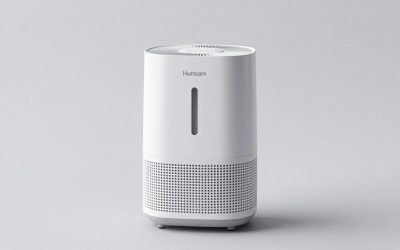
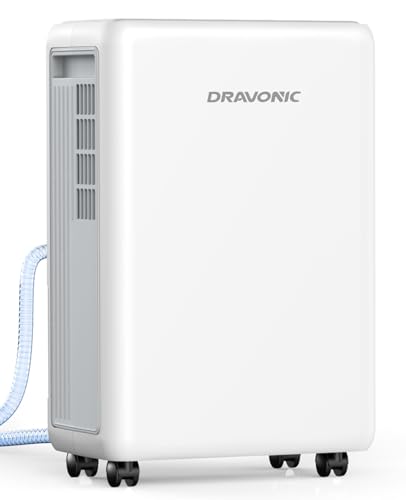 Dravonic 30 Pints Dehumidifier for Basement up to2000 Sq.Ft15 x 5 x 10 Inches18 poundsCheck on Amazon
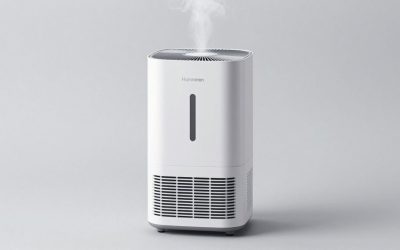
 Waykar 34 Pints 2025 Most Efficient Energy StarDrain Hose10.87 x 8.39 x 19.3 inches22.05 PoundsCheck on Amazon
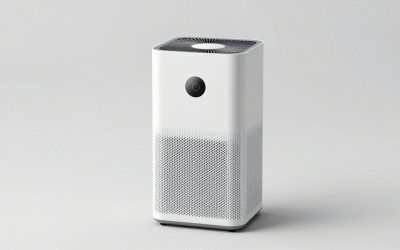
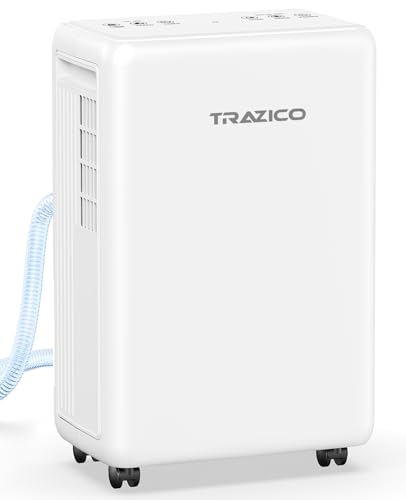 Trazico 30 Pint Dehumidifier for Basement with Drain2000 Sq.ft10.01 x 6.3 x 15.01 inchesCheck on Amazon
Thirty pints a day is 3.75 gallons of water, and a 30-pint dehumidifier only reaches that number when the air is warm and soaking wet. Real basements are cooler and drier than the lab, so what you actually get is a fraction of the label figure, spread across a house that keeps adding moisture. That gap between the printed number and the daily result is the reason this guide spends time on arithmetic before it gets to products. Below are eight 30-pint class models drawn from retailer listings, compared on what their titles state: pint claim, square-footage claim, tank size, drain hose and controls. For a damp 1,000 to 1,500 square foot basement, the Waykar 34-pint model is the strongest on paper because of its larger tank and its stated Energy Star designation, while the Shinco and Uhome units are the budget routes. Everything about performance here is an estimate built from published specifications, not a result from a lab or a living room.
What a 30-pint label really promises
Dravonic 30 Pints Dehumidifier for Basement up to 2,000 Sq.Ft with Hose | 0.5 Gal Tank, 3.3ft Continuous Drain Hose, 40dB Quiet Sound, 3 Modes, Auto Defrost, Real-Time Humidity Display, 360 Casters
One of the moisture-control product options compared in this guide.
View on AmazonWaykar 34 Pints 2025 Most Efficient Energy Star Dehumidifier for Home & Basement, Ideal for Spaces up to 2,000 Sq. Ft. with Auto or Manual Drainage, 0.62-Gallon Water Tank
One of the moisture-control product options compared in this guide.
View on AmazonTrazico 30 Pint Dehumidifier for Basement with Drain Hose Up to 2000 Sq.ft | Quiet Dehumidifiers for Home Large Room Bedroom Bathroom RV, Smart Humidity Control, 24H Timer, Auto Defrost, 3 Modes
One of the moisture-control product options compared in this guide.
View on Amazon
SEMKAP 2500 Sq.Ft Max 32 Pints Dehumidifier for Basement with Drain Hose | Dehumidifiers for Home, Large Room, Bathroom, Bedroom, Quiet With Smart Compressor, Intelligent Humidity Control, 24HR Timer
One of the moisture-control product options compared in this guide.
View on Amazon
Uhome 30 Pint Dehumidifier - for Basement with Activated Carbon Filter,Ultra Quiet, Humidity Sensor, Auto Shut Off, Continuous Drainage Hose - Ideal Dehumidifiers for Home, 1500 Sq Ft Dehumidifiers
One of the moisture-control product options compared in this guide.
View on Amazon
Dehumidifiers for Home, 30 Pint Dehumidifier for Basement with Drain Hose | Humidity Control, Sleep Mode, Auto-defrost/shut-off, Continuous Drain, 24H Timer, Ideal for Bathroom, Bedroom & Living Room
One of the moisture-control product options compared in this guide.
View on Amazon
KNKA 2500 Ft² Max 34 Pints Dehumidifier for Basement with Drain Hose, White | Dehumidifiers for Home, Bedroom, Bathroom, Large Room, Three Modes, Intelligent Humidity Control, Dry Clothes, 24HR Timer
One of the moisture-control product options compared in this guide.
View on Amazon
Shinco 30 Pints Dehumidifier for Home and Basements, 1500 Sq.Ft Dehumidifiers with Drain Hose, Auto or Manual Drainage, Auto Defrost, Quietly Remove Moisture, Activated Carbon Filter, 24HR Timer
One of the moisture-control product options compared in this guide.
View on AmazonThe pint figure on a dehumidifier box is a capacity rating: the most water the machine is expected to condense out of the air in 24 hours while sitting in a controlled chamber. Two details change how you should read it. First, the test conditions. The Association of Home Appliance Manufacturers (AHAM) defines the chamber test, and for many years the standard condition was 80 degrees Fahrenheit and 60 percent relative humidity. Since the federal test procedure changed, units sold as certified for the US market are rated at 65 degrees and 60 percent. Colder air holds less water, so the same compressor and coil earn a smaller number at 65 degrees. Many units once sold as 50 pints are now labeled around 35 pints with no change in how well they dry a basement.
That matters for shopping because the listings below do not state which condition their pint claims follow. A 30-pint figure at 65 degrees describes a stronger machine than a 30-pint figure at 80 degrees. Some marketplace listings also quote a “maximum” figure at a very warm, very humid condition, which looks impressive and says little about a 62-degree basement in April. When a title does not name the test condition, the sensible assumption is the generous one, and the sensible response is to size with a margin.
Second, the pint figure is a ceiling, not a typical day. Your unit only reaches it when the room is at or above the rated temperature and humidity. As moisture drops toward your target, say 50 percent, the air carries less water per hour through the coil, and daily extraction falls well under the label. If a unit holds 40 percent of its maximum output near the end of a drying cycle, a 30-pint machine is really removing the equivalent of 12 pints during that stretch. That is perfectly normal and still adequate; the aim is to remove the moisture that enters, not to hit the printed number.
It helps to translate pints into tank time. A US gallon is 8 pints, so a half-gallon tank holds 4 pints and a 0.62-gallon tank holds about 5 pints. At the full labeled output, a 30-pint unit produces 1.25 pints an hour, which would fill a 4-pint tank in about 3.2 hours. At a more realistic 40 percent output, the same tank takes roughly 8 hours. Those are estimates from simple division, but they explain why every model in this list advertises a continuous drain hose and why a unit that relies on its tank can shut off in the middle of the night.
| Tank size | Holds (pints) | Hours to fill at full 30-pint output (estimate) | Hours to fill at 40 percent output (estimate) |
|---|---|---|---|
| 0.5 gallon | 4 | about 3.2 | about 8 |
| 0.62 gallon | 5 | about 4 (about 3.5 at a 34-pint claim) | about 10 |
| 1 gallon | 8 | about 6.4 | about 16 |
Sizing worked example: a 1,100 square foot basement
Suppose a basement measures 1,100 square feet with an 8-foot ceiling, a musty smell in summer, no standing water and a laundry corner where the dryer vents outdoors. Start by labeling the dampness honestly. Musty smell without visible wetness is “very damp” on the scale below. This scale is an editorial rule of thumb built from the way many manufacturer sizing charts are organized, not an industry standard, and it assumes pint figures on the older, warmer test condition.
| Condition | Rule of thumb (pints per square foot) | Area one 30-pint unit might cover (estimate) |
|---|---|---|
| Damp: occasional clamminess after rain | 1 pint per 60 sq ft | about 1,800 sq ft |
| Very damp: musty smell, always cool and sticky | 1 pint per 45 sq ft | about 1,350 sq ft |
| Wet: damp spots on walls or floor in humid weather | 1 pint per 35 sq ft | about 1,050 sq ft |
| Extremely wet: standing water, seepage, recent flooding | 1 pint per 25 sq ft | about 750 sq ft |
For the 1,100 square foot example, “very damp” at 1 pint per 45 square feet calls for about 24 pints, so a 30-pint unit leaves roughly 25 percent of headroom. If the same basement has damp patches on the walls, the “wet” row calls for about 31 pints, which means a 30-pint unit is right at the limit and a stronger unit makes sense. When your calculation lands above about 35 pints, move up to the next capacity class, which we cover in our guide to the best 50 pint dehumidifier options.
Now the running cost, using stated assumptions. Take an average draw of 350 watts while the compressor is on, which is a plausible figure for this capacity class but is not stated in any of the listings below. Take an electricity rate of 16 cents per kilowatt-hour and a 30-day month. If the compressor runs 10 hours a day, that is 3.5 kilowatt-hours daily, 105 a month, and about 17 dollars. At 6 hours a day, the cost is about 10 dollars; at 16 hours it is about 27 dollars. A drying phase after a wet spell costs more than a maintenance phase, and a unit with an Energy Star designation should land lower for the same water removed, though the saving is something to verify, not assume.
The last sizing variable is air movement. A dehumidifier dries the air that passes through it, so a 1,100 square foot basement split into three closed rooms behaves like three small spaces. Keep interior doors open, or plan for one unit per zone, and leave a few inches of clearance around the intake and exhaust. We explain placement in more detail in our guide to the best places to place a dehumidifier.
The shortlist, side by side
The table lists only what each product title states. “Price tier” is a band based on the listed price when this page was drafted: Budget is under 100 dollars, Mid-range is 100 to 200 dollars, and Premium is above 200. Prices change often, so confirm the current figure on the listing.
| Model | Key specs from the title | Price tier | Best for |
|---|---|---|---|
| Dravonic 30 Pints | 30 pints, up to 2,000 sq ft, 0.5 gal tank, 3.3 ft drain hose, 40 dB, auto defrost, casters | Mid-range | Wheeling between basement zones |
| Waykar 34 Pints | 34 pints, Energy Star claim, up to 2,000 sq ft, auto or manual drain, 0.62 gal tank | Mid-range | Long-run efficiency and the largest tank |
| Trazico 30 Pint | 30 pints, up to 2,000 sq ft, drain hose, smart humidity control, 24-hour timer, auto defrost | Mid-range | Flexible rooms from basement to bathroom |
| SEMKAP 32 Pints | 32 pints, 2,500 sq ft claim, drain hose, smart compressor, 24-hour timer | Mid-range | Larger open basements |
| Uhome 30 Pint | 30 pints, 1,500 sq ft, activated carbon filter, humidity sensor, auto shut-off, drain hose | Budget | Musty-smell basements on a tight budget |
| JOYSAILOR 30 Pint | 30 pints, sleep mode, auto-defrost and shut-off, continuous drain, 24-hour timer | Mid-range | Living areas and bedrooms near the basement |
| KNKA 34 Pints | 34 pints, 2,500 sq ft claim, drain hose, three modes, dry-clothes use, 24-hour timer | Mid-range | Laundry-heavy basements |
| Shinco 30 Pints | 30 pints, 1,500 sq ft, auto or manual drain, auto defrost, carbon filter, 24-hour timer | Budget | First-time buyers who want the lowest entry cost |
The eight models, one at a time
Each profile below states only what the product title says. Anything the title leaves out, such as wattage, noise at the high setting, refrigerant, warranty or exact dimensions, is a question for the listing page and the manufacturer manual. Performance statements are labeled estimates.
Dravonic 30 Pints for Basements, with 3.3 ft Drain Hose
The Dravonic title packs in the most concrete detail of the group: 30 pints a day, coverage up to 2,000 square feet, a 0.5-gallon tank, a 3.3-foot continuous drain hose, a stated 40 dB sound level, three modes, auto defrost, a real-time humidity display and 360-degree casters. The casters are the underrated feature. A compressor dehumidifier of this class is a heavy appliance (check the listing for the exact weight) that you will move from laundry corner to storage room more than you expect, and wheels keep that from becoming a chore.
The 3.3-foot hose is short, and that is the detail to plan around. It reaches a floor drain or utility sink only if the unit sits within a few feet of it and above its level, so measure before you buy; a hose extension or a condensate pump is a separate purchase. The 0.5-gallon tank holds 4 pints, which at the full labeled output is about 3.2 hours of work (an estimate), so this is a hose-first machine. The 40 dB figure is a manufacturer claim whose measuring distance the title does not state, so expect real-world noise to be somewhat higher in a hard-surfaced basement.
Pros
- Casters and a visible humidity readout make it easy to move and to confirm a 45 to 55 percent target
- A real-time display lets you spot a failing target without buying a separate hygrometer
- Auto defrost is stated, which matters in a cool basement
Cons
- The 3.3 ft hose limits how far the unit can sit from a drain
- The 0.5 gal tank fills quickly if you cannot use the hose
- Wattage and the pint test condition are not given in the title
Who it’s for: households with a basement floor drain or sink within a few feet of where the unit will sit, and a need to move it between zones.
Waykar 34 Pints Energy Star Model with 0.62 Gallon Tank
Waykar raises the capacity claim to 34 pints, states an Energy Star designation, claims coverage up to 2,000 square feet and offers either automatic or manual drainage. Its tank is 0.62 gallons, the biggest in this list, at roughly 5 pints. Dividing that by a 34-pint daily output gives about 1.4 pints an hour at the maximum, so the tank would be full in around 3.5 hours at best conditions and roughly 9 hours at 40 percent output (both estimates).
The Energy Star mention is worth a closer look, because it is the one claim in this guide that can be checked externally. The program publishes a product finder listing certified models and their capacity and efficiency figures, so verify the exact model before treating the claim as settled. A certified unit generally removes more water per kilowatt-hour than a standard one, which lowers the running cost over a season. Using our earlier assumptions of 350 watts and 10 hours a day, a standard unit costs about 17 dollars a month; a more efficient model might trim that by a few dollars, but we cannot state a figure for this one.
The title does not mention a humidity display, a timer or casters, so check the listing for those. The 34-pint number is also the most likely to follow one of the generous test conditions discussed earlier, so size it as a 30-pint unit with extra margin rather than as a step toward 50 pints.
Pros
- Largest tank in the group at 0.62 gallons
- Energy Star claim that can be verified in the program’s product finder
- Auto or manual drainage gives flexibility in a finished space
Cons
- Highest listed price in the group, though still within the Mid-range tier
- Controls, noise level and hose length are not stated in the title
- The 34-pint claim does not name its test condition
Who it’s for: buyers who expect to run the unit for many hours each month and want to confirm an efficiency credential before paying a bit more.
Trazico 30 Pint for Basements, Bedrooms and Bathrooms
The Trazico title reads like a versatility pitch: a 30-pint unit for basements up to 2,000 square feet that also mentions large rooms, bedrooms, bathrooms and RVs. The listed features are a drain hose, smart humidity control, a 24-hour timer, auto defrost and three modes. The wide range of suggested rooms is a marketing statement. A machine sized for 2,000 square feet in a bathroom will cycle on and off quickly because the small room reaches its target in minutes, which can be fine, but it is not a reason to expect a quiet night in a bedroom.
The 24-hour timer deserves attention for a practical reason: running a dehumidifier only during the hours you need it can cut a month’s electricity use. Assuming 350 watts, a timer schedule that limits compressor time to 6 hours a day lands near 10 dollars a month at 16 cents per kilowatt-hour, against about 17 dollars at 10 hours (estimates under stated assumptions). Smart humidity control, as the title phrases it, suggests the unit holds a target percentage by cycling, but the title does not state the adjustment range or the accuracy of the sensor, so look for that on the listing.
The title does not state the tank size, and that is a notable omission for a model that also promises RV use. If you plan to use it without a hose, find the tank capacity before purchase, because the hose-versus-tank choice drives how often you will visit the unit.
Pros
- Timer and humidity control support scheduled, lower-cost operation
- Drain hose and auto defrost are both stated
- Pitched at several room types, which helps if you will move it around
Cons
- Tank size, noise level and wattage are not given in the title
- The suggestion that it suits bedrooms and RVs should be treated as a claim to verify
- Sensor accuracy and adjustment range are not stated
Who it’s for: someone who wants one 30-pint unit that mainly lives in the basement but occasionally visits a bathroom or guest room.
SEMKAP 32 Pints with Smart Compressor and 2,500 Sq Ft Claim
SEMKAP lists 32 pints and the largest coverage claim in this list alongside KNKA: 2,500 square feet. Its title names a “smart compressor,” intelligent humidity control, a 24-hour timer and a drain hose, and it positions the unit for the basement, large rooms, bathrooms and bedrooms. The phrase “smart compressor” is a marketing term, and the title does not explain it. In the dehumidifier world it could point to variable-speed operation or simply to electronic control of a conventional compressor, so check the listing before assuming it lowers noise or power use.
The coverage claim deserves caution. Coverage figures of 2,000 to 2,500 square feet with only 30 to 34 pints of capacity imply a lightly damp, open space. Using the sizing rule of thumb above, 32 pints covers about 1,900 square feet when the space is merely damp and roughly 1,100 when walls feel wet. In other words, the 2,500 figure describes the ideal case, so a 2,500 square foot finished basement with partitions would be better served by two units or a stronger one.
What the title does give us is a clear set of controls and a hose. For most buyers, the hose matters more than any other feature after capacity, because it turns a daily chore into a once-a-season check on the drain path.
Pros
- High coverage claim for a 32-pint unit, useful in large, open basements
- Drain hose and a 24-hour timer are stated
- Intelligent humidity control for holding a target level
Cons
- “Smart compressor” is unexplained, so benefits are unconfirmed
- The 2,500 sq ft claim is an upper bound that assumes light dampness
- Tank size, noise and wattage are not stated in the title
Who it’s for: owners of larger, open-plan basements who want a drain-hose unit and are comfortable checking the compressor details on the listing.
Uhome 30 Pint with Activated Carbon Filter
Uhome is one of the two budget picks and the only one whose title stresses odor control with an activated carbon filter, alongside a humidity sensor, auto shut-off, a continuous drainage hose and a “ultra quiet” description. Coverage is stated as 1,500 square feet, which is the more conservative claim of the group, and one that fits a 30-pint machine better than 2,500 does.
The carbon filter is a detail with a trade-off. Activated carbon can reduce some musty odors passing through the unit, but it does not remove the source of those odors, which is moisture and the mold or mildew it feeds. It also is a consumable, so find out from the listing whether it is replaceable and what a replacement costs. A basement that smells sour needs the humidity brought to 50 percent or lower and the surfaces cleaned; the filter alone will not do that.
With 1,500 square feet as the stated coverage, the sizing table suggests this unit is best for a very damp space of about 1,300 square feet or a merely damp one up to about 1,800. If your basement is wet to the touch, step up. The title does not give a tank size, a noise figure in decibels or the pint test condition, so the “ultra quiet” wording is a claim to read against buyer reviews before you rely on it for a finished basement used as a bedroom.
Pros
- Lowest entry price band in the group, in the Budget tier
- Activated carbon filter is called out for odor
- Continuous drainage hose and auto shut-off are stated
Cons
- Coverage claim of 1,500 sq ft is smaller than most of the group
- No decibel figure, tank size or wattage in the title
- The carbon filter does not fix the moisture that causes the smell
Who it’s for: a budget-conscious owner with a smaller, musty but not flooded basement who wants a filter and a hose without paying mid-range prices.
JOYSAILOR 30 Pint with Sleep Mode and 24-Hour Timer
The JOYSAILOR listing is distinctive in an odd way: the title opens with generic text, “Dehumidifiers for Home, 30 Pint Dehumidifier for Basement with Drain Hose,” and the brand name appears in the listing data rather than at the front. Do not let that confuse you when comparing; this is the same 30-pint class as the others. The title states a drain hose, humidity control, a sleep mode, auto-defrost and auto shut-off, continuous drain and a 24-hour timer, and suggests bathroom, bedroom and living room placement.
Sleep mode is the feature to think about. In most dehumidifiers, a sleep or quiet setting lowers fan speed, which reduces noise and also reduces airflow, and so reduces extraction. The title does not say by how much either changes. For a bedroom that needs steady humidity of about 50 percent overnight, a reasonable approach is to run the unit at full power for a few hours before bedtime and then switch to sleep mode, which keeps the room near target without the loudest operation during sleep. This is a practical technique, not a result from any lab.
The title does not give a square-footage claim, which makes the sizing table more important here. Without a coverage statement, size it conservatively as a 30-pint unit for roughly 1,000 to 1,500 square feet of damp space. Note that “bedroom” and “living room” in the title imply a noise level that is tolerable, but the title does not give a decibel rating.
Pros
- Sleep mode and 24-hour timer support overnight or scheduled use
- Auto-defrost and auto shut-off are both stated
- Continuous drain with hose is included
Cons
- No coverage figure, tank size or decibel level in the title
- The brand does not appear at the start of the title, which makes it easy to confuse with similar listings
- Sleep mode likely trades some drying speed for quiet
Who it’s for: homes where the dehumidifier must live in or beside a bedroom or living space and run on a schedule.
KNKA 34 Pints with Three Modes and a Dry-Clothes Use
KNKA offers a 34-pint claim, a 2,500 square foot coverage figure, a drain hose, a white finish, three modes, intelligent humidity control and a 24-hour timer. Its distinctive line is “dry clothes,” which points to a laundry mode or at least a laundry use case. If your basement doubles as the place where you hang wet laundry, that use case deserves some arithmetic. A typical load of wet laundry holds on the order of a quart or more of water after spinning, about 2 pints, though the true figure varies a lot with fabric and spin speed. Four loads a week would add roughly 8 pints a week, or about 1 pint a day, to the air, which is a small fraction of a 34-pint unit’s capacity and an easy job (an estimate, with the assumptions given).
That arithmetic also shows why laundry drying is rarely the reason a dehumidifier is overwhelmed. A 34-pint unit will handle a drying rack comfortably, and the more important matter is airflow around the clothes. Put the rack in the same room as the unit, keep the door open, and give it a clear 12 inches or so from the intake.
With the same 2,500 square foot claim as SEMKAP, the same caution applies: this is a ceiling. The price band is Mid-range, and the title does not state tank size, wattage or noise. If you need a unit that holds a humidity target without supervision, the timer plus intelligent control is the combination to look for.
Pros
- Higher 34-pint claim with a drain hose and timer
- Laundry drying use is explicitly mentioned
- Three modes give some flexibility between drying phases and maintenance
Cons
- 2,500 sq ft is an upper-bound claim
- Tank size, wattage and noise are not stated in the title
- White casing shows dust and basement grime sooner than darker finishes
Who it’s for: basements that double as laundry rooms and need a capable unit that handles line-drying as well as general dampness.
Shinco 30 Pints with Auto or Manual Drainage
Shinco is the lowest-priced model with a hose in this group apart from Uhome, and its title is generous with features: 30 pints, 1,500 square feet, a drain hose, auto or manual drainage, auto defrost, “quietly remove moisture,” an activated carbon filter and a 24-hour timer. It covers much of what the other two budget-minded options do, which is why it makes a sensible first purchase.
The “auto or manual drainage” wording means you can use the hose for continuous operation or empty the tank by hand when no drain is nearby. That flexibility pays off in a house where the dehumidifier moves with the seasons: the basement hose in summer, a tank-only role in a closet or a guest room in spring. The title does not state the tank size, so look at the listing to see how often a manual empty would be needed.
Auto defrost is stated and matters if your basement drops below about 65 degrees in the shoulder seasons, when a compressor unit’s coil can frost over; a defrost feature handles that by pausing the compressor until the coil clears. The 1,500 square foot claim is a realistic one for a 30-pint unit and consistent with the Uhome figure, so size it using the “very damp” row of the table above, which suggests about 1,350 square feet. A unit at this price offers the least margin for error, so avoid pushing it to the edge of its claim.
Pros
- One of the two Budget-tier options
- Auto or manual drainage covers both hose and tank use
- Carbon filter, auto defrost and a 24-hour timer are all stated
Cons
- Coverage claim is only 1,500 sq ft
- Tank size, wattage and sound level are not stated in the title
- No humidity display is mentioned in the title
Who it’s for: first-time dehumidifier buyers with a smaller, moderately damp basement who want the hose-or-tank flexibility at the lowest entry price.
How we picked these
This page was compiled by the Editorial team from published specifications, manufacturer documentation and buyer reviews. Nobody on the team used or measured these units. Every statement about a product is limited to what its listing title says, and every performance figure on the page is an estimate based on simple arithmetic with the assumptions spelled out beside it. We did not rank by a single score. Instead, we kept eight models in the 30 to 34 pint class and grouped them by the questions a buyer actually needs to answer: how big is the space, is there a drain nearby, will the unit run near where people sleep, and how much is the budget.
Three filters shaped the list. First, a stated drain hose or hose option, because at this capacity a hose changes daily life more than any other feature. Second, a stated defrost feature, because basements run cool. Third, a coverage claim that does not outrun the capacity. We did not exclude the 2,500 square foot claims, but we flagged them as ceilings. Prices are shown as tiers rather than numbers because they move often; confirm the current price, the seller and the return terms on the listing before you commit.
Drain, tank and placement choices that decide daily life
Once capacity is settled, the day-to-day experience comes down to three practical decisions. The first is the drain path. The best route is a gravity drain: the hose slopes continuously downhill from the unit to a floor drain, a utility sink or a standpipe, with no loops that can hold water. A short hose like the 3.3-foot one on the Dravonic means the unit must sit near the drain. If your drain is across the room, a condensate pump or a longer garden-style hose is worth the extra cost, and you should check the listing for the hose connection thread.
The second decision is the humidity target. Most guidance for homes points to 30 to 50 percent relative humidity, with 60 percent as a ceiling above which mold risk climbs. Setting a basement unit to 45 to 50 percent is a sensible starting point, because going lower wastes energy and may over-dry wood. Our guide to the best setting for a dehumidifier goes through how to adjust the target by season.
The third is placement. Keep the unit in the dampest open part of the space, with the intake and exhaust clear of walls and furniture, and keep interior doors open. In a two-story house, a basement unit does little for upstairs rooms, which have their own moisture sources; see our guide to the best place to put a dehumidifier in a two-story house for how to split capacity across floors.
A short pre-purchase checklist for any model here: measure the distance from the planned spot to the drain and compare it to the hose length; find the tank size on the listing; check the unit’s width and height against shelves or stairs; confirm the power cord length; and note whether the humidity display or timer is present. Ten minutes of measuring prevents most returns.
Five slip-ups that make a 30-pint unit underperform
Trusting the square-foot claim at face value. A 2,500 square foot claim from a 32 or 34 pint unit describes a lightly damp, open space. If your basement has partitions, a sump pit or visible dampness, size from the table earlier, not from the headline.
Skipping the hose. A half-gallon tank means a trip to the sink every few hours during the first wet days. Many people give up after a week and the unit sits full, switched off by its own shut-off float. Plan the drain before you plan the purchase.
Setting the target too low. Dropping the dial to 30 percent keeps the compressor running nearly all day, and past a certain point it only costs money. Start at 50 percent and adjust only if you still smell damp.
Putting the unit against a wall or in a corner. A dehumidifier needs room to breathe, usually several inches of clearance, and a corner cuts airflow through the room. Moving it to a more central spot often improves results more than buying a bigger model.
Ignoring the filter. A clogged air filter lowers airflow, which reduces extraction and can encourage frost on the coil. Rinsing or cleaning the filter every couple of weeks during heavy use is a small task that protects the machine. If your space is a warm, muggy upstairs room rather than a cool basement, a different class of appliance may fit better, and our roundup of air conditioner dehumidifier combos covers that route.
Verdict
For the widest practical margin, the Waykar 34-pint model is our top pick on paper because of its larger tank, its stated Energy Star designation and its flexible drainage, though we cannot confirm its efficiency beyond what the program publishes. The best low-cost pick is the Shinco 30-pint unit, which pairs a hose with auto defrost, a carbon filter and a timer at a Budget-tier price; the Uhome is a close alternative for musty basements. For larger open spaces, the SEMKAP and KNKA models state the highest coverage, but size them as ceilings. For a basement that sits close to a bedroom, the JOYSAILOR with its sleep mode is the most thought-through option. Whichever you pick, measure the drain distance first and confirm the tank size and wattage on the listing.
Frequently asked questions
How much space does a 30 pint dehumidifier cover?
Listings for 30-pint class models claim anywhere from 1,500 to 2,500 square feet, but those figures assume moderate dampness. As an editorial rule of thumb, a 30-pint unit handles about 1,800 square feet of merely damp space, roughly 1,350 if it smells musty, about 1,050 if walls feel wet, and around 750 after flooding or in a very leaky basement. Open floor plans and tall ceilings push the real number lower, so treat the listing claim as a ceiling.
Is a 30 pint dehumidifier big enough for a basement?
Often yes, if the basement is under about 1,200 square feet and only damp rather than wet. A finished basement with a dryer vent leak, a sump pit or visible seepage may need more capacity, and a 50-pint class unit gives headroom. Capacity matters less than airflow, so one centrally placed unit with doors open usually beats a stronger unit shut in a corner room. Check the labeled test conditions on the listing.
What does 30 pints per day actually mean?
It is the maximum water the unit is rated to remove in 24 hours under a specific lab condition, not what it removes in your house. The older standard used 80 degrees Fahrenheit and 60 percent relative humidity. The current US standard uses 65 degrees and 60 percent, which produces smaller numbers for the same hardware. Many marketplace titles do not say which condition applies, so a 30-pint claim can describe different machines.
How much does it cost to run a 30 pint dehumidifier?
It depends on watts, hours and your power rate. As an illustration only, assume an average draw of 350 watts while the compressor runs and an electricity rate of 16 cents per kilowatt-hour. Six hours a day works out to about 10 dollars a month, ten hours to about 17 dollars, and sixteen hours to about 27 dollars. Check the wattage on each listing, since the titles do not state it.
Should I use the tank or a drain hose?
If the unit can sit above a floor drain, sink or standpipe, use a hose, because a 30-pint unit can fill a half-gallon tank in a few hours during the first wet days. The tank works for occasional use, bedrooms and spaces with no drain nearby, but it means emptying it daily. Models with auto shut-off stop when the tank is full, which protects floors but also ends the drying until you empty it.