Key takeaways
- Socket: Check the fixture label before buying. E26 is the standard medium base, while E12 is a smaller candelabra base and E17 is an intermediate size.
- Brightness: A 60-watt-equivalent LED producing around 600 lumens is a practical starting point for most ceiling-fan light kits.
- Color temperature: Choose 2700K for a warm, relaxed glow, 4000K for balanced everyday light, or 5000K for crisp daylight-style illumination.
- Shape and clearance: A15 and G14 bulbs are compact choices for enclosed shades, but always compare the bulb dimensions with the fixture’s available space.
- Dimming: If your fan includes a wall dimmer or remote dimming function, select a bulb specifically labeled dimmable. Several compact options here are non-dimmable.
What's inside
Choosing a ceiling-fan light bulb is rarely as simple as matching the wattage. The wrong base, an overly harsh color temperature, or a bulb that is too tall for the shade can leave a beautifully styled room with uneven lighting and an awkward fixture fit.
This guide focuses on the details that matter in real interiors: socket type, brightness, color quality, bulb shape, and whether dimming is supported. The selections below cover the most common small ceiling-fan sockets, from standard E26 bases to compact E12 and E17 fittings.
As an Amazon Associate we earn from qualifying purchases.


How to Choose a Light Bulb For Ceiling Fan (2026)
- Socket: Check the fixture label before buying. E26 is the standard medium base, while E12 is a smaller candelabra base and E17 is an intermediate size.
- Brightness: A 60-watt-equivalent LED producing around 600 lumens is a practical starting point for most ceiling-fan light kits.
- Color temperature: Choose 2700K for a warm, relaxed glow, 4000K for balanced everyday light, or 5000K for crisp daylight-style illumination.
- Shape and clearance: A15 and G14 bulbs are compact choices for enclosed shades, but always compare the bulb dimensions with the fixture’s available space.
- Dimming: If your fan includes a wall dimmer or remote dimming function, select a bulb specifically labeled dimmable. Several compact options here are non-dimmable.
The Best Light Bulbs For Ceiling Fans (2026) Reviewed
A15 LED E26 Ceiling Fan Light Bulbs
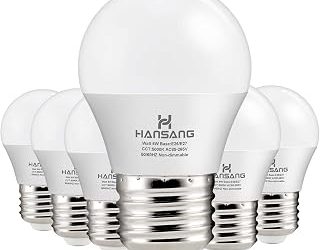
This six-pack is a dependable choice for ceiling fans using a standard E26 socket. Its compact A15 profile, 5000K daylight output, and 600-lumen brightness suit kitchens, utility spaces, and contemporary rooms where crisp visibility is more important than a soft, ambient mood.
Cotanic E26 LED Ceiling Fan Light Bulbs
The Cotanic bulbs offer a slightly gentler 4000K natural-daylight tone, making them a more versatile pick for living rooms, bedrooms, and open-plan spaces. Their small A15 form keeps the fixture visually neat, while the CRI 85+ rating helps furnishings and wall colors appear reasonably accurate.
E12 LED Ceiling Fan Light Bulbs
For ceiling fans with candelabra sockets, this six-pack combines a petite A15 shape with bright 5000K illumination. The E12 base is the key feature, and the eye-friendly positioning makes these useful when a fan light serves as the room’s primary task lighting.
E17 Intermediate Base G14 Globe Bulbs
This option is designed for fixtures that fall between standard and candelabra sizing, using an E17 intermediate base. The G14 globe shape has a polished, decorative feel and works especially well in compact glass shades, while 600 lumens per bulb provide a strong daylight effect.
MAXvolador E12 LED Ceiling Fan Bulbs
MAXvolador’s E12 bulbs are a practical replacement set for small-base ceiling fans and chandeliers. Their 5000K color temperature produces a clean, energetic look, and the compact design helps avoid crowding inside shallow fan-light housings.
Frequently Asked Questions
What bulb base do most ceiling fans use?
Many ceiling fans use either an E26 medium base or an E12 candelabra base, though some models use E17 intermediate sockets. Remove the existing bulb and compare its base, or check the fan’s manual before ordering.
Is 5000K too bright for a ceiling-fan light?
Not necessarily. A 5000K bulb gives a crisp, blue-leaning daylight appearance that works well in kitchens, home offices, and modern interiors. For bedrooms or cozy living spaces, 2700K to 4000K usually feels more relaxed.
How many lumens should a ceiling-fan bulb have?
A 600-lumen LED is a useful baseline for a typical ceiling-fan light kit. If the fixture has multiple sockets, lower-lumen bulbs may be sufficient; a single-bulb fixture may benefit from the brightest rating the manufacturer allows.
Can I use a dimmable bulb in any ceiling fan?
No. Dimming requires compatibility between the bulb, fan control, and wall switch or remote. Non-dimmable bulbs should be used only with standard on-and-off controls to prevent flickering or premature failure.
Final Thoughts
For a standard socket, the A15 LED E26 bulbs are a straightforward everyday choice, while Cotanic’s 4000K version offers a softer, more adaptable look. For smaller fittings, the E12 LED set and MAXvolador bulbs are strong picks; choose the E17 G14 option when your fan uses an intermediate base and a globe-shaped shade.