Key takeaways
- Adjustable steam: Low or variable output gives you more control than a single high-temperature setting.
- A soft, clean pad: Microfiber should lift dust without abrasive scrubbers or rough plastic edges.
- Fast movement: A lightweight body and smooth swivel head help prevent prolonged heat exposure in one spot.
- A modest water tank: A smaller tank can be an advantage because it discourages extended, overly wet cleaning sessions.
- Washable pads: Replaceable or machine-washable pads are more hygienic and economical than disposable alternatives.
What's inside
Laminate floors can give a room the polished, furniture-showroom look of timber without the upkeep of solid wood—but they are less forgiving than they appear. Excess water, lingering humidity, and heat can swell the core, lift edges, dull the wear layer, or loosen joints. That makes choosing a steam mop less about maximum power and more about controlled moisture, a gentle cleaning head, and a manufacturer-approved method.
This guide explains what to look for in the best steam mop for laminate floors in 2026, when steam cleaning is appropriate, and how to use it without putting your flooring at risk. I’ll also compare useful features such as variable steam, washable pads, tank size, cord length, and handheld versatility, with an interior-styling perspective on keeping floors looking quietly immaculate.
As an Amazon Associate we earn from qualifying purchases.




First, Check Whether Your Laminate Allows Steam
Before buying any steam mop, consult the flooring warranty and care instructions. Many laminate manufacturers advise against steam because heat and moisture can penetrate seams, particularly on older, budget, damaged, or poorly installed floors. If the manufacturer permits occasional steam cleaning, choose the lowest effective setting and use quick, continuous passes. Never leave a hot mop head stationary.
A sealed hard-floor cleaner is not automatically safe for laminate. Product descriptions often mention tile, vinyl, hardwood, or “sealed floors,” but those categories are not interchangeable. Treat steam as an optional tool only when your flooring documentation expressly allows it. For most laminate, a microfiber spray mop with a barely damp pad remains the safer everyday choice.
What Makes a Steam Mop Laminate-Friendly?
- Adjustable steam: Low or variable output gives you more control than a single high-temperature setting.
- A soft, clean pad: Microfiber should lift dust without abrasive scrubbers or rough plastic edges.
- Fast movement: A lightweight body and smooth swivel head help prevent prolonged heat exposure in one spot.
- A modest water tank: A smaller tank can be an advantage because it discourages extended, overly wet cleaning sessions.
- Washable pads: Replaceable or machine-washable pads are more hygienic and economical than disposable alternatives.
Be cautious with rotating scrubbers, stiff bristles, and aggressive “deep-clean” claims. Those features can be excellent for resilient tile, but laminate usually benefits from restraint. A mop that feels easy to steer is often more useful than one with the highest headline temperature.
Recommended Models and Where They Fit
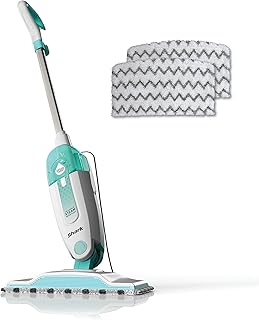
The Shark Steam Mop for Sealed Hard Floors, S1000 is appealing if you want a lightweight design, a removable tank, and two washable Dirt Grip pads. Its simple format suits quick cleaning, provided your laminate manufacturer permits steam and you use a conservative technique.
The BISSELL PowerFresh 1940A adds variable steam, an Easy Scrubber, and a 12-inch cleaning path. The adjustable output is the most relevant feature for laminate, although the scrubber should be avoided on delicate finishes and the lowest setting should be your starting point.
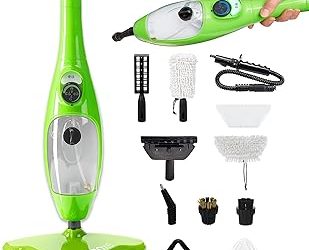
For households that want one appliance to handle more than floors, the 11-in-1 Steam Mop offers a handheld mode, a long 23-foot cord, a 15.2-ounce tank, and three steam modes. Its versatility is useful for sealed tile, glass, or fabric-care tasks, but extra attachments do not make steam safer for laminate.
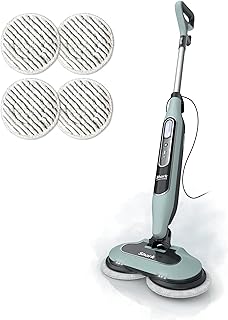
The Shark Steam & Scrub S8001 brings LED headlights, swivel steering, an XL tank, and soft scrub pads. It is a more feature-rich option for compatible hard floors; on laminate, however, use only the gentlest setting and skip any powered scrubbing function unless the flooring maker approves it.
Two other multi-surface choices—the Multi-Purpose Steam Cleaner with Handheld Steamer and the 10-in-1 Steam Mop with Detachable Handheld Cleaner—prioritize accessories and flexibility. They may suit homes with tile and other sealed surfaces, but their broad marketing should not override laminate-care instructions.
How to Steam-Clean Laminate Safely
Begin by vacuuming or dry-mopping thoroughly. Fine grit can act like sandpaper beneath a damp pad, creating the very haze or micro-scratches you are trying to prevent. Fill the tank with clean water according to the manual; avoid adding detergent, essential oils, or homemade mixtures unless the manufacturer specifically allows them.
Attach a clean, dry microfiber pad and select the lowest steam setting. Test an inconspicuous area near a cabinet or behind furniture, then wait until the floor is fully dry and inspect for whitening, swelling, lifted edges, or changes in sheen. If the test is satisfactory, work in small sections with straight, purposeful passes. Follow immediately with a dry microfiber cloth if any moisture remains.
Features That Matter More Than Marketing
A long cord can be more convenient than a larger tank, since repeatedly stopping to refill is less disruptive than dragging an overfilled, heavy machine. A swivel head is valuable around dining chairs, sofa legs, and narrow furniture gaps, while a removable tank simplifies emptying after each use. Headlights can reveal crumbs beneath cabinets, but they do not improve the mop’s compatibility with laminate.
Look for clear care instructions, readily available replacement pads, a comfortable handle, and a warranty that does not exclude your flooring type. “Chemical-free” and “99.9%” claims describe particular test conditions, not a guarantee that every household surface will tolerate steam. Trust the floor manufacturer first.
Tips
- Keep the mop moving continuously; never park it on the floor while plugged in or heating.
- Wash microfiber pads without fabric softener, which can reduce absorbency and leave residue.
- Empty and dry the water tank after use to reduce stale odors and mineral buildup.
- Use felt pads beneath furniture and lift pieces rather than dragging them across a freshly cleaned floor.
Frequently Asked Questions
Can I use a steam mop on all laminate flooring?
No. Laminate construction, seam quality, surface finish, and warranty terms vary. Use steam only when the flooring manufacturer explicitly permits it. Otherwise, choose a lightly damp microfiber mop and dry the floor promptly.
What steam setting is best for laminate?
If steam is approved, begin with the lowest setting and use the shortest practical passes. The correct amount is the minimum needed to loosen light soil, not enough to leave visible moisture behind.
Is a steam mop better than a spray mop for laminate?
Usually not for routine care. A well-made spray mop offers better moisture control and less heat exposure. Steam can be convenient for approved floors and occasional cleaning, but it is not automatically more hygienic or more effective.
Why does my laminate look streaky after mopping?
Streaks commonly come from an overloaded or dirty pad, excessive water, cleaning-product residue, or mineral deposits. Dry-mop first, use a freshly washed pad, avoid over-wetting, and follow the flooring maker’s approved cleaning solution guidance.
Conclusion
The best steam mop for laminate floors is the one your flooring manufacturer allows you to use—and that gives you precise control over moisture. Among the options above, variable steam, a soft washable pad, light handling, and easy maneuverability are the most useful qualities. If steam is not approved, skip it without hesitation: a gentle microfiber system will protect the clean-lined, wood-look finish that makes laminate such a stylish foundation for a room.