Key takeaways
- Tooth count: Blades with 60 to 80 teeth generally produce cleaner plywood and veneer cuts, while 40-tooth blades offer a faster balance between ripping and crosscutting.
- Tooth design: ATB, or alternate-top-bevel, teeth are a versatile choice for plywood and solid wood because they shear fibers rather than simply forcing through them.
- Arbor size: Confirm whether your saw uses a 5/8-inch or 1-inch arbor before buying. A blade that does not fit correctly should never be adapted with an improvised spacer.
- Kerf: Thin-kerf blades remove less material and may reduce motor load, which is useful on compact saws. Check that the blade remains compatible with your riving knife.
- Project finish: Choose a high-tooth-count finish blade for visible cabinet parts and furniture surfaces; use a combination or lower-tooth-count blade when speed matters more than a near-finished edge.
What's inside
Cutting plywood cleanly on a table saw is less about brute force and more about choosing the right blade. A general-purpose blade may leave chipped veneers, fuzzy edges, or a rough surface that shows through paint and clear finishes. The wrong kerf or arbor size can also create unnecessary strain, vibration, and alignment problems.
This guide focuses on blades suited to plywood, MDF, laminate, and furniture-grade sheet goods. I’ve compared tooth counts, cutting styles, arbor compatibility, and finish potential so you can match a blade to the way you actually build—whether that means breaking down cabinet panels, trimming shelves, or creating a polished tabletop.
As an Amazon Associate we earn from qualifying purchases.


How to Choose a Plywood Table Saw Blade (2026)
- Tooth count: Blades with 60 to 80 teeth generally produce cleaner plywood and veneer cuts, while 40-tooth blades offer a faster balance between ripping and crosscutting.
- Tooth design: ATB, or alternate-top-bevel, teeth are a versatile choice for plywood and solid wood because they shear fibers rather than simply forcing through them.
- Arbor size: Confirm whether your saw uses a 5/8-inch or 1-inch arbor before buying. A blade that does not fit correctly should never be adapted with an improvised spacer.
- Kerf: Thin-kerf blades remove less material and may reduce motor load, which is useful on compact saws. Check that the blade remains compatible with your riving knife.
- Project finish: Choose a high-tooth-count finish blade for visible cabinet parts and furniture surfaces; use a combination or lower-tooth-count blade when speed matters more than a near-finished edge.
The Best Plywood Table Saw Blades (2026) Reviewed
FOXBC 10-Inch 80-Tooth Table Saw Blade
The FOXBC 10-Inch Table Saw Blade uses an 80-tooth layout aimed at smooth wood cutting, making it a natural fit for plywood panels, trim, and furniture components where the edge will remain visible. Its 5/8-inch arbor suits many common 10-inch table saws, but verify your machine’s specifications before ordering. This is the kind of blade I would reach for when a clean, refined cut matters more than maximum feed speed.
S55300 XL4000 12-Inch 60T Combo Blade
The S55300 (XL4000) Combo RIP-Crosscut Saw Blade combines ripping and crosscutting in a 60-tooth, ATB configuration. With a 12-inch diameter and 1-inch bore, it is best considered for larger saw setups rather than standard 10-inch homeowner machines. Its combination format is appealing for workshop owners who want one versatile blade for breaking down stock and producing reasonably smooth crosscuts in plywood and solid wood.
KENDO 10-Inch Circular Saw Blade Set
KENDO’s two-blade set gives a furniture maker more flexibility than a single all-purpose blade: the 40-tooth blade is positioned for ripping, while the 60-tooth blade is intended for plywood, MDF, and laminate finish cuts. Both use a 5/8-inch arbor and are designed for table and miter saw use. For a developing workshop, this practical pairing makes it easier to switch from fast stock preparation to cleaner final cuts without buying several separate blades.
WORKPRO 10-Inch 80T Ultra Fine Finish Blade
The WORKPRO 10″ Circular Saw Blade is built around 80 thin-kerf carbide-tipped ATB teeth, with cabinetry, plywood, and trim among its intended applications. The fine tooth pattern should appeal to anyone styling built-ins or contemporary furniture with crisp, quiet-looking edges. As with any thin-kerf blade, check riving-knife clearance and avoid pushing material faster than the saw can comfortably handle.
10-Inch 80T Blade with 1-Inch Big Arbor
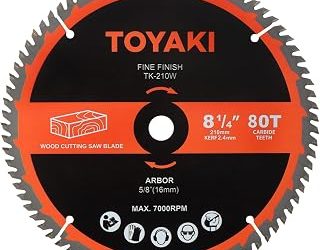
This 10-inch, 80-tooth blade targets ultra-fine cuts in hardwoods, softwoods, plywood, and MDF, with a 1-inch arbor for compatible saws. It is an especially relevant option for shops using equipment with a larger arbor than the common 5/8-inch standard. The high tooth count favors smooth, presentation-ready work, so it belongs in the blade drawer for cabinet panels, shelving, and carefully finished furniture parts.
Frequently Asked Questions
Is an 80-tooth blade best for plywood?
Often, yes—especially when cutting veneered plywood or parts that will be visible. An 80-tooth blade can leave a smoother edge, although it may cut more slowly than a 40- or 60-tooth option. Feed steadily and let the blade do the work.
Can I use a plywood blade for solid wood?
Yes, provided the blade’s diameter, arbor, and recommended saw type match your equipment. High-tooth-count blades work well for crosscuts and finish work, while a lower-tooth-count combination blade is usually more efficient for long rips.
Why does plywood chip on the top or bottom?
Chipping can come from a dull blade, unsuitable tooth geometry, excessive feed pressure, or inadequate support. A sharp ATB blade, a properly aligned fence, and a zero-clearance insert can all help improve the cut.
Do I need a separate blade for ripping?
Not always. A 60-tooth combination blade can handle many small-shop tasks, but a 40-tooth blade is generally faster for repeated rips. Keeping both styles available is worthwhile if you regularly move between rough sizing and final furniture cuts.
Final Thoughts
For polished plywood furniture, the FOXBC 80-tooth blade and WORKPRO 80T blade are compelling finish-focused choices. If you prefer flexibility, the KENDO two-pack is a smart workshop pairing, while the 1-inch-arbor 80T model deserves attention for compatible larger-bore saws.