Key takeaways
- Keep the hammock’s lowest point high enough to avoid dragging, but low enough for an easy, controlled entry.
- Inspect straps for fraying, fading, cuts, or stretched stitching; replace damaged webbing rather than repairing it with tape or knots.
- Use outdoor-rated fabric and hardware in exposed locations, and store the hammock indoors during severe weather.
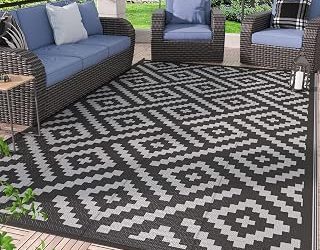
- Place a soft outdoor rug beneath a garden setup to define the lounging zone, but do not allow loose rugs to interfere with the stand’s feet.
What's inside
A hammock can make a room, patio, or garden feel instantly more relaxed—but the best-looking setup is also the one that is properly supported, comfortably angled, and suited to the space. A sagging bed, stressed hardware, or poorly chosen stand can turn a stylish retreat into a safety concern.
This guide explains how to hang a hammock securely in 2026, whether you are working between trees, from a ceiling, or with a freestanding frame. You will learn how to choose the right hardware, set the ideal height and curve, protect your surfaces, and create a finished look that feels intentional rather than improvised.
As an Amazon Associate we earn from qualifying purchases.


Choose the Right Hanging Method
Start by deciding where the hammock will live and how permanent you want the installation to be. Tree straps are the most flexible choice for gardens, campsites, and rental homes because they do not require drilling. The MalloMe Hammock Straps for Trees are a useful all-purpose option, with adjustable loops that make it easier to work around different trunk sizes. The SZHLUX Hammock Straps offer another practical two-strap setup with multiple attachment loops and carabiners.
For a room, porch, or covered patio, ceiling hardware creates the cleanest visual result—but only when attached to a genuinely structural support. A ceiling joist, substantial beam, or properly engineered mounting point is essential. Drywall, plaster, decorative trim, and unsupported porch ceilings are not reliable anchors. If you cannot identify the structure confidently, ask a qualified professional to inspect the location.
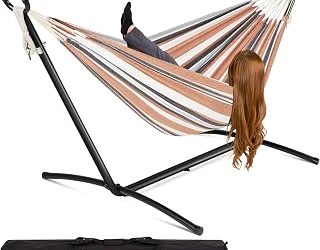
A freestanding frame is the least invasive option. It is particularly useful when trees are too far apart, the ground layout changes, or you want to move the hammock seasonally. The Sunnydaze Heavy-Duty Hammock Stand accommodates 9- to 14-foot hammocks and has a 550-pound capacity, making it a sensible choice for a spacious outdoor seating area.
Measure Before Buying
Measure the hammock from end to end, including its hanging loops, then measure the distance between your proposed anchor points. As a general starting point, the anchor span should be slightly longer than the hammock’s overall length, though the exact requirement varies by design. Follow the hammock manufacturer’s instructions rather than relying on a universal measurement.
Allow room for a gentle curve. A hammock that is pulled nearly flat places greater force on the anchor points and is usually less comfortable. A traditional hammock often hangs with its lowest point around 18 inches above the ground when occupied, while a chair-style hammock may need a different height for safe foot clearance. Leave generous space beneath and around the hammock so it does not strike walls, furniture, railings, fire pits, or hard-edged garden features.
For an interior, treat the hammock as a prominent piece of furniture. Center it within the room or align it with a window, reading lamp, or rug. A neatly planned sightline makes the suspension hardware feel architectural instead of accidental.
Select Hardware for the Load
Check the combined weight of every expected occupant, plus a margin for movement. Capacity ratings are not interchangeable: a hook, carabiner, strap, stand, and anchor must each be suitable for the intended load. Never assume that a high-rated carabiner compensates for a weak ceiling attachment or unsuitable tree branch.
For ceiling-mounted hammock chairs and swings, products such as the MHMYDZ 1000 lb Capacity Heavy Duty Hammock Hanging Kit and the Hammock Hanging Kit with 360° Rotating 1000 lb Hooks can provide useful components, including hooks and carabiners. The similarly specified Hammock Hanging Kit, 1000 lb Capacity Heavy Duty 360° Rotate Swing is another option for indoor or outdoor suspension. Verify the included fasteners, thread type, and installation requirements before purchasing; hardware designed for concrete may not be appropriate for wood, and vice versa.
Rotating hardware is helpful for hammock chairs because it allows the seat to turn smoothly and reduces twisting in the suspension point. It should still be installed into a correctly sized structural anchor, with every connection fully closed and seated.
Install and Test Gradually
Attach tree straps around healthy, substantial trunks rather than thin branches, deadwood, or damaged bark. Keep the strap broad and flat, and avoid wrapping it around sharp edges that could cut the webbing. Do not substitute narrow cord, rope, or improvised webbing for purpose-made hammock straps.
For stands, assemble every section according to the manufacturer’s instructions and place the feet on stable, level ground. Confirm that pins, chains, hooks, and locking points are fully engaged. For a permanent installation, use the specified bolts and washers, drill accurately, and avoid overtightening into wood or masonry.
Before relaxing fully, apply weight in stages: first pull gently on the hammock, then sit carefully near the center, and finally shift your weight while checking for slipping, creaking, bending, or movement at the anchors. Stop immediately if anything feels unstable. Recheck the setup after its first few uses and periodically thereafter.
Tips
- Keep the hammock’s lowest point high enough to avoid dragging, but low enough for an easy, controlled entry.
- Inspect straps for fraying, fading, cuts, or stretched stitching; replace damaged webbing rather than repairing it with tape or knots.
- Use outdoor-rated fabric and hardware in exposed locations, and store the hammock indoors during severe weather.
- Place a soft outdoor rug beneath a garden setup to define the lounging zone, but do not allow loose rugs to interfere with the stand’s feet.
Frequently Asked Questions
How far apart should hammock anchors be?
The correct span depends on the hammock’s total length and suspension design. Measure the product first, then follow its recommended hanging distance. When in doubt, a little extra span is generally easier to accommodate than an overly short one, because the hammock can be adjusted with straps or chains.
Can I hang a hammock from drywall or a ceiling joist?
Drywall alone is not suitable. A ceiling joist or substantial beam may be suitable if the hardware is correctly matched and securely fastened. Because a hammock creates dynamic loads as people enter, shift, and swing, have uncertain structures assessed by a qualified professional.
Are tree straps better than rope?
Purpose-made tree straps are usually the better choice because their wide webbing distributes pressure more evenly and their adjustment loops make positioning simpler. Rope can damage bark, slip, or concentrate force in a small area, so it should not be used as an improvised substitute.
What is the safest hammock angle?
A hammock should form a relaxed, visible curve rather than being stretched taut. The ideal angle varies by hammock style, but a moderate sag usually improves comfort and reduces unnecessary strain. Test the position gradually and follow the manufacturer’s guidance for height and tension.
Conclusion
The best way to hang a hammock is to match the suspension method to the structure, measure carefully, use properly rated hardware, and test the installation before settling in. Tree straps offer flexibility, ceiling mounts provide a polished permanent look when structurally appropriate, and a quality stand delivers convenience without drilling. With thoughtful placement and regular inspections, your hammock can become a comfortable, durable focal point indoors or outside.