Key takeaways
- Clean the filter every two to four weeks during heavy cooling, especially in homes with pets, renovation dust, or open windows.
- Use a low-suction vacuum setting near fins, and keep the nozzle parallel rather than pressing it into the coil.
- Never use bleach, abrasive powder, or a pressure washer on a window air conditioner.
- After cleaning, leave the unit unplugged until all moisture has evaporated; then run fan-only mode briefly if the appliance supports it.
What's inside
A window air conditioner can cool a room beautifully, yet its front grille often becomes an unintended display shelf for dust, pet hair, and cooking residue. A neglected unit may look dingy against carefully chosen furniture and textiles—and restricted airflow can make it work harder, sound louder, and cool less evenly. The good news is that a thorough seasonal clean is manageable without dismantling the entire appliance.
This guide explains the best way to clean a window AC safely, from preparing the room and washing the filter to brushing the coils and straightening delicate fins. You’ll also learn which tools are genuinely useful, when a foaming coil cleaner makes sense, and which signs mean the unit needs professional attention rather than another weekend refresh.
As an Amazon Associate we earn from qualifying purchases.




1. Prepare the unit and protect the room
Choose a mild day when you can leave the air conditioner switched off for several hours. Turn the unit off with its controls, unplug it, and wait a few minutes before cleaning. If it is hardwired or you cannot reach the plug safely, switch off the appropriate circuit breaker. Never clean an energized appliance.
Move nearby lamps, cushions, and artwork away from the work area. Lay an absorbent towel or shallow tray beneath the indoor side, and keep a vacuum, soft cloths, a bucket of warm water, and a small brush within reach. If you plan to use a spray cleaner, read its label first: some products are intended for coils only and should never contact painted plastic, wiring, controls, or the room-side air outlet.
2. Remove and wash the filter
Take out the front filter according to the manufacturer’s instructions. Most slide out from behind the grille, although some lift upward or require a small latch to be released. Vacuum loose dust from both sides before rinsing. Wash a washable filter in lukewarm water with a little mild dish soap, then rinse thoroughly.
Let the filter dry completely in a shaded, ventilated spot before reinstalling it. Do not put a wet filter back into the unit: trapped moisture can encourage odors and microbial growth. If the filter is torn, warped, or permanently gray despite washing, replace it with the correct size rather than trying to restore it.
3. Clean the grille, fan, and accessible surfaces
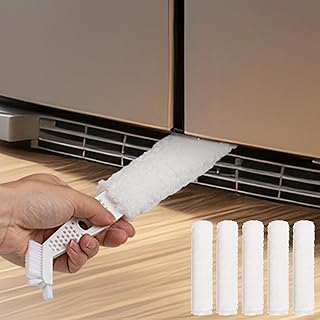
Wipe the front grille and louvers with a barely damp microfiber cloth. For narrow gaps, an Air Conditioner Cleaner Set Mini Split Cleaning Kit Under Fridge Cleaning Tool Window Unit Kit with 5 Replaceable Brush Clothes can be handy because its slim tools reach dusty channels without requiring furniture or appliances to be moved around. Use gentle pressure around louvers, which can bend easily.
With the grille open or removed as directed by the manual, vacuum loose debris from the accessible fan area. A soft brush attachment is preferable to a rigid nozzle. Do not pour water into the air outlet, and avoid pushing debris deeper into the blower wheel. If the fan is caked with sticky buildup, rattles, or cannot be reached safely, stop and arrange service.
4. Brush the coils and straighten the fins
The indoor evaporator coil sits behind the filter; the outdoor condenser coil is usually at the back of the unit. Vacuum both surfaces carefully, following the direction of the fins. A 3-Piece Air Conditioner Fin Comb Cleaning Tools set can help lift compacted dust and gently straighten flattened fins. Match the comb to the fin spacing and never force it through a blocked section.
Fins are thin aluminum and damage easily. Work in short, light strokes, and avoid scraping across the tubing. Better airflow comes from removing the layer of debris—not from making the fins look perfectly new. If the rear coil is inaccessible because the cabinet must be opened, consult the owner’s manual before removing screws.
5. Decide whether coil cleaner is appropriate
For routine dirt, dry brushing and vacuuming are often enough. For greasy or stubborn buildup, use only a coil cleaner labeled for your unit and follow the dilution, ventilation, and rinse instructions exactly. Arm & Hammer Biodegradable HVAC and Air Conditioner Coil Cleaner Foam Aerosol Spray, 19 fl. oz, AHCC-19 by Diversitech is one option to consider, while a Foaming AC Coil Cleaner 38oz or Foaming AC Coil Cleaner 57 oz may suit larger seasonal-maintenance jobs.
“No-rinse” does not mean “spray anywhere.” Shield electrical components, insulation, painted surfaces, and the room interior. Apply sparingly to the coil, allow the foam to work for the label’s stated time, and ensure the unit is fully dry before reconnecting power. A reusable Oiktylr Mini Split Cleaning Kit with 2L Pressure Sprayer is designed more for compatible split systems than most window units, so verify dimensions and manufacturer guidance before buying; its waterproof cleaning bag may not fit a standard window AC.
Tips
- Clean the filter every two to four weeks during heavy cooling, especially in homes with pets, renovation dust, or open windows.
- Use a low-suction vacuum setting near fins, and keep the nozzle parallel rather than pressing it into the coil.
- Never use bleach, abrasive powder, or a pressure washer on a window air conditioner.
- After cleaning, leave the unit unplugged until all moisture has evaporated; then run fan-only mode briefly if the appliance supports it.
Frequently Asked Questions
How often should a window air conditioner be deep-cleaned?
Give the filter regular attention throughout summer and inspect the coils at least once each cooling season. A deeper clean is worthwhile before storage and again before the unit is put back into service. Homes with pets, smokers, allergies, or nearby construction may need more frequent cleaning.
Can I spray water directly into my window AC?
Not into the indoor grille or electrical compartment. A lightly damp cloth is safer for the room-side surfaces. If the manufacturer permits rinsing an exterior coil, disconnect power first, protect the indoor side, and use only gentle water flow so moisture cannot reach controls or insulation.
Why does my air conditioner smell after cleaning?
A persistent musty odor can come from damp insulation, a dirty blower wheel, a clogged drain path, or biological growth hidden inside the cabinet. Confirm that the filter and accessible surfaces are completely dry. If the smell returns quickly, arrange professional cleaning rather than masking it with fragrance.
When should I replace the unit instead of cleaning it?
Consider replacement if the cabinet is badly corroded, the power cord is damaged, the unit repeatedly leaks indoors, or cleaning does not improve airflow and cooling. Unusual electrical smells, buzzing, refrigerant-like hissing, or frequent breaker trips call for immediate shutdown and qualified service.
Conclusion
The best window AC cleaning routine is careful rather than aggressive: unplug first, remove dust before moisture, protect the fins, and allow every washable part to dry fully. With a soft brush, a suitable fin comb, and a coil cleaner used only where approved, you can improve airflow while keeping the appliance visually tidy alongside your interior scheme. Regular filter care does most of the work; professional help is the right choice when dirt is deep inside or the unit shows electrical, refrigerant, or drainage problems.