Key takeaways
- Tooth count: Higher tooth counts generally produce smoother crosscuts in trim, plywood, and hardwood, while lower counts remove material faster during rough cuts and ripping.
- Tooth design: Alternate-top-bevel (ATB) teeth are a dependable choice for clean wood cuts. Specialized grind patterns may perform better on laminates, plastics, or non-ferrous metal.
- Kerf: A thin-kerf blade wastes less material and can feel easier on compact saws, but it must be properly matched to your machine and fence setup.
- Arbor fit: Confirm that the blade’s arbor hole matches your saw—many 10-inch models use a 5/8-inch arbor. Never force an incompatible blade onto the spindle.
- Material rating: Select a blade designed for the material you intend to cut. A wood-finishing blade is not automatically suitable for aluminum, laminate, or abrasive sheet goods.
What's inside
Choosing a 10-inch miter saw blade can feel surprisingly complicated. Tooth counts, kerf widths, arbor sizes, carbide quality, and material ratings all affect the result—and the wrong blade can leave furniture parts with chipped veneer, fuzzy crosscuts, or a finish that needs far too much sanding. For anyone building shelves, trim, cabinets, or custom tables at home, the blade is often the difference between a polished project and a frustrating one.
This guide focuses on blades that suit real furniture-making tasks, from delicate trim cuts to plywood breakdown and repeatable hardwood crosscuts. I’ve considered tooth configuration, finish quality, versatility, and the kind of work each blade makes easiest, so you can choose a practical match for your saw and your interior projects.
As an Amazon Associate we earn from qualifying purchases.


How to Choose a 10 Inch Miter Saw Blade (2026)
- Tooth count: Higher tooth counts generally produce smoother crosscuts in trim, plywood, and hardwood, while lower counts remove material faster during rough cuts and ripping.
- Tooth design: Alternate-top-bevel (ATB) teeth are a dependable choice for clean wood cuts. Specialized grind patterns may perform better on laminates, plastics, or non-ferrous metal.
- Kerf: A thin-kerf blade wastes less material and can feel easier on compact saws, but it must be properly matched to your machine and fence setup.
- Arbor fit: Confirm that the blade’s arbor hole matches your saw—many 10-inch models use a 5/8-inch arbor. Never force an incompatible blade onto the spindle.
- Material rating: Select a blade designed for the material you intend to cut. A wood-finishing blade is not automatically suitable for aluminum, laminate, or abrasive sheet goods.
The Best 10 Inch Miter Saw Blades (2026) Reviewed
WEN BL1080 80-Tooth Ultra-Fine Finish Blade
The WEN BL1080 is a strong all-around choice for furniture builders who prioritize clean, refined crosscuts. Its 80 carbide-tipped teeth are well suited to trim, cabinet components, plywood, and hardwood, making it a sensible upgrade for a workshop where the saw frequently moves between practical repairs and more design-conscious projects.
10-Inch 120-Tooth Fine-Finish Professional Blade
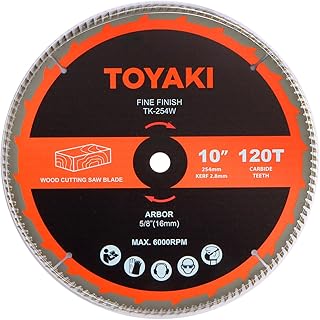
With 120 teeth, this fine-finish professional woodworking blade is aimed squarely at detail work where minimizing tear-out matters more than cutting speed. It fits miter saws, table saws, and circular saws with a 5/8-inch arbor, giving it useful flexibility for makers who work across several machines. It is especially appealing for delicate molding, narrow trim, and visible furniture edges.
KENDO 10-Inch Circular Saw Blade Set
The KENDO two-pack offers a practical 40-tooth and 60-tooth pairing for shoppers who do not want one blade handling every task. Use the 40-tooth blade for faster ripping and general stock preparation, then switch to the 60-tooth option for plywood, MDF, and laminate finish cuts. For a developing home workshop, that division of labor is more useful than owning two nearly identical blades.
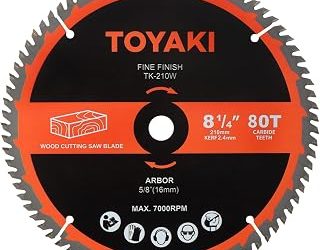
WORKPRO 10-Inch 80-Tooth Ultra-Fine Finish Blade
The WORKPRO 80-tooth blade is tailored to cabinetry, plywood, and trim, with a thin-kerf design intended to support smooth, clean cuts. It is a good fit for interior projects where edges remain visible—think floating shelves, face frames, and painted built-ins—and where reducing splintering saves time during finishing.
Benchmark Abrasives 10-Inch 100-Tooth TCT Blade
Unlike the wood-focused options above, the Benchmark Abrasives 10-inch TCT blade is made for aluminum and other non-ferrous metals. Its 100-tooth configuration is a specialized option for projects involving metal trim, aluminum profiles, or furniture hardware components. Verify that your miter saw is approved for the material and blade type before cutting; this is a purpose-built purchase, not a general woodworking replacement.
Frequently Asked Questions
Is a higher tooth count always better?
No. A higher tooth count usually improves the appearance of crosscuts, but it can cut more slowly and may not be appropriate for ripping thick stock. Choose the tooth count according to the cut rather than treating it as a simple quality ranking.
Can a 10-inch blade fit any 10-inch miter saw?
Not necessarily. Check the arbor diameter, maximum blade thickness, kerf requirements, and the saw’s instructions. The blade must also be rated for the saw’s operating speed and intended material.
What blade is best for cutting plywood without chipping?
An ATB blade with approximately 60 to 80 teeth is a useful starting point for plywood and cabinet panels. Support the sheet well, keep the blade sharp, and make sure the good face is oriented according to your saw’s cutting direction.
How often should a miter saw blade be replaced?
Replace or sharpen it when cuts become visibly rough, the saw requires unusual pressure, burning appears, or the blade starts wandering. The interval depends on the wood species, sheet goods, nail strikes, and how frequently you use the saw.
Final Thoughts
For the most versatile furniture-focused upgrade, the WEN BL1080 is an excellent starting point, while the 120-tooth fine-finish blade suits especially delicate trim and presentation surfaces. The KENDO set is the practical choice for varied workshop duties, and the Benchmark Abrasives blade deserves consideration only when your projects specifically include aluminum or other non-ferrous metals.