Key takeaways
- Base and shape: Most decorative chandeliers use an E12 candelabra base, but check the fixture’s specifications before buying. B10, B11, CA10, and flame-tip profiles can create noticeably different silhouettes.
- Color temperature: Around 2700K gives a familiar soft-white glow that works beautifully in living and dining areas. A 2500K bulb feels even warmer and more candlelike.
- Brightness: Compare lumens rather than watt-equivalent claims. Higher-lumen bulbs suit larger rooms, while lower-output lamps are often more flattering in exposed multi-bulb fixtures.
- Dimming: If your chandelier is connected to a dimmer, select bulbs specifically described as dimmable and confirm that the dimmer is LED-compatible to reduce flicker or buzzing.
- Visual finish: Clear glass and exposed filaments complement open candle cups and glass shades. Frosted bulbs soften the light and conceal the hardware more effectively.
What's inside
Choosing the best bulb for a chandelier is less straightforward than it looks. The right shape must suit the socket and shade, the brightness should flatter the room rather than glare across it, and the color temperature can shift a fixture from welcoming to icy in an instant. Dimming performance, filament appearance, and bulb size matter just as much.
This guide focuses on chandelier-friendly E12 bulbs, comparing their warmth, brightness, style, and practical versatility. Whether your fixture is a traditional crystal centerpiece, a relaxed farmhouse pendant, or a contemporary dining-room statement, these options make it easier to create a polished glow without compromising everyday function.
As an Amazon Associate we earn from qualifying purchases.


How to Choose a Bulb For Chandelier (2026)
- Base and shape: Most decorative chandeliers use an E12 candelabra base, but check the fixture’s specifications before buying. B10, B11, CA10, and flame-tip profiles can create noticeably different silhouettes.
- Color temperature: Around 2700K gives a familiar soft-white glow that works beautifully in living and dining areas. A 2500K bulb feels even warmer and more candlelike.
- Brightness: Compare lumens rather than watt-equivalent claims. Higher-lumen bulbs suit larger rooms, while lower-output lamps are often more flattering in exposed multi-bulb fixtures.
- Dimming: If your chandelier is connected to a dimmer, select bulbs specifically described as dimmable and confirm that the dimmer is LED-compatible to reduce flicker or buzzing.
- Visual finish: Clear glass and exposed filaments complement open candle cups and glass shades. Frosted bulbs soften the light and conceal the hardware more effectively.
The Best Bulb For Chandelier (2026)s Reviewed
60W Equivalent LED Filament Candelabra Bulbs
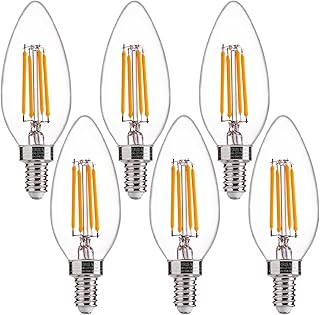
These clear B11 bulbs are a strong all-purpose choice when you want a chandelier to feel bright but still inviting. Their 2700K soft white light, E12 base, and dimmable LED construction make them particularly well suited to dining rooms, foyers, and fixtures where the filament remains visible.
E12 Flame Tip Candle Bulbs, 40W Equivalent
The flame-tip profile brings a more traditionally candlelit character to ornate or vintage-inspired chandeliers. With a warm 2700K tone and 460 lumens per bulb, this 12-pack offers generous coverage for larger fixtures while retaining a decorative silhouette.
COLWATT Candelabra Light Bulbs, 2500K
For rooms that benefit from a distinctly mellow atmosphere, the COLWATT bulbs stand out with their very warm 2500K color temperature. The clear CA10 form has a classic chandelier look, while the 380-lumen output is better suited to ambient lighting than task-level brightness.
12-Pack Dimmable B11 Vintage Chandelier Bulbs
This option balances decorative appeal and useful illumination with a 2700K color temperature and 450 lumens. The clear glass and LED filament styling work especially well in transitional interiors, where you want vintage detailing without the heat and energy use of traditional incandescent lamps.
E12 LED Candelabra Bulbs, 470-Lumen B10
The compact B10 profile is a smart pick for chandeliers with narrow candle sleeves or closely spaced sockets. These dimmable 2700K bulbs offer a warm, attractive glow and a slightly higher lumen output, making them a practical choice when a smaller bulb still needs to contribute noticeable light.
Frequently Asked Questions
What bulb base does a chandelier usually use?
Many decorative chandeliers use an E12 candelabra base, which is narrower than the standard E26 base found in many table and floor lamps. Always verify the socket size and maximum wattage printed on the fixture before ordering.
Is 2700K or 2500K better for a chandelier?
That depends on the mood you want. A 2700K bulb produces a versatile soft-white glow that suits most interiors, while 2500K looks warmer and more candlelike—especially attractive in dining rooms, bedrooms, and traditional spaces.
How many lumens should chandelier bulbs have?
There is no single ideal figure because the total brightness depends on the number of sockets and the room’s other lighting. Lower-lumen bulbs can look elegant in a large multi-arm fixture, while 450 to 460 lumens per bulb may be preferable when the chandelier is the room’s primary light source.
Can LED chandelier bulbs be used with a dimmer?
Yes, provided the bulbs are labeled dimmable and the dimmer is compatible with LED loads. If you notice flickering, buzzing, or a limited dimming range, the issue may be an older dimmer rather than the chandelier bulbs themselves.
Final Thoughts
For the most versatile update, the 60W Equivalent LED Filament Candelabra Bulbs are an excellent starting point. Choose the E12 Flame Tip Candle Bulbs for a more traditional profile, or the COLWATT 2500K bulbs when your priority is an especially warm, intimate chandelier glow.