Key takeaways
- Tooth count: A 48- to 50-tooth combination blade is the best all-purpose starting point for ripping boards and crosscutting sheet goods. Higher counts favor smoother finishing cuts but can feed more slowly.
- Kerf width: Thin-kerf blades remove less material, which can help smaller saws maintain speed and reduce waste. Confirm that the blade is suitable for your saw and that the splitter or riving knife aligns correctly.
- Tooth geometry: Alternating top bevel, or ATB, teeth create clean crosscuts while still clearing material effectively during rips. Combination designs may add a flat-top tooth to improve general-purpose performance.
- Carbide and coating: Dense carbide stays sharp through demanding work, while a nonstick or protective coating helps limit pitch buildup and corrosion. These details matter when cutting resinous lumber or plywood adhesives.
- Vibration and speed: Laser-cut stabilizers, anti-vibration slots, and a suitable maximum RPM rating can improve control and reduce noise. Never exceed the speed rating or use a blade with the wrong arbor size.
What's inside
Choosing a 10-inch combination table saw blade can feel deceptively complicated. Tooth count, kerf width, hook angle, carbide quality, and vibration control all affect whether a cut leaves a crisp furniture-grade edge or a ragged surface that needs hours of sanding. The wrong blade may also strain a compact saw, waste expensive hardwood, or leave plywood edges visibly torn.
This guide focuses on versatile blades for home workshops and furniture projects, where one blade often needs to handle both ripping and crosscutting. I’ve compared the most useful options for balancing clean results, efficient feed rates, thin-kerf performance, durability, and finish quality—so you can choose a blade that suits the way you actually build.
As an Amazon Associate we earn from qualifying purchases.




How to Choose a 10-Inch Combination Table Saw Blade (2026)
- Tooth count: A 48- to 50-tooth combination blade is the best all-purpose starting point for ripping boards and crosscutting sheet goods. Higher counts favor smoother finishing cuts but can feed more slowly.
- Kerf width: Thin-kerf blades remove less material, which can help smaller saws maintain speed and reduce waste. Confirm that the blade is suitable for your saw and that the splitter or riving knife aligns correctly.
- Tooth geometry: Alternating top bevel, or ATB, teeth create clean crosscuts while still clearing material effectively during rips. Combination designs may add a flat-top tooth to improve general-purpose performance.
- Carbide and coating: Dense carbide stays sharp through demanding work, while a nonstick or protective coating helps limit pitch buildup and corrosion. These details matter when cutting resinous lumber or plywood adhesives.
- Vibration and speed: Laser-cut stabilizers, anti-vibration slots, and a suitable maximum RPM rating can improve control and reduce noise. Never exceed the speed rating or use a blade with the wrong arbor size.
The Best 10-Inch Combination Table Saw Blade (2026)s Reviewed
Diablo D1050X 50-Tooth Combination Blade
The Diablo D1050X is an excellent everyday choice for a furniture-focused workshop. Its thin kerf helps portable and contractor-style saws work efficiently, while the 50-tooth ATB configuration produces a pleasing balance of clean crosscuts and reasonably quick rips. The Perma-Shield coating is especially welcome when working through pine, construction lumber, or glue-prone plywood.
CMT Orange Tools 50-Tooth Combination Blade
CMT’s Orange Tools combination blade is built around a 50-tooth grind that combines ATB teeth with a flat tooth for versatile cutting. It is a strong option when you want one blade for cabinet parts, solid-wood panels, and general workshop tasks, with carbide-tipped teeth intended to maintain a clean edge over repeated use.
Freud LU83R010 Industrial Thin-Kerf Blade
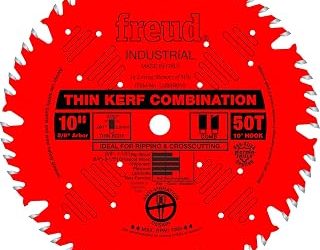
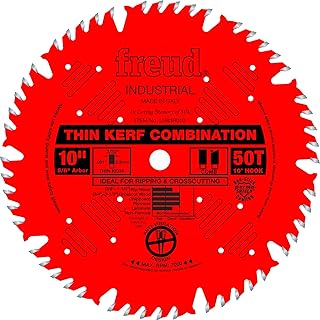
The Freud LU83R010 stands out for its premium TiCo high-density carbide blend and laser-cut anti-vibration slots. That combination gives it a refined, controlled feel—useful when building shelves, drawer components, or small tables where tear-out and chatter are unwelcome. Its thin-kerf design also makes sense for saws that benefit from a lighter cutting load.
ATB Combination Table Saw Blade US1048ATBFK
This USA-made 48-tooth blade offers a straightforward, dependable combination profile for both ripping and crosscutting. Its 1/8-inch kerf is a little more substantial than a thin-kerf design, but that can suit full-size table saws well by providing a solid, stable cut through hardwood and plywood.
10-Inch 50-Tooth Thin-Kerf Combination Blade
For shoppers wanting a practical general-purpose blade, this 50-tooth model combines carbide ATB teeth with a thin kerf and nonstick coating. It is a sensible pick for occasional furniture projects, particularly when conserving material and reducing strain on a smaller saw matter more than maximizing heavy-duty longevity.
Frequently Asked Questions
Is a combination blade good for making furniture?
Yes. A quality 48- or 50-tooth combination blade is well suited to common furniture cuts, including ripping boards to width and crosscutting panels. For exceptionally clean joinery or delicate veneer, a dedicated finish blade may still produce a better edge.
Should I choose a thin-kerf blade?
Thin-kerf blades are helpful on compact, portable, or lower-powered saws because they remove less material and require less force. Before buying, check that your saw’s riving knife or splitter is compatible with the blade’s kerf.
Can a combination blade cut plywood?
Most of the blades listed here can handle plywood, but the quality of the top veneer, feed rate, and saw setup will influence tear-out. Use a sharp blade, support the sheet carefully, and keep the workpiece moving steadily.
When should I use an 80-tooth blade?
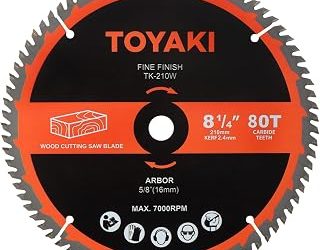
An 80-tooth blade such as the FOXBC 10-Inch Ultra Finish blade is better suited to very smooth crosscuts and trim work than fast ripping. It can be valuable for visible furniture parts, but it is not the most efficient single blade for every workshop task.
Final Thoughts
The Diablo D1050X is the strongest all-around pick for most home furniture makers, while the Freud LU83R010 is an excellent upgrade when vibration control and premium cutting performance matter. Choose the CMT Orange Tools blade for a versatile, traditional combination profile, and consider the higher-tooth FOXBC blade when an especially polished crosscut finish is your priority.