Key takeaways
- Rip capacity: Look for enough fence travel to handle cabinet sides, shelves, and wider panels without awkward repositioning; around 24 inches is workable, while 30 inches or more is noticeably more versatile.
- Stand and storage: A folding stand with wheels can transform a heavy saw into a manageable workshop companion, especially when your workspace must be packed away after use.
- Cut accuracy: A rigid table, smooth fence adjustment, and easy-to-read bevel and height controls are more valuable than headline speed when you want clean furniture joinery.
- Safety features: Prioritize a riving knife, blade guard, anti-kickback protection, and a reliable power switch. Always use push sticks and appropriate eye and hearing protection.
- Project fit: Compact saws suit trim, small furniture, and limited spaces; worm-drive and full-size jobsite models are better choices for repeated hardwood work and larger sheet goods.
What's inside
Choosing a table saw for DIY furniture projects is less about chasing the highest RPM and more about finding the right balance of accuracy, portability, safety, and workspace. A saw that feels ideal in a large workshop may be frustrating in a garage that doubles as a car park, while an ultra-compact model can become limiting when you start breaking down full sheets of plywood.
This guide focuses on the details that matter to home furniture makers: rip capacity, stand design, cut control, storage, and the kind of projects each saw suits best. Whether you are building shelving, a dining table, or a steady stream of weekend projects, these options cover practical needs from compact portability to serious jobsite power.
As an Amazon Associate we earn from qualifying purchases.



How to Choose a Table Saw For Diyers (2026)
- Rip capacity: Look for enough fence travel to handle cabinet sides, shelves, and wider panels without awkward repositioning; around 24 inches is workable, while 30 inches or more is noticeably more versatile.
- Stand and storage: A folding stand with wheels can transform a heavy saw into a manageable workshop companion, especially when your workspace must be packed away after use.
- Cut accuracy: A rigid table, smooth fence adjustment, and easy-to-read bevel and height controls are more valuable than headline speed when you want clean furniture joinery.
- Safety features: Prioritize a riving knife, blade guard, anti-kickback protection, and a reliable power switch. Always use push sticks and appropriate eye and hearing protection.
- Project fit: Compact saws suit trim, small furniture, and limited spaces; worm-drive and full-size jobsite models are better choices for repeated hardwood work and larger sheet goods.
The Best Table Saw For Diyers (2026)s Reviewed
DEWALT DWE7491RS 10-Inch Table Saw
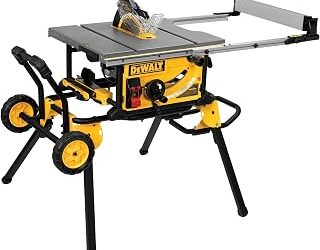
The DEWALT DWE7491RS is the strongest all-rounder here for serious DIY furniture work. Its generous 32-1/2-inch rip capacity, rolling stand, and rack-and-pinion fence make it particularly appealing when accurate, repeatable cuts matter more than compact storage.
SKIL TS6307-00 10-Inch Portable Table Saw
SKIL’s TS6307-00 delivers a friendly mix of capability and value, with a 10-inch blade and folding stand that suits developing workshops. It is a sensible choice for makers who need full-size cutting ability but do not want a permanently installed machine.
DEWALT DWE7485 8-1/4-Inch Compact Table Saw
The DWE7485 earns its place in smaller studios and multipurpose garages. Its compact footprint is easier to carry and store, while the rigid construction and precise fence make it well suited to furniture components, narrow stock, and renovation projects.
SKIL SPT99-11 Heavy-Duty Worm Drive Table Saw
For demanding cuts and dense hardwoods, the SKIL SPT99-11 brings substantial power and a stable stand to the job. It is larger and less casual than the compact picks, but that extra presence is welcome when breaking down thick boards or working through long sessions.
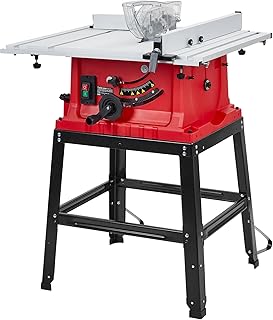
10-Inch 5000 RPM Table Saw with Stand and Protective Cover
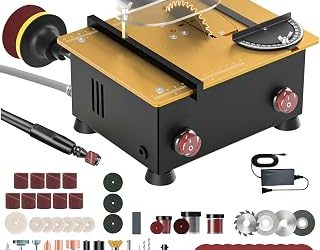
This feature-packed 10-inch model is aimed at DIYers who want an included stand, protective cover, adjustable depth, and both crosscut and bevel capability in one package. It can be attractive for occasional furniture projects, though buyers should pay close attention to fence rigidity, assembly quality, and replacement-part support.
Frequently Asked Questions
Is a 10-inch table saw best for DIY furniture?
For most home furniture projects, yes. A 10-inch saw offers broad blade availability, useful cutting depth, and enough capacity for common hardwoods and sheet goods. An 8-1/4-inch model can still be excellent when portability and storage are higher priorities.
How much rip capacity do I need?
Around 24 inches handles many shelves, rails, and smaller panels. If you regularly cut cabinet sides, wide desktops, or plywood, a saw offering 30 inches or more will reduce setup time and make large work safer and more comfortable.
Can I use a portable table saw in a small garage?
Absolutely, provided you allow room for material support and safe outfeed. Folding stands are especially useful because they let you roll the saw into position for cutting and store it vertically or against a wall afterward.
What safety equipment should I use?
Use the blade guard and riving knife whenever the cut allows, along with eye and hearing protection. Keep both hands clear of the blade, use a push stick for narrow pieces, and never reach over a spinning blade to retrieve stock.
Final Thoughts
The DEWALT DWE7491RS is the standout pick for broad capability and furniture-friendly accuracy, while the SKIL TS6307-00 offers an appealing balance for budget-conscious DIYers. Choose the compact DEWALT DWE7485 when storage is tight, or step up to the SKIL SPT99-11 for frequent heavy-duty hardwood work.