Key takeaways
- Clean ceiling fans before vacuuming or mopping so fallen dust can be removed afterward.
- Use a dry microfiber head for routine maintenance and reserve a damp cloth for stuck-on residue.
- Wash reusable duster heads according to their care instructions and let them dry fully before storing.
- Keep an extension pole collapsed and secured when not in use; inspect joints regularly for wear.
What's inside
A ceiling fan can be one of the hardest-working features in a room—and one of the easiest to overlook when dusting. Over time, its blades collect a soft gray layer that can dull an otherwise polished interior, redistribute allergens, and leave flecks across furniture and floors when the fan runs. A clean fan also looks more intentional, especially in rooms where lighting, wood tones, and ceiling details are part of the overall design.
This guide explains the best way to clean a ceiling fan without scattering dust everywhere or putting unnecessary strain on the motor. You’ll learn how to prepare the room, choose between a handheld or extendable duster, clean blades and hardware safely, and decide which features are worth buying in a fan-cleaning tool.
As an Amazon Associate we earn from qualifying purchases.



Start with Safety and Room Preparation
Turn the fan off at the wall switch and use the pull chain or remote to stop the blades completely. For the safest approach, switch off the fan’s circuit at the breaker before working near the motor housing, especially if you’ll use a damp cloth. Never clean a moving fan, and avoid spraying cleaner directly onto the fixture.
Move delicate décor, artwork, and upholstered pieces away from the area beneath the fan. Cover nearby furniture with a washable sheet if it cannot be moved. If the blades are within comfortable reach, use a stable step stool rather than a chair. For high ceilings, an extension duster is usually safer than leaning or overreaching from a ladder.
Choose the Right Cleaning Tool
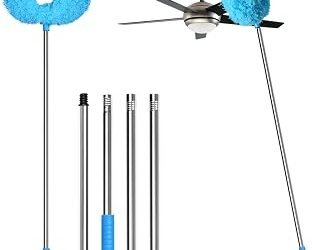
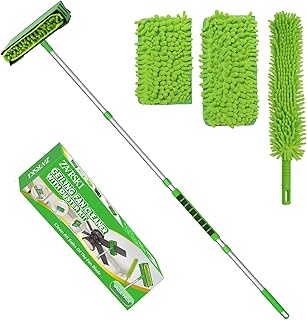
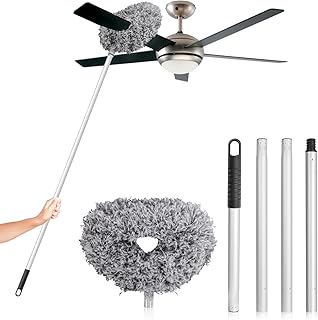
A microfiber fan duster is generally the most practical choice because its fibers hold dust instead of simply pushing it around. Look for a washable or removable head, a flexible shape that can hug both sides of a blade, and a handle that locks securely at different lengths.
For standard ceiling heights, the DRQ Ceiling Fan Cleaner Duster, FONUNO Ceiling Fan Duster, and SetSail Ceiling Fan Cleaner Duster offer adjustable reach in the roughly 13-to-50-inch range. Their removable microfiber heads are useful beyond the fan, too, including for bookshelves, door tops, molding, and wall details. The Ceiling Fan Cleaner with a 6-foot extension pole is a sensible middle ground for rooms with higher ceilings.
If your home has a very tall entryway or vaulted ceiling, the LAANPOLE 26FT Reach Ceiling Fan Cleaner Duster is designed for substantially greater reach. Use long poles with particular care: keep the tool vertical when possible, avoid pressing hard against the blades, and make sure the cleaning head is firmly attached before lifting it overhead.
Clean the Blades from Top to Bottom
Begin at the blade closest to you and work methodically around the fan. Position the duster so the microfiber sleeve rests over the blade rather than scraping along its edge. Use slow, even strokes from the center of the blade toward the tip, supporting the tool lightly. Excessive pressure can flex the blade, loosen hardware, or transfer grime to the ceiling.
For especially dusty blades, make one pass with a dry duster, then remove accumulated dust from the head before continuing. If you skip this step, you may simply redistribute debris onto the next blade. A pillowcase can also work for reachable blades: slide it over one blade, gently press around the fabric, and pull it off so the dust stays inside. Empty the case outdoors before laundering it.
Use Moisture Sparingly
Once loose dust has been removed, inspect the blades for fingerprints, cooking residue, or sticky buildup. Lightly dampen a microfiber cloth with water and wipe the blade in the direction of its length. Follow with a dry cloth so moisture does not linger near seams or metal fittings.
For finished wood, painted surfaces, or laminate blades, test any cleaner on an inconspicuous area first. A mild solution is usually enough; harsh degreasers, abrasive sponges, and excessive water can damage the finish. Keep liquid away from the motor housing, light kit, remote receiver, and electrical connections. If the fan has removable glass shades, take them down only according to the manufacturer’s instructions and clean them separately.
Finish with a Detail Check
Dust the motor housing, pull chain, light fixture, and ceiling canopy with a dry microfiber cloth. Check the blade screws, brackets, and visible hardware for looseness, but do not remove parts unless you are following the fan’s manual. After everything is dry, restore power and run the fan briefly on its lowest setting. Stop immediately if you notice wobbling, clicking, scraping, or unusual vibration.
How often you clean depends on the room. Bedrooms and living rooms may need attention every one to three months, while kitchens, covered porches, homes with pets, and allergy-sensitive households often benefit from more frequent dusting.
Tips
- Clean ceiling fans before vacuuming or mopping so fallen dust can be removed afterward.
- Use a dry microfiber head for routine maintenance and reserve a damp cloth for stuck-on residue.
- Wash reusable duster heads according to their care instructions and let them dry fully before storing.
- Keep an extension pole collapsed and secured when not in use; inspect joints regularly for wear.
Frequently Asked Questions
What is the easiest way to clean a ceiling fan without making a mess?
Use a microfiber duster that encloses or closely surrounds the blade, and clean one blade at a time. A pillowcase method works well for reachable fans because it captures loose dust as you pull the fabric away. Always vacuum or mop the floor after cleaning.
Should I clean ceiling fan blades with a wet cloth?
Not for the first pass. Remove dry dust before using a barely damp cloth on marks or grease. Too much moisture can streak the finish and create problems around electrical components, so never spray liquid directly onto the fan.
Are long-reach ceiling fan dusters safe to use?
They can be, provided the pole is stable, the head is locked in place, and you do not overextend your body to guide it. Choose the shortest useful reach, keep both feet planted, and use a second person to steady a ladder when ladder work is unavoidable.
How often should a ceiling fan be cleaned?
For most rooms, every one to three months is a good starting point. Clean more often in kitchens, homes with pets, rooms with open windows, or spaces where occupants are sensitive to dust. A quick monthly inspection helps you adjust the schedule.
Conclusion
The best ceiling-fan cleaning routine is gentle, dry-first, and consistent. A washable microfiber duster with the right reach makes the job faster while protecting your floors, furniture, and the fan’s finish. Clean the blades slowly, keep moisture away from electrical parts, and treat unusual movement or noise as a maintenance issue rather than something to ignore.