Key takeaways
- Slot fit: Confirm that the gauge matches your table saw’s slot dimensions, commonly 3/4 by 3/8 inch. A snug, adjustable fit is essential for accurate cuts without binding.
- Angle control: Look for clearly marked settings and positive stops. More detents are useful when cutting common angles repeatedly, while a smooth adjustment helps with less typical layouts.
- Fence length: A longer fence supports larger workpieces, but it also needs to remain rigid and parallel to the blade. Extensible designs are practical when workshop space is limited.
- Stop mechanism: A flip stop speeds up repeat cuts and keeps a project visually consistent. Micro-adjustment is particularly valuable for furniture parts that must match precisely.
- Build and usability: Aluminum keeps weight manageable, while steel and brass components can add a reassuringly solid feel. Favor readable scales, smooth locking action, and adjustments you can make without tools.
What's inside
Choosing a mitre gauge for a table saw is less straightforward than it looks. A gauge can appear substantial in a product photo yet introduce play in the slot, drift away from a true 90-degree cut, or offer a fence that is awkward to adjust. Those small shortcomings become especially obvious when building furniture, where a fraction of a degree can turn a clean cabinet joint into a frustrating gap.
This guide focuses on the details that matter at the workbench: slot compatibility, angle accuracy, fence support, stop design, adjustability, and day-to-day handling. The aim is to help you choose a gauge that feels at home in a carefully arranged workshop, whether you are cutting picture-frame mitres, repeatable shelving parts, or broad furniture components.
As an Amazon Associate we earn from qualifying purchases.


How to Choose a Mitre Gauge For Table Saw (2026)
- Slot fit: Confirm that the gauge matches your table saw’s slot dimensions, commonly 3/4 by 3/8 inch. A snug, adjustable fit is essential for accurate cuts without binding.
- Angle control: Look for clearly marked settings and positive stops. More detents are useful when cutting common angles repeatedly, while a smooth adjustment helps with less typical layouts.
- Fence length: A longer fence supports larger workpieces, but it also needs to remain rigid and parallel to the blade. Extensible designs are practical when workshop space is limited.
- Stop mechanism: A flip stop speeds up repeat cuts and keeps a project visually consistent. Micro-adjustment is particularly valuable for furniture parts that must match precisely.
- Build and usability: Aluminum keeps weight manageable, while steel and brass components can add a reassuringly solid feel. Favor readable scales, smooth locking action, and adjustments you can make without tools.
The Best Mitre Gauge For Table Saw (2026)s Reviewed
GOINGMAKE Compact Table Saw Miter Gauge
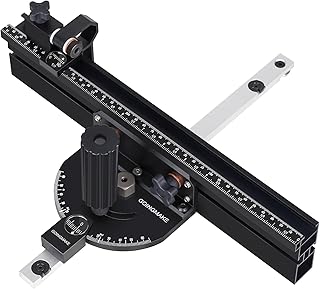
This compact GOINGMAKE model is a sensible choice for smaller workshops and furniture makers who want useful support without a sprawling fence. Its 360mm fence, multifunction flip stop, and positive angle stops provide a practical combination for crosscuts, mitres, and repeatable components where bench space matters.
GOINGMAKE Table Saw Miter Gauge with 18-Inch Fence
The second GOINGMAKE gauge adds a micro-adjust flip stop and 13 precision angle positions, making it better suited to projects with repeated, closely matched parts. The 18-inch fence offers a balanced middle ground: enough support for everyday furniture work while remaining relatively easy to store.
GOINGMAKE Extendable Table Saw Miter Gauge
For wider panels and longer stock, this GOINGMAKE version stands out with a fence that extends from 18 to 32 inches. The combination of 13 angle stops and micro-adjustment gives it the flexibility of a more substantial workshop gauge, particularly when a project moves from small joinery to larger casework.
VEVOR Precision Miter Gauge
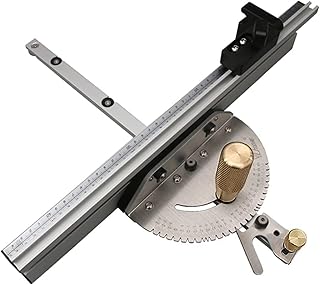
VEVOR’s precision gauge is designed around a standard 3/4 by 3/8-inch slot and pairs an aluminum-alloy body with an 18-inch grating fence. Its 15 angle stops, adjustable spring-loaded plunger, and removable disc make it appealing to woodworkers who value fine tuning and a configurable setup.
WEN Steel and Brass Premium Miter Gauge WA1401
The WEN WA1401 brings a more traditional, substantial character to the table with steel and brass construction and 27 angle stops. Its broad compatibility with table saws, router tables, and band saws makes it a versatile option for a workshop where one carefully chosen accessory needs to serve several machines.
Frequently Asked Questions
Does every mitre gauge fit every table saw?
No. Most gauges are designed for common slot sizes, but dimensions and slot profiles vary between saws. Measure the slot before buying and check whether the gauge includes adjustment features for removing side-to-side play.
Is a longer fence always better?
Not necessarily. A longer fence offers more support for large workpieces, but it can add weight and require more storage space. For a compact furniture studio, an extendable or medium-length fence may provide the best balance.
How many angle stops do I need?
For general work, reliable stops at 90 degrees, 45 degrees, and other common angles may be sufficient. A gauge with 13 or 27 positions becomes more useful when you regularly make frames, segmented work, or repeated angled components.
Can a mitre gauge replace a crosscut sled?
A good mitre gauge can handle many crosscuts and angled cuts, especially on smaller stock. A crosscut sled may offer greater stability and support for large panels, so many experienced woodworkers keep both available.
Final Thoughts
The compact GOINGMAKE is a strong fit for space-conscious furniture makers, while the extendable GOINGMAKE offers more support for larger workpieces. For fine angle control and broad workshop versatility, the VEVOR Precision Miter Gauge and WEN WA1401 are compelling picks; choose according to your saw’s slot, your typical material sizes, and the kind of repeatable cuts your projects demand.