Key takeaways
- Tooth count: Higher tooth counts generally produce smoother crosscuts, while lower counts remove material faster and suit rough or construction cuts.
- Tooth geometry: Alternate-top-bevel teeth are a strong choice for clean crosscuts in solid wood, plywood, molding, and furniture components.
- Blade diameter: Match the blade diameter to your saw exactly. A 10-inch blade belongs on a compatible 10-inch saw, and a 12-inch blade requires a 12-inch model.
- Kerf: Thin-kerf blades remove less material, which can reduce waste and place less demand on the motor, especially when cutting wide boards or working with a compact saw.
- Material and coating: Carbide-tipped teeth retain an edge longer than basic steel, while a dependable blade body and low-friction coating can improve consistency and reduce resin buildup.
What's inside
Choosing a miter saw blade is less about buying the toothiest option and more about matching the blade to the finish you want. A blade that leaves crisp edges on oak may be unnecessarily slow in framing lumber, while an aggressive general-purpose blade can leave delicate trim looking fuzzy or chipped. The right choice also affects noise, tear-out, cutting speed, and how polished your furniture projects appear.
This guide focuses on blades that make sense for home workshops, furniture upgrades, cabinetry, trim, and everyday woodworking. We compare tooth count, cut quality, versatility, thin-kerf performance, and value so you can choose a blade that complements both your miter saw and your interior-style ambitions.
As an Amazon Associate we earn from qualifying purchases.


How to Choose Blades For Miter Saw (2026)
- Tooth count: Higher tooth counts generally produce smoother crosscuts, while lower counts remove material faster and suit rough or construction cuts.
- Tooth geometry: Alternate-top-bevel teeth are a strong choice for clean crosscuts in solid wood, plywood, molding, and furniture components.
- Blade diameter: Match the blade diameter to your saw exactly. A 10-inch blade belongs on a compatible 10-inch saw, and a 12-inch blade requires a 12-inch model.
- Kerf: Thin-kerf blades remove less material, which can reduce waste and place less demand on the motor, especially when cutting wide boards or working with a compact saw.
- Material and coating: Carbide-tipped teeth retain an edge longer than basic steel, while a dependable blade body and low-friction coating can improve consistency and reduce resin buildup.
The Best Blades For Miter Saw (2026)s Reviewed
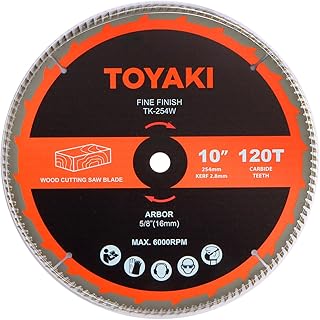
10-Inch 120-Tooth Fine-Finish Blade
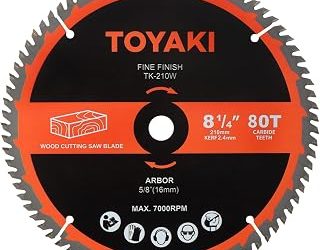
This 120-tooth blade is aimed squarely at detail-oriented work, making it appealing for picture frames, painted trim, shelving, and furniture parts where a clean edge matters more than speed. Its 5/8-inch arbor fits many common 10-inch miter saws, table saws, and circular saw setups, but confirm compatibility before ordering. Expect slower cuts than with a lower-tooth blade, particularly in thick hardwood.
WEN BL1080 10-Inch 80-Tooth Blade
The WEN BL1080 offers a practical middle ground for makers who want a refined cut without moving all the way to an ultra-high tooth count. Its carbide-tipped teeth are well suited to crosscutting boards, plywood, molding, and cabinet components, making it a sensible everyday blade for a home furniture workshop. It is especially attractive when you want one dedicated finishing blade for routine projects.
DEWALT DWA112100 12-Inch 100-Tooth Blade
Designed for 12-inch miter saws, the DEWALT DWA112100 is built around precise, fine-finish cutting. The 100-tooth layout is a strong match for trim, hardwood furniture components, and visible end grain where splintering would spoil an otherwise polished project. Its ultra-sharp carbide teeth make it a compelling choice for users who regularly work with a larger saw and prefer a premium-feeling finish blade.
Freud LU91R012 12-Inch 72-Tooth Thin-Kerf Blade
Freud’s LU91R012 combines a 72-tooth crosscutting design with a thin kerf, helping conserve material and reduce the cutting load on compatible saws. The premium Tico high-density carbide is well suited to repeated woodworking use, while the ATB grind supports clean, controlled crosscuts. It is a particularly good fit for furniture builders who value efficient cuts and want to minimize waste on expensive hardwood.
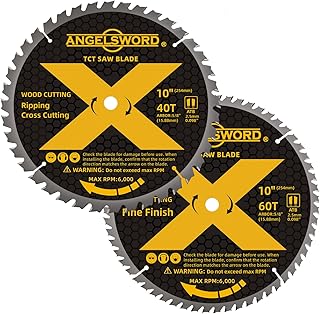
10-Inch 3-Pack: 32T, 60T, and 80T
This three-blade set covers the main cutting jobs most home workshops encounter: fast framing cuts with the 32-tooth blade, general fine finish work with the 60-tooth option, and smoother ultra-fine cuts with the 80-tooth blade. It is a useful way to build a small blade collection without relying on one compromise blade for every project. Use the correct tooth count for the material and keep each blade reserved for its intended role.
Frequently Asked Questions
How many teeth should a miter saw blade have for furniture?
For furniture and visible trim, 60 to 100 teeth is a useful range on a 10- or 12-inch blade. Choose toward the higher end for delicate crosscuts and toward the lower end when you need a quicker cut through thicker stock.
Can I use a table saw blade on a miter saw?
Many blades are marketed for both tools, but the blade must match the miter saw’s diameter, arbor size, speed rating, and cutting requirements. Avoid blades intended for dado work or any blade that does not clearly list compatibility with your saw.
Is a higher tooth count always better?
No. A high tooth count can create a smoother finish, but it usually cuts more slowly and may struggle in thick material. A lower-tooth blade is often more efficient for rough lumber, framing, and fast stock preparation.
When should I replace a miter saw blade?
Replace or sharpen the blade when cuts become noticeably slower, edges show increasing tear-out, burn marks appear, or the saw requires unusual pressure. Cleaning resin and dust can restore performance temporarily, but damaged or heavily worn carbide teeth call for replacement.
Final Thoughts
For fine, detail-driven work, the 10-Inch 120-Tooth Fine-Finish Blade is an appealing choice, while the WEN BL1080 is a balanced everyday option. Owners of 12-inch saws should consider the DEWALT DWA112100 for refined trim and hardwood cuts, or the Freud LU91R012 when thin-kerf efficiency and premium crosscut performance are priorities.