Key takeaways
- Ventilation: Choose a canopy with a vented or double-top design so rising air has somewhere to escape instead of lifting the entire umbrella.
- Frame strength: Aluminum is light and rust-resistant, while reinforced ribs and braced supports help the umbrella stay composed when gusts arrive.
- Base compatibility: A strong canopy is only half the setup. Confirm that the umbrella includes, or works with, a sufficiently heavy and properly fitted base.
- Canopy size: Larger umbrellas provide more useful shade but catch more wind. Match the diameter to the exposure of your space and the base weight available.
- Closing routine: Even a wind-resistant umbrella should be closed and secured when unattended. A crank mechanism makes that habit quick enough to follow consistently.
What's inside
A patio umbrella can look perfectly stable in the showroom and still become a liability once the afternoon breeze arrives. Lightweight poles, shallow bases, poorly vented canopies, and oversized fabric can all turn a relaxing outdoor setup into a constant exercise in folding, chasing, and repositioning.
This guide focuses on patio umbrellas that make more sense for breezy decks, exposed gardens, pool areas, and coastal-style outdoor rooms. I’m looking closely at venting, frame construction, canopy fabric, shade coverage, and the practical difference between a standard center-pole umbrella and a heavier cantilever design.
As an Amazon Associate we earn from qualifying purchases.
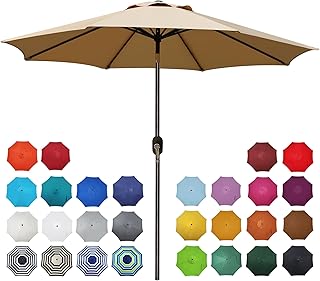


How to Choose a Patio Umbrella For Windy Area (2026)
- Ventilation: Choose a canopy with a vented or double-top design so rising air has somewhere to escape instead of lifting the entire umbrella.
- Frame strength: Aluminum is light and rust-resistant, while reinforced ribs and braced supports help the umbrella stay composed when gusts arrive.
- Base compatibility: A strong canopy is only half the setup. Confirm that the umbrella includes, or works with, a sufficiently heavy and properly fitted base.
- Canopy size: Larger umbrellas provide more useful shade but catch more wind. Match the diameter to the exposure of your space and the base weight available.
- Closing routine: Even a wind-resistant umbrella should be closed and secured when unattended. A crank mechanism makes that habit quick enough to follow consistently.
The Best Patio Umbrella For Windy Areas (2026) Reviewed
EliteShade USA 3-Tier 9-Foot Market Umbrella
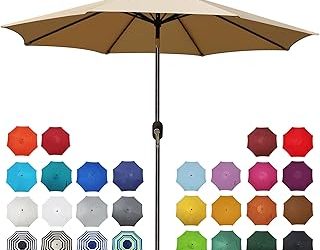
The EliteShade USA 10-Year-Non-Fading 9ft 3-Tier Market Patio Umbrella is one of the most convincing choices for a breezy dining area. Its tiered canopy encourages airflow through the top while the commercial-grade construction, crank opening, and UPF 50+ protection give it the polished, dependable feel I want in a frequently used patio.
EliteShade USA 9-Foot Vented Market Umbrella
The EliteShade USA 10-Year-Non-Fading 9Ft Market Patio Umbrella offers a more traditional silhouette with a windproof vented top, crank, and tilt adjustment. The Heather Beige color is especially easy to blend into natural furniture schemes, pairing beautifully with teak, warm wicker, and stone-look outdoor flooring.
PURPLE LEAF 12-Foot Wood-Grain Patio Umbrella
For a generous outdoor table or a broad conversation area, the PURPLE LEAF Patio Umbrella 12ft Extra Large Wood-Grain Finish delivers impressive coverage without looking overly commercial. Its braced frame, long-lasting aluminum construction, 240 GSM fabric, and UPF 50+ protection make it a strong choice for larger, exposed patios—provided it is paired with a suitably robust base.
PURPLE LEAF 12-Foot Double-Top Cantilever Umbrella
The PURPLE LEAF Cantilever Umbrella 12FT Heavy Duty Umbrella Double Top Taupe is the most wind-conscious design in this roundup. A double-top canopy helps release pressure, while six tilt positions and 99% UV protection make it particularly useful beside lounge seating where a center pole would interrupt the layout. Its cantilever shape demands careful anchoring, but it creates a wonderfully open, furniture-friendly arrangement.
10-Foot Crank-and-Tilt Market Umbrella
The 10FT Patio Umbrella with Push Button Tilt and Crank is a practical middle ground for buyers who want more shade than a standard nine-footer without moving to a cantilever system. Its eight sturdy ribs, waterproof fabric, UV protection, and adjustable tilt suit a poolside table or backyard dining zone, although wind-exposed homes should prioritize an appropriately heavy base.
Frequently Asked Questions
What makes a patio umbrella suitable for windy areas?
Look for a vented or double-top canopy, reinforced ribs, a sturdy pole, and a base designed for the umbrella’s diameter. Wind resistance is a system rather than a single feature, so the frame and anchoring matter as much as the fabric.
Is a cantilever umbrella better in the wind?
Not automatically. A well-designed cantilever umbrella can manage airflow effectively and keeps a center pole away from seating, but its offset structure places greater demands on the base and anchoring hardware.
Should I leave a wind-resistant umbrella open overnight?
No. Wind-resistant means better able to handle moderate movement, not safe in every weather condition. Close the canopy whenever the patio is unattended, and secure it with a tie or protective cover.
How heavy should the umbrella base be?
The correct weight depends on the canopy size, pole design, and local exposure. A 12-foot or cantilever umbrella generally needs substantially more support than a compact table umbrella, so follow the manufacturer’s base recommendations rather than relying on appearance alone.
Final Thoughts
For a breezy dining space, the EliteShade USA 3-Tier 9-Foot Market Umbrella is my favorite balance of airflow, finish, and everyday usability. Choose the PURPLE LEAF 12-Foot Wood-Grain model for expansive table coverage, or step up to the PURPLE LEAF Double-Top Cantilever when an open, lounge-focused layout and stronger wind-conscious design are the priorities.