Key takeaways
- 1,000–1,500 PSI: suitable for delicate outdoor furniture, painted surfaces, screens, and light dirt.
- 1,500–2,500 PSI: a versatile range for many household tasks, including patio furniture, vehicles, fencing, and modest patio cleaning.
- 2,500–3,500 PSI: better suited to tougher grime on concrete, masonry, and larger outdoor areas, with careful technique around furniture.
- Above 3,500 PSI: generally unnecessary for routine home cleaning and easier to misuse.
What's inside
Choosing the best PSI for a pressure washer is less about chasing the biggest number and more about matching force to the surface in front of you. A machine that refreshes a concrete patio can quickly strip paint from a garden chair, scar softwood, or drive water beneath upholstery. For home projects, pressure, water flow, nozzle choice, and technique all matter.
This guide explains how much PSI you actually need for furniture, patios, fences, cars, and driveways. You’ll also learn how to compare electric and gas models, when accessories are worthwhile, and how to clean outdoor furnishings without turning a simple refresh into a repair project.
As an Amazon Associate we earn from qualifying purchases.


What Is The Best Psi For A Pressure Washer (2026)
What PSI Do You Need?
PSI, or pounds per square inch, describes the water pressure at the nozzle. GPM, or gallons per minute, describes how much water the machine moves. Together, they determine cleaning power. A useful comparison is the cleaning power unit: PSI multiplied by GPM, divided by 1,000. It is not a complete performance test, but it helps explain why a washer with slightly lower PSI can still clean impressively if its water flow is higher.
- 1,000–1,500 PSI: suitable for delicate outdoor furniture, painted surfaces, screens, and light dirt.
- 1,500–2,500 PSI: a versatile range for many household tasks, including patio furniture, vehicles, fencing, and modest patio cleaning.
- 2,500–3,500 PSI: better suited to tougher grime on concrete, masonry, and larger outdoor areas, with careful technique around furniture.
- Above 3,500 PSI: generally unnecessary for routine home cleaning and easier to misuse.
The Best PSI for Outdoor Furniture
For furniture, start at the lower end of the machine’s range. Wicker, rattan, painted wood, composite materials, and plastic can all respond differently to concentrated water pressure. Begin with a wide-angle nozzle, stand well back, and test an inconspicuous area. Keep the spray moving rather than holding it over one joint, edge, or finish.
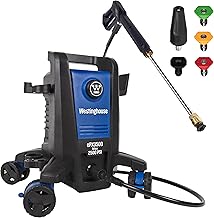
An electric washer such as the Westinghouse ePX3500, rated at 2,500 maximum PSI and 1.76 maximum GPM, offers useful flexibility for general home care. Its maximum setting should not be treated as the default for a painted bench or delicate chair. Use the widest suitable nozzle first, then increase cleaning strength only when the surface clearly allows it.
Never pressure-wash cushions, upholstered fabric, or furniture with loose veneers. Excess water can soak padding, weaken adhesives, and leave mildew behind. For those materials, vacuum first and use a damp cloth or manufacturer-approved cleaner instead.
Electric or Gas: Which Is Better?
Electric pressure washers are usually the more convenient choice for styling-conscious homeowners. They tend to be easier to store, simpler to start, and well suited to balconies, patios, vehicles, and routine furniture maintenance where an outlet is available. They also make it easier to work in short sessions without preparing fuel.
Gas models make sense when you need higher flow, longer run time, or more power for broad areas of concrete and heavily soiled masonry. The Westinghouse WPX3400 provides 3,400 PSI and 2.6 GPM, while the DeWalt DXPW3300-S is rated at 3,300 PSI and 2.4 GPM. Either can be useful for demanding exterior work, but both require more restraint near painted furniture, timber, windows, and delicate landscaping.
For most household buyers, choose the power source based on your typical project rather than your most extreme one. A manageable washer that you use correctly is more valuable than an oversized model that stays in the garage.
Nozzles and Accessories Matter
The nozzle controls how widely the water spreads. A wide spray is gentler; a narrow spray concentrates force and increases the risk of damage. Use the widest nozzle that removes the dirt, and reserve narrow patterns for durable surfaces where you can maintain a safe distance. A detergent or foam attachment can loosen grime before rinsing, reducing the need for aggressive pressure.
The Pressure Washer Accessory Short Wand Foam Cannon is useful for applying foam in tighter spaces, particularly when cleaning vehicles or intricate patio furniture. A replacement gun can also improve comfort and control. The Sooprinse High Pressure Washer Gun includes quick-connect nozzles and an M22-14 hose connector, while the GDHXW High Power Washer Gun includes an extension wand, adapters, and multiple tips. Confirm connector size and washer compatibility before ordering; “universal” accessories are not always universal in practice.
How to Pressure-Wash Safely
Clear the area before starting, protect nearby outlets, and wear eye protection and closed-toe shoes. Sweep away loose grit first so it does not become high-speed debris. Apply detergent from the bottom upward when appropriate, allow it to dwell without drying, and rinse from the top down. Keep the wand moving in overlapping passes.
For wood, work with the grain and use modest pressure. For concrete, a more powerful setting may be appropriate, but avoid forcing water into cracks or beneath slabs. Never aim the spray at people, pets, electrical fixtures, window seals, or the machine’s own connections. Follow the manufacturer’s instructions for detergent, hose fittings, and operating pressure.
Tips
- Compare both PSI and GPM; maximum PSI alone does not tell you how quickly a washer cleans.
- Test every unfamiliar surface in a hidden spot before cleaning the visible area.
- Use detergent and dwell time to loosen grime instead of compensating with excessive pressure.
- Let furniture dry completely before replacing cushions, covers, or decorative accessories.
Frequently Asked Questions
Is 2,000 PSI enough for patio furniture?
Usually, yes, provided you use a wide-angle nozzle, maintain distance, and adjust technique for the material. Start at the lowest effective setting. Metal and robust plastic may tolerate more force than painted wood, wicker, or aging finishes.
Is higher PSI always better?
No. Higher PSI can shorten cleaning time on durable surfaces, but it also increases the chance of stripping coatings, etching wood, damaging seals, and driving water into joints. The best pressure is the lowest setting that removes the soil effectively.
Should I buy a gas pressure washer for home furniture?
Probably not if furniture is your main task. Gas models such as the Westinghouse WPX3400 or DeWalt DXPW3300-S are better matched to large, demanding exterior jobs. An electric model is often easier to control for occasional furniture, car, and patio cleaning.
Can I use a foam cannon with any pressure washer?
Not automatically. Check the quick-connect style, hose fitting, operating pressure, and included adapters. A foam cannon is helpful for pre-treating grime, but it does not replace a surface-appropriate nozzle or careful rinsing.
Conclusion
For most homes, the best pressure washer is a versatile model used thoughtfully rather than the most powerful machine available. A range around 1,500 to 2,500 PSI is a practical starting point for furniture and everyday exterior care, while 3,300 to 3,400 PSI gas washers are better reserved for larger, tougher surfaces. Choose compatible accessories, begin gently, and let the material—not the maximum number on the box—set the pace.