Key takeaways
- Turn off the relevant breaker, lock or label it when possible, and verify the circuit is de-energized with a properly rated tester.
- Set all four feet on a clean, level surface; never improvise with books, blocks, rugs, or furniture.
- Face the ladder while climbing and keep your belt buckle between the rails rather than reaching sideways.
- Keep both hands available when climbing by using a tool belt or hoisting tools after you are positioned safely.
What's inside
Choosing a ladder for electrical work is not the same as choosing one for painting a bedroom. The right model must help keep you away from energized parts, remain stable on the floor, and support your body, tools, and materials without flexing or shifting. From an interior-styling perspective, it is also worth choosing a ladder that stores neatly and feels manageable enough that you will actually use it correctly.
This guide explains which ladder types suit common household electrical tasks, how fiberglass and load ratings affect your decision, and when a step ladder is safer than an extension model. You will also find practical buying guidance, including a few dependable options for light home maintenance and more demanding work. Always switch off power at the breaker and verify that circuits are dead; ladder selection never replaces safe electrical practice or a qualified electrician.
As an Amazon Associate we earn from qualifying purchases.


Our Recommended Picks
Choose Fiberglass for Electrical Work
For electrical tasks, fiberglass is generally the preferred ladder material because it is non-conductive under normal, dry conditions. Aluminum ladders conduct electricity and should not be used near wiring, outlets, service panels, or overhead lines. Fiberglass is not a guarantee of safety: contamination, moisture, damage, and contact with energized equipment can still create serious hazards. Treat the ladder as one layer of protection, not permission to work live.
Inspect the rails, rungs, feet, hinges, and spreaders before every use. Do not use a fiberglass ladder with cracks, exposed fibers, bent hardware, loose rivets, or worn shoes. Store it away from prolonged sunlight, extreme heat, and damp conditions, which can shorten its service life.
When an A-Frame Step Ladder Is Best
For replacing a ceiling fixture, testing a receptacle, or reaching a junction box inside the home, an A-frame step ladder is usually the most stable and convenient choice. It stands independently, has a relatively small footprint, and does not need to lean against a wall. A model such as the Louisville Ladder FS1508, an 8-foot orange fiberglass ladder, is suited to higher ceilings when you need a substantial reach without setting up an extension ladder.
Look for wide, slip-resistant steps, secure locking spreaders, a firm top platform, and rubber feet that sit evenly on the floor. Choose a height that lets you work from a safe standing position rather than standing on the top cap or the highest prohibited step. The 8-foot fiberglass step ladder with a 500-pound capacity offers a broad-step, heavy-duty format, while the 5-foot red fiberglass step ladder is more suitable for lower fixtures and easier storage in a closet or utility room.
Understand Load Ratings and Reach
A ladder’s duty rating must cover your complete working load: your body weight, clothing, shoes, tools, test equipment, and any materials you carry. A 300-pound Type IA rating is not a recommendation to approach that limit casually; it is the ladder’s rated maximum under specified conditions. For frequent work or heavier tool bags, a 500-pound model can provide a useful margin, provided the ladder remains easy for you to transport and position.
Reach height is different from ladder length. Your safe working height depends on your height, arm reach, and the manufacturer’s standing limits. Never place a step ladder on boxes, furniture, or another ladder to gain extra height. If you cannot comfortably reach the work while keeping your torso between the rails, reposition the ladder or select a more suitable model.
When to Buy a Multi-Position or Extension Ladder
A multi-position ladder makes sense when your home projects include stairwells, tall exterior walls, roof-adjacent access, or locations where an A-frame cannot provide enough reach. The Little Giant Dark Horse 2.0 M17 is a Type IA, 300-pound fiberglass multi-position ladder that can be configured for several setups. Its flexibility is useful, but every hinge and adjustment point must be fully locked before climbing.
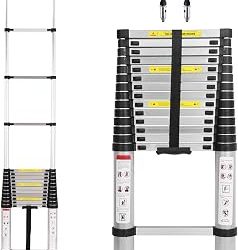
For straight-wall access, the Louisville Ladder 16-foot fiberglass extension ladder, model FE3216, provides a conventional setup with a 300-pound Type IA rating. A shorter or more portable alternative is the Soctone 14-foot A-frame extension ladder, which combines multiple positions with a stabilizer bar. These designs are convenient for varied household work, but they demand more setup space and careful angle control than a step ladder.
Use extension ladders only on firm, level ground. Maintain the manufacturer’s required clearance from electrical lines, keep the base from sliding, and do not climb above the permitted top section. If the ladder must be placed near overhead wires, stop and arrange professional assistance instead.
Features That Make a Ladder Easier to Live With
Good design matters in a home. Wide feet protect flooring and reduce movement, while a tool tray or molded top can prevent repeated trips up and down. Lightweight fiberglass is easier to carry through a furnished room, but a very light ladder may feel less planted than a heavier professional model. Consider folded dimensions, carrying handles, and whether it can stand securely in a garage or tall cupboard without leaning against delicate furniture.
For indoor use, choose non-marring feet and wipe them clean before bringing the ladder across finished floors. Avoid working around wet flooring, clutter, open drawers, or doors that could be opened into the ladder. A beautifully organized room is no substitute for a clear, stable work zone.
Tips
- Turn off the relevant breaker, lock or label it when possible, and verify the circuit is de-energized with a properly rated tester.
- Set all four feet on a clean, level surface; never improvise with books, blocks, rugs, or furniture.
- Face the ladder while climbing and keep your belt buckle between the rails rather than reaching sideways.
- Keep both hands available when climbing by using a tool belt or hoisting tools after you are positioned safely.
Frequently Asked Questions
Is fiberglass completely safe around electricity?
No. Fiberglass is non-conductive, but it can become hazardous when wet, dirty, damaged, or used close to energized equipment. De-energize circuits whenever possible, maintain required clearances, and use a qualified electrician for work beyond your training.
What ladder height do I need for an eight-foot ceiling?
A 5-foot step ladder may handle many low fixtures, while an 8-foot model offers more comfortable reach for taller ceilings and wall work. The correct choice depends on your height and the manufacturer’s standing limit. Never stand on a top cap or a step marked unsafe.
Are 500-pound ladders better than 300-pound ladders?
Not automatically. A higher rating provides more capacity, but it may also mean additional weight and a larger footprint. Select the rating that comfortably exceeds your total load while keeping the ladder practical to move and position.
Should I buy a multi-position ladder for occasional repairs?
Only if you genuinely need its extra configurations. For most indoor electrical maintenance, a quality fiberglass A-frame is simpler and quicker to set up. Choose a multi-position or extension ladder for varied heights, stair access, or exterior work, and follow every locking and setup instruction.
Conclusion
The best ladder for electrical work is usually a well-maintained fiberglass A-frame with a suitable height, generous load rating, wide steps, and secure feet. Add a multi-position or extension model when your home requires greater reach, but do not trade stability for versatility. With the power switched off, the ladder positioned correctly, and the work area clear, the right choice can make essential maintenance safer, calmer, and far less disruptive to your home.