Key takeaways
- Leather Type: Full-grain and top-grain cowhide age beautifully and breathe well, but command a premium. Bonded or PU leather offers the aesthetic at a lower price — just expect shorter lifespan and less breathability in warm rooms.
- Ergonomic Adjustability: Look for chairs that let you independently tweak seat height, lumbar depth, armrest position, and recline angle. A fixed “one-setting-fits-all” chair sounds simple but never fits anyone well for long.
- Weight Capacity: Standard office chairs typically support 250–300 pounds. If you need more, seek purpose-built heavy-duty frames with reinforced bases — these are engineered differently, not just bigger versions of the same chair.
- Seat Dimensions and Body Fit: Seat depth, backrest height, and overall proportions matter enormously. Taller users need deeper seats and higher backs; shorter users benefit from compact dimensions so their feet reach the floor without a footrest.
- Base and Caster Quality: A solid aluminum or steel base eliminates the wobble that plagues cheap nylon frames. Quiet-rolling casters protect hard floors and prevent that mid-afternoon grinding sound during focused work.
What's inside
Leather office chairs promise sophistication, durability, and that satisfying creak of quality the moment you sit down. But the market in 2026 is a minefield: genuine top-grain hides sit next to bonded veneers on the same search page, ergonomic claims go unverified, and chairs marketed as “executive” arrive with lumbar support that crumples after a month. The wrong pick doesn’t just waste money — it wrecks your posture and ruins the look you were going for.
I tested and compared the standout leather office chairs available right now, filtering for honest materials, real ergonomic engineering, and build quality that survives daily eight-hour sessions. Whether you need a compact mid-back for a tight home office or a heavy-duty throne rated for 450 pounds, this guide maps the field so you can choose once and choose well.
As an Amazon Associate we earn from qualifying purchases.


How to Choose an Office Chair Leather (2026)
- Leather Type: Full-grain and top-grain cowhide age beautifully and breathe well, but command a premium. Bonded or PU leather offers the aesthetic at a lower price — just expect shorter lifespan and less breathability in warm rooms.
- Ergonomic Adjustability: Look for chairs that let you independently tweak seat height, lumbar depth, armrest position, and recline angle. A fixed “one-setting-fits-all” chair sounds simple but never fits anyone well for long.
- Weight Capacity: Standard office chairs typically support 250–300 pounds. If you need more, seek purpose-built heavy-duty frames with reinforced bases — these are engineered differently, not just bigger versions of the same chair.
- Seat Dimensions and Body Fit: Seat depth, backrest height, and overall proportions matter enormously. Taller users need deeper seats and higher backs; shorter users benefit from compact dimensions so their feet reach the floor without a footrest.
- Base and Caster Quality: A solid aluminum or steel base eliminates the wobble that plagues cheap nylon frames. Quiet-rolling casters protect hard floors and prevent that mid-afternoon grinding sound during focused work.
The Best Office Chair Leather (2026)s Reviewed
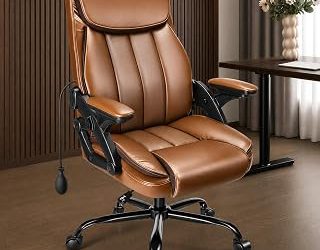
YFO Brown Leather Ergonomic Office Chair
This YFO chair punches well above its price point with genuine lumbar support, rubber casters that roll silently across hardwood, and a clean executive silhouette in warm brown. It handles height adjustment smoothly and the swivel mechanism feels tight rather than wobbly — a rarity at this tier.
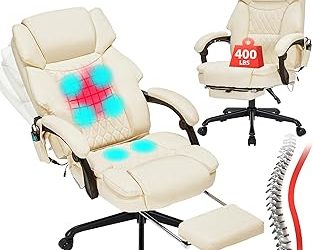
Genuine Leather Executive High-Back Chair — 135° Recline
A genuine leather high-back that actually delivers on its recline promise, tilting to a full 135 degrees with a lockable mechanism. The aluminum base is reassuringly heavy, the casters are whisper-quiet, and the mid-century-modern lines look intentional rather than corporate. This is the one to buy if your chair doubles as a reading nook.
Top-Grain Cowhide Executive Leather Chair
Wrapped in real top-grain cowhide, this executive chair is built for environments where impressions matter as much as comfort. The three-position recline locks firmly at each stop, the adjustable headrest and seat height accommodate a wide range of body types, and the hide itself develops a rich patina over months of use. It’s the kind of chair that makes a home office look like someone actually thought about the space.
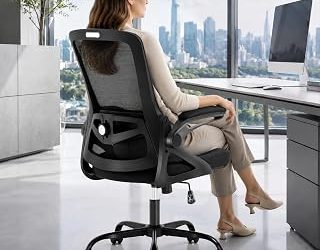
Brown PU Leather Office Chair for Short Users
Specifically proportioned for people under 5’6″, this chair solves the nagging problem of seats that leave shorter users dangling or propped on a cushion. The PU leather is surprisingly supple, the 360-degree swivel is smooth, and the padded armrests sit at a height that doesn’t force your shoulders up. If you’ve been suffering through standard-dimension chairs, this is a genuine fix.
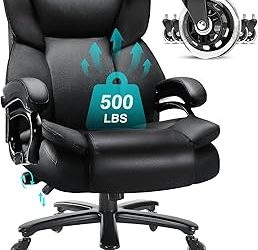
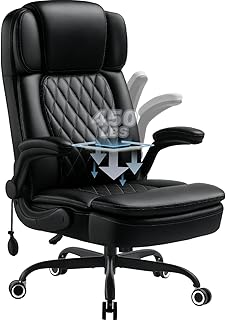
450LBS Big & Tall Executive Office Chair
Rated for 450 pounds with a reinforced metal base and spring cushion system, this heavy-duty executive chair doesn’t compromise on comfort for its structural strength. Flip-up arms make getting in and out easy, the high back provides full spinal coverage, and the PU leather surface is thick enough to resist the compression marks that plague cheaper heavy-duty options.
Frequently Asked Questions
Is genuine leather worth the extra cost over PU leather for an office chair?
For chairs you’ll use five or more hours daily, genuine leather almost always justifies the investment. It breathes better, resists cracking for years longer, and develops character with age. PU leather works well for occasional-use chairs or budget-conscious buyers who prioritize appearance over longevity.
Can a leather office chair be comfortable without a headrest?
Absolutely — a well-designed mid-back chair with proper lumbar support often outperforms a tall chair with a poorly placed headrest. Headrests matter most during reclined use; for upright desk work, lumbar depth and seat angle do the heavy lifting.
What maintenance does a leather office chair need?
Wipe genuine leather with a damp cloth weekly and apply a quality leather conditioner every three to six months to prevent drying and cracking. PU leather requires only a damp wipe — avoid harsh solvents, which break down the synthetic surface faster than normal wear.
Are heavy-duty office chairs only for larger individuals?
Not at all. Heavy-duty chairs often feature sturdier frames, better cushioning, and more robust mechanisms that benefit anyone. The reinforced construction means less flex, less noise, and a chair that simply feels planted — qualities every user appreciates regardless of body size.
Final Thoughts
For most home-office buyers, the Genuine Leather Executive High-Back Chair with 135° recline hits the best balance of material quality, ergonomic range, and visual appeal. If you need real top-grain hide that ages gracefully, the Top-Grain Cowhide Executive Chair is the premium pick worth saving for. And for users who simply need a chair built to endure, the 450LBS Big & Tall Executive Chair offers overbuilt quality at a fair price — no compromise required.