Key takeaways
- Wet Rating vs. Damp Rating: If your fan will sit in a truly open structure like a pergola or gazebo where rain can reach it, look for IP65 or “wet-rated” models. Damp-rated fans can handle humidity but not direct water exposure.
- Blade Span and Airflow: For spaces over 300 square feet, aim for a blade span of 52 inches or more and a CFM (cubic feet per minute) rating above 4,000. Smaller patios or tight nooks can get away with 42-to-44-inch fans.
- Motor Type: DC motors are quieter, use less energy, and usually offer more speed settings than AC motors. The tradeoff is a slightly higher upfront cost, but the long-term savings and near-silent operation are worth it outdoors.
- Installation Method: Hardwired fans look cleaner but require ceiling electrical boxes rated for fan weight. Plug-in models with hanging hooks are ideal for renters, temporary setups, or structures without existing wiring.
- Smart Features and Controls: App and voice control (Alexa, Google Home) add convenience, but make sure the fan’s receiver module is sealed or housed indoors if the fan body is wet-rated. A reliable physical remote is always a good backup.
What's inside
Picking an outdoor ceiling fan sounds straightforward until you realize the market is flooded with models that look identical online but behave very differently once mounted under a gazebo or porch roof. Wet ratings, blade span, motor type, and smart-home compatibility all matter—and getting one wrong means either a fan that corrodes by summer’s end or one that barely moves air on a humid evening.
This guide breaks down six contenders for outdoor ceiling fan duty in 2026, then narrows the field to five worth serious consideration. Whether you’re outfitting a freestanding pergola with a plug-in caged fan or hardwiring a statement piece into a covered patio, the picks below are organized by real-world performance, build quality, and how well each one holds up to the elements.
As an Amazon Associate we earn from qualifying purchases.


How to Choose a Ceiling Fan for Outdoors (2026)
- Wet Rating vs. Damp Rating: If your fan will sit in a truly open structure like a pergola or gazebo where rain can reach it, look for IP65 or “wet-rated” models. Damp-rated fans can handle humidity but not direct water exposure.
- Blade Span and Airflow: For spaces over 300 square feet, aim for a blade span of 52 inches or more and a CFM (cubic feet per minute) rating above 4,000. Smaller patios or tight nooks can get away with 42-to-44-inch fans.
- Motor Type: DC motors are quieter, use less energy, and usually offer more speed settings than AC motors. The tradeoff is a slightly higher upfront cost, but the long-term savings and near-silent operation are worth it outdoors.
- Installation Method: Hardwired fans look cleaner but require ceiling electrical boxes rated for fan weight. Plug-in models with hanging hooks are ideal for renters, temporary setups, or structures without existing wiring.
- Smart Features and Controls: App and voice control (Alexa, Google Home) add convenience, but make sure the fan’s receiver module is sealed or housed indoors if the fan body is wet-rated. A reliable physical remote is always a good backup.
The Best Ceiling Fans for Outdoors (2026) Reviewed
Addlon 20-Inch Caged Outdoor Fan
The Addlon 20″ earns its place for anyone wiring a compact covered patio or porch where space is tight. The caged design feels industrial-chic rather than utilitarian, and the IP65 plug-in setup with a hanging hook means you don’t need an electrician to get it running. Six speeds and a reversible DC motor give it surprising versatility for a fan this size, though the 20-inch span won’t cool a large gathering on its own.
56-Inch Wet-Rated Outdoor Fan
This 56-inch workhorse is the pick when raw airflow is the priority. Seven UV-coated blades push serious volume, and the all-weather construction holds up in rain and sun alike. The dimmable three-color-temperature light is a genuine bonus for evening use, and the quiet DC motor means conversation isn’t drowned out. It’s a strong choice for anyone covering a large patio or open deck.
Hunter Cassius 44-Inch
Hunter’s Cassius strips away the extras and focuses on what a no-frills outdoor fan should do: move air quietly and reliably. The 44-inch span suits medium-sized spaces, and the matte-black finish looks at home against exposed rafters or modern pergola beams. No light kit keeps the profile clean, and the pull-chain control is refreshingly simple. For buyers who trust a heritage brand and want straightforward durability, this is the one.
65-Inch Waterproof Outdoor Fan
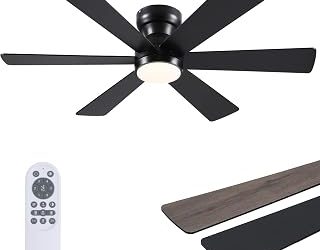
At 65 inches with eight aluminum blades, this is the largest fan on the list and the best fit for spacious outdoor living rooms or high-ceilinged gazebos. The 8,421 CFM output is genuinely impressive, and aluminum blades resist warping better than composite alternatives. Smart-home integration via Alexa and a dedicated app adds a modern edge, while the wet-rated build means it can handle exposed installations without anxiety.
Orison 24-Inch Weatherproof Caged Fan
The Orison 24″ bridges the gap between the compact Addlon and full-size options. Its caged silhouette reads as a design choice rather than a compromise, and app plus remote control with three-color-temperature dimming gives it a feature set that punches above its price class. Ideal for pergolas, canopy-covered seating areas, and covered porches where you want personality alongside function.
Frequently Asked Questions
Can I use an indoor ceiling fan on a covered patio?
It depends. A damp-rated fan can handle the humidity of a fully covered patio, but if rain, sprinklers, or direct moisture are possible, you need a wet-rated or IP65-rated model. Using a fan without the proper rating risks electrical damage and voids most warranties.
Are plug-in outdoor ceiling fans safe in the rain?
Plug-in fans rated at IP65 or higher are designed to withstand water jets from any direction, so brief rain exposure won’t compromise them. Always use a grounded outdoor outlet with a GFCI breaker, and avoid coiling excess cord where water could pool.
What size outdoor ceiling fan do I need?
For spaces up to 75 square feet, a 36-to-44-inch fan works well. Rooms from 76 to 144 square feet call for 44-to-52-inch fans, and anything larger benefits from 56 inches or above. When in doubt, bigger blades move more air at lower speeds, which means less noise.
Do outdoor ceiling fans need special light bulbs?
Most outdoor-rated fans use standard LED bulbs, but enclosed or caged fixtures may require specific form factors. Check the manufacturer’s specification for compatible bulb types and wattage limits, especially if the fixture is sealed against moisture.
Final Thoughts
For most outdoor spaces, the 56-Inch Wet-Rated Outdoor Fan strikes the best balance of airflow, weather resistance, and built-in lighting. Compact patios and renters will appreciate the Addlon 20″ for its plug-and-play simplicity, while the Hunter Cassius remains a solid pick for anyone who values a trusted name and no-nonsense design. Any of these three will keep your outdoor living area comfortable well into the warm months ahead.