Our Top Picks
The best slippers for people with plantar fasciitis are generally those with a firm arch contour, a deep heel cup and a cushioned but supportive sole, such as the Vionic orthotic slippers, OOFOS OOahh recovery slides and Archies-style supportive slides, rather than flat, soft shearling scuffs. Anyone with persistent heel pain should see a doctor or podiatrist, because slippers are comfort footwear, not treatment, and the right support depends on your foot and diagnosis.
This guide compares the main types of supportive house slippers, explains what makers say about their arch and heel design, and gives fit and care notes. It makes no medical claims. Foot pain has many possible causes, so use these notes to shop for comfort and support and let a clinician guide treatment.

GRITHEIM Women's Orthotic Arch Support Slippers Fuzzy Adjustable Orthopedic Slippers for Plantar Fasciitis Furry Slide for Ladies (black, 9, Adult, Women, 9, Numeric, US Footwear Size System, Medium)
Chosen because it specifies Adult and Women.
View on Amazon
KuaiLu Womens Orthotic Slides Fuzzy House Slippers for Plantar Fasciitis | Arch Support Open Toe Slipper Ladies Platform Cushion Sandals with Fur, Slip-Ons Casual Outings Indoor House Essential Autumn
Chosen because it specifies Slip-Ons Casual Outings Indoor House Essential Autumn.
View on Amazon
ERGOfoot Orthopedic Arch Support Slippers Women Men, W9/W8 | Orthotic House Shoes for Plantar Fasciitis Relief, Breathable, Closed Toe, Slip On, Non Slip, Indoor Outdoor Wear
Chosen because it specifies W9/W8 and Orthotic House Shoes for Plantar Fasciitis Relief.
View on Amazon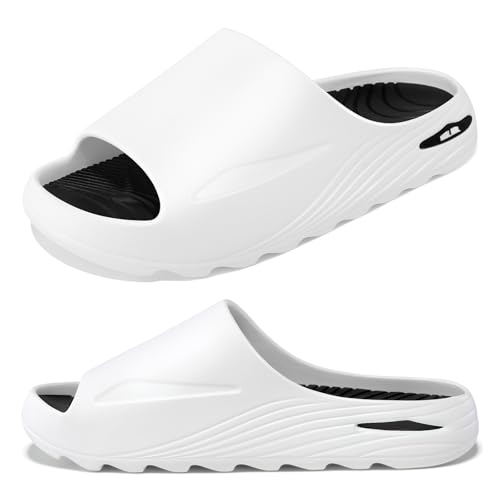
HMLHML Mens Recovery Slides - Orthotic Arch Support Sandals for Plantar Fasciitis,Comfortable Cushioned Sport Slides with Open Toe, Reduces Foot & Joint Stress, Size 8(White-Black)
Chosen because it specifies Orthotic Arch Support Sandals for Plantar Fasciitis and Comfortable Cushioned Sport Slides with Open Toe.
View on AmazonAt a glance: supportive slipper options
| Option | Best for | Key features as stated by makers | Limits |
|---|---|---|---|
| Vionic orthotic slippers (e.g., Gemma, Indulge styles) | All-day indoor wear with arch support | Vionic describes built-in orthotic arch support, a deep heel cup and podiatrist-developed footbed | Mid to premium tier; sizing varies by style |
| OOFOS OOahh and OOcloog | Post-activity recovery, hard floors | OOFOS states its OOfoam absorbs more impact than traditional foam and the footbed is shaped for arch support | Foam sole is less warm; not a plush slipper |
| Archies Arch Support Slides | Light arch support on a budget to mid-range | Archies describes a contoured footbed with arch support | Less cushioning than recovery foam |
| Hoka Ora Recovery Slide | Cushioned recovery sandal for indoors | Hoka lists a thick foam midsole and a structured footbed | Open design; limited warmth |
| Orthofeet or Telic style slippers | Those wanting roomier, orthopedic styling | Makers describe cushioned insoles and wider toe boxes | Look is more utilitarian |
| Soft shearling or fleece scuffs | Warmth, not support | Plush lining, thin sole | Usually flat; not designed for heel or arch support |
What to look for in a supportive slipper
- Arch contour: a footbed that rises to meet the arch rather than a flat insole.
- Heel cup: a shaped, deeper heel area that keeps the heel centered.
- Midsole cushioning: enough foam to soften hard-floor impact without feeling unstable.
- Firm backing: a closed or strapped heel is generally steadier than a backless scuff, though some recovery slides use a strap.
- Non-slip outsole: rubber or textured traction for tile and wood floors.
- Width and room: space for toes to spread, and options for wide feet if you need them.
Vionic: orthotic styling in a slipper
Vionic markets its slippers with a built-in arch support system that the brand says was developed with podiatrists. Several styles feature a contoured footbed with a heel cup and a cushioned outsole, in suede, knit or terry upper options. Reviewers at consumer outlets often mention that the arch feels firm compared with ordinary slippers and that a break-in period is common. These sit in the mid to premium tier.
OOFOS: recovery foam you can wear all day
OOFOS says its OOfoam is formulated to absorb more impact than traditional footwear foam, and it offers slides, clogs and closed-toe versions. The footbed has a defined arch. Reviewers often describe the feel as soft but structured, and the wipe-clean surface is practical in kitchens and bathrooms. They are less cozy in cold weather, so some buyers pair them with socks or choose a closed style.
Hoka and Archies
The Hoka Ora Recovery Slide gives a thick, cushioned platform that is popular with people on their feet all day. Archies sells slides, flip-flops and some slipper styles with an arch-support design at a lower tier than many orthotic brands. If you need more correction than a general arch contour provides, discuss custom or over-the-counter orthotics with a podiatrist, and ask whether a slipper that accepts removable insoles is appropriate.
Fit and sizing notes
- Measure feet in the afternoon, when they are largest, and use the maker’s size chart.
- Many supportive slippers run narrow or have a defined last; some makers offer wide widths.
- Foam clogs may feel snug at first and loosen slightly with wear.
- If you use prescription orthotics, check whether the slipper’s footbed is removable.
- Try to wear them around the house for a few hours before deciding; keep tags and packaging within the return window.
Care notes
Foam slides can usually be wiped or rinsed; follow the maker’s instructions and let them air dry away from direct heat, which can warp foam. Fabric slippers may be spot-cleaned or hand-washed depending on the label. Replace slippers when the footbed compresses, the arch flattens or the outsole is worn, since worn support no longer does what it was designed to do.
Pick X if…
| If you… | Pick | Why |
|---|---|---|
| Want arch support in a traditional cozy slipper | Vionic orthotic slipper | Closed construction with contoured footbed |
| Stand on hard floors for hours | OOFOS OOahh or Hoka Ora Recovery | Thick cushioned foam with arch shape |
| Are on a lower budget | Archies-style arch support slide | Basic contour at an accessible tier |
| Have wide or swollen feet | Orthopedic-styled slipper with wide sizing | More room, adjustable closures |
| Need warmth | Closed supportive slipper with a lining | Support plus warmth |
| Use prescription orthotics | Slipper with a removable footbed | Allows your own insole |
Alternatives
- Supportive house shoes or indoor-only sneakers: a lightweight athletic shoe kept for indoor use offers more structure than any slipper.
- Removable orthotic insoles in a roomy slipper: a podiatrist can advise on insoles that suit your foot.
- Supportive sandals with a cork footbed: a different material that molds to the foot over time.
Habits that go with the footwear
Slippers are one part of a larger picture. Avoid walking barefoot on hard floors if it aggravates your heel, keep a pair by the bed so your first steps in the morning are supported, and follow any stretching or activity guidance from your clinician. If heel pain is severe, lasts more than a few weeks, or comes with numbness, swelling or night pain, see a doctor.
Budget tiers explained
At the budget tier you will find simple contoured slides with a basic arch shape and modest cushioning. Mid-range slippers add better foam, a deeper heel cup and stronger outsoles. Premium orthotic slippers and recovery footwear emphasize engineered footbeds, more durable materials and wider size ranges. Spending more does not guarantee a better fit for your foot, so try several shapes if returns are allowed.
Mistakes to avoid
- Choosing the softest slipper: very soft, flat footbeds can feel nice but provide little structure.
- Buying backless scuffs for long wear: they may encourage gripping with the toes.
- Wearing worn-out pairs: compressed foam loses shape and support.
- Ignoring sizing: a slipper that is too small crowds the toes, and one that is too large lets the foot slide.
- Self-diagnosing: heel pain can have several causes, and a clinician can tell you which footwear features matter.
When to see a professional
If heel pain persists, wakes you at night, comes with swelling, numbness or tingling, or follows an injury, see a doctor or podiatrist. A clinician can examine your foot, review your footwear and suggest suitable inserts, exercises or other care.
Buying checklist
- Described arch contour and heel cup, not just “cushioned” or “memory foam”.
- A sole with traction suited to your floors.
- Width options and a return window long enough for several days of wear.
- Whether the footbed is removable if you use inserts.
- Care instructions for foam or fabric.
Using slippers sensibly
Put supportive slippers on before your feet touch the floor in the morning, keep a pair near the places you stand longest such as the kitchen, and rotate between pairs so the foam can recover. Slippers will not replace advice from a clinician, but they can make everyday routines on hard floors more comfortable. Stop wearing any pair that increases pain and ask a professional about alternatives.
Frequently Asked Questions
Can slippers cure plantar fasciitis?
No. Slippers can add cushioning and arch support that makes standing at home more comfortable, but they are not a treatment. A doctor or podiatrist can diagnose the cause of heel pain and recommend a plan.
Is it better to wear slippers or go barefoot with plantar fasciitis?
Many clinicians advise avoiding long periods barefoot on hard floors if you have heel pain. Supportive slippers or indoor shoes are a common suggestion. Follow the advice of your own provider.
Are OOFOS or Vionic better?
They suit different needs. Vionic offers closed, traditional-style slippers with orthotic features, while OOFOS offers soft recovery foam in slide and clog shapes. Try the footbed shape that feels most comfortable on your feet.
How long do supportive slippers last?
It depends on use and construction. Foam can compress and lose its shape over months of daily wear, and outsoles wear down on hard floors. Replace them when support or traction visibly decline.
Can I use my own orthotics in slippers?
Some slippers have a removable footbed, which allows a custom or over-the-counter insole. Check the maker’s description and ask your podiatrist whether it is appropriate. Do not force a rigid orthotic into a shallow slipper.
Should I wear supportive slippers at night?
Many people wear them for bathroom trips or when getting out of bed so the first steps are supported. There is no need to wear them while sleeping. Ask your clinician for advice tailored to your symptoms.