Key takeaways
- Pavement: Nearly any properly rated ride-on can manage smooth concrete or asphalt. Hard plastic tires are acceptable but can be noisy and slippery on wet surfaces. Rubberized tires provide a quieter, more controlled ride.
- Short, dry grass: Look for traction tread, at least 2–3 inches of ground clearance, and a weight rating with plenty of margin. A heavy child can make a basic 12-volt motor stall even on a modest lawn.
- Long or damp grass: Prefer 24 volts and a two-motor drivetrain. Wet grass reduces traction, so more voltage alone will not solve every problem. Avoid steep slopes.
- Gravel: Larger pneumatic or soft-compound tires handle small stones better than narrow plastic wheels. Check that the manufacturer permits this surface; loose gravel can affect steering and braking.
- Slopes: Keep ride-ons on gentle, supervised grades. A vehicle that climbs well may still be difficult to stop going downhill. Never rely on the child to use reverse as a brake.
The best kids electric cars are chosen by your child’s weight, the terrain around your home, and whether you need parent control—not by looks alone: for most families, a 12-volt two-seat ride-on with a low-speed setting is the safest starting point for ages 3–6, while heavier children and rough grass may need a 24-volt model for ages 6 and up.
Quick picks by child, terrain, and household
| Situation | Best type | Useful target specifications | Why it fits |
|---|---|---|---|
| First ride-on for a 3–4-year-old | 12-volt single- or two-seat car | 2–3 mph low setting, 55–65 lb capacity, parental remote | Gentler acceleration and easier adult supervision |
| Two children sharing | 12- or 24-volt two-seater | 100–130 lb combined capacity, 4–5 mph top speed | More seat width and useful weight headroom |
| Flat pavement or a driveway | 12-volt car or small truck | 2–5 mph, rubberized or traction-tread wheels | Lower power is usually adequate and easier to control |
| Grass, slopes, or uneven ground | 24-volt UTV-style ride-on | 4–6 mph, two driven wheels or four-wheel drive, 100 lb or more capacity | Higher voltage and traction reduce stalling |
| Small apartment or shared courtyard | Compact single-seat model | Under 40 in. long, under 24 in. wide, 12-volt battery | Easier to store, turn, and carry through a doorway |
These are selection targets rather than universal specifications. Always confirm the current product manual, because age limits, weight ratings, speed modes, and included remotes differ between versions.

FanttikRide N7 Pro Electric Wiggle Car, Flashing Wheels, for Ages 3+, Blue
Included for 'Best Kids Electric Cars by Age and Terrain' because the listing specifies Flashing Wheels and for Ages 3+, details this guide uses to compare options.
View on Amazon
First Ride On 36V Kids Ride On UTV, 2-Seater 400W Electric Car for Kids 6+, 5-8 MPH Speed, 14" EVA Wheels, Metal Frame, Bluetooth Music, Rear Metal Suspension Off-Road Vehicle (Cobalt Blue)
Included for 'Best Kids Electric Cars by Age and Terrain' because the listing specifies 2-Seater 400W Electric Car for Kids 6+ and 5-8 MPH Speed, details this guide uses to compare options.
View on Amazon
2 Seater Ride On Car for Kids, 24V Licensed Ford Bronco Raptor Electric Power Ride On Truck Toy with Remote Control, 4 Wheels Shock Absorption, Soft Start, Bluetooth, Radio, 3 Speed - Blue
Included for 'Best Kids Electric Cars by Age and Terrain' because the listing specifies 4 Wheels Shock Absorption and Soft Start, details this guide uses to compare options.
View on Amazon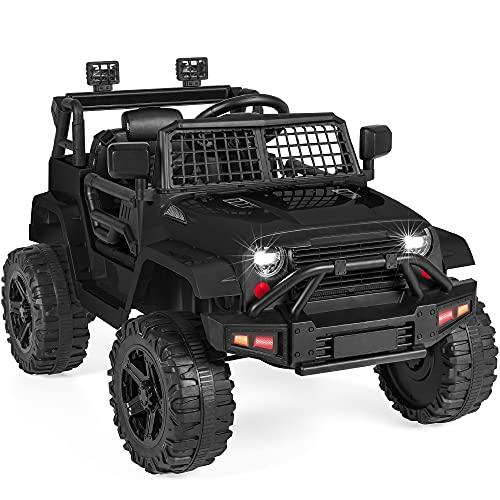
Best Choice Products 12V Kids Electric Vehicle Toy Ride On Car with Parent Remote Control for Toddlers, Seat Harness, 61 lbs Weight Capacity, Locking Doors, Spring Suspension, Bluetooth - Black
Included for 'Best Kids Electric Cars by Age and Terrain' because the listing specifies Seat Harness and 61 lbs Weight Capacity, details this guide uses to compare options.
View on AmazonBest kids electric cars by age
Ages 2–3: low-speed ride-ons
For toddlers, choose a ride-on designed specifically for young children rather than simply buying the smallest-looking car. Look for a 6- or 12-volt system with a maximum speed around 1.5–3 mph, a wide wheelbase, a simple foot pedal, and an adult-operated remote. A remote with forward, reverse, stop, and speed control is more useful than a decorative steering wheel.
At this age, the most important limit is not battery voltage but body fit. The child should be able to sit with their back against the seat, bend their knees comfortably, and release the pedal without stretching. Avoid models in which the child’s feet cannot reach the floor pan securely. Use these cars only on level, private surfaces away from driveways and roads.
Ages 3–6: the most versatile category
A 12-volt two-seat car is often the best balance for preschool and early elementary children. Typical models provide a low and high speed setting, roughly 2–5 mph, and a total capacity of about 80–130 lb. Power Wheels cars and trucks, including models in the Dune Racer and Jeep-style ranges, are familiar examples of this category; exact specifications vary by model year.
Choose a two-seater only if the seats have enough usable width. A nominal two-seat label does not guarantee that two children will fit comfortably with winter clothing. Measure the seat width and compare it with the children’s hip width, leaving room to buckle in and move their knees. If one child is already near the weight limit, a single-seat model may climb and brake more predictably.
Ages 6 and up: 24-volt UTVs and larger trucks
Older children generally benefit from a 24-volt UTV-style vehicle with a sturdy frame, higher ground clearance, and a capacity of at least 100 lb. These models commonly reach 4–6 mph and may include two-speed or three-speed selection, working lights, a horn, and a parent remote.
Do not select a faster car solely because a child is older. A 6 mph ride-on covers about 9 feet each second. That leaves little time to react near walls, pets, steps, or another child. A speed lock that keeps the vehicle at its lowest setting is valuable, especially when siblings share the car.
How terrain changes the right choice
- Pavement: Nearly any properly rated ride-on can manage smooth concrete or asphalt. Hard plastic tires are acceptable but can be noisy and slippery on wet surfaces. Rubberized tires provide a quieter, more controlled ride.
- Short, dry grass: Look for traction tread, at least 2–3 inches of ground clearance, and a weight rating with plenty of margin. A heavy child can make a basic 12-volt motor stall even on a modest lawn.
- Long or damp grass: Prefer 24 volts and a two-motor drivetrain. Wet grass reduces traction, so more voltage alone will not solve every problem. Avoid steep slopes.
- Gravel: Larger pneumatic or soft-compound tires handle small stones better than narrow plastic wheels. Check that the manufacturer permits this surface; loose gravel can affect steering and braking.
- Slopes: Keep ride-ons on gentle, supervised grades. A vehicle that climbs well may still be difficult to stop going downhill. Never rely on the child to use reverse as a brake.
Ground clearance matters around roots and edging. A practical home check is to measure the tallest obstacle in the planned route and choose at least 1 inch more clearance. Also allow a turning zone: many ride-ons need roughly 5–7 feet of open width to turn without repeatedly touching a wall or fence.
Battery runtime, charging, and speed settings
Manufacturers often advertise runtime under ideal conditions. A 12-volt ride-on may provide approximately 45–90 minutes of intermittent driving, while a larger 24-volt vehicle may provide around 30–90 minutes depending on battery capacity, child weight, terrain, temperature, and speed. Continuous full-throttle driving on grass can reduce that figure substantially.
Ask for battery capacity in amp-hours, not voltage alone. A 12-volt battery rated at 9 amp-hours stores about 108 watt-hours; a 24-volt, 7-amp-hour battery stores about 168 watt-hours. The second vehicle has more stored energy, but motor efficiency and terrain still determine actual runtime.
Plan on several hours for a full charge unless the manual specifies otherwise. Use only the supplied charger or an approved replacement, charge in a dry ventilated location, and disconnect after the recommended charging period. Lead-acid batteries are common and affordable, while lithium-powered models may be lighter and offer more consistent performance but can cost more.
Parental controls and safety features worth paying for
- Parent remote: It should stop the vehicle, change direction, and control speed—not merely steer while the child remains in command.
- Low-speed lockout: A switch or remote setting that prevents access to top speed is useful for new drivers.
- Soft-start acceleration: Gradual motor engagement reduces the lurch that can surprise a small child.
- Seat belts: A three-point or adjustable lap-and-shoulder restraint is preferable to a decorative belt that does not adjust.
- Protected drive components: Covered chains, gears, and wiring reduce pinch and snag hazards.
- Thermal protection: Motor and battery cutoffs help prevent overheating during long grass runs or repeated hill attempts.
- Real brakes and reverse controls: Confirm how the vehicle stops when the pedal is released and whether reverse is limited to a low speed.
Use a properly fitted helmet on every ride, keep the vehicle off public roads, and supervise even when the remote is available. A parent remote is a backup, not a substitute for staying close enough to intervene.
Assembly, storage, and durability realities
Expect assembly to take about 30–90 minutes for a basic car and longer for a larger UTV. The first charge may take several hours, and some models require the battery to be connected before the vehicle will operate. Photograph the wiring before closing the battery compartment, and tighten wheel, steering, and seat hardware after the first few rides.
Check the boxed dimensions before ordering. A finished ride-on measuring 45 inches long may arrive in packaging close to 48–52 inches long and 25–30 inches wide. Measure the narrowest doorway, including trim, and plan for a storage route. A 12-volt model may weigh 35–55 lb; larger 24-volt vehicles can exceed 70 lb, making stairs and vehicle loading awkward without a second adult or a ramp.
The parts most likely to wear first are tires, drive gears, steering links, foot pedals, battery connectors, and the rechargeable battery itself. Plastic body panels may survive years of outdoor use, but sun exposure can fade them and moisture can corrode terminals. Store the vehicle under cover, keep mud out of the motor area, and avoid leaving the battery discharged for long periods.
What should you spend?
Basic single-seat ride-ons usually cost about $100–$250. Better-equipped 12-volt cars and two-seaters commonly fall around $200–$500. Larger 24-volt UTVs with stronger drivetrains, remote controls, and improved tires often cost $400–$900 or more. Budget for a replacement battery eventually; its price is commonly about $40–$150 depending on chemistry and capacity.
Final buying checklist
- Measure the child’s weight, seated leg length, and shoulder width—not just their age.
- Keep at least 15–25% capacity above the heaviest expected load when terrain is uneven.
- Match voltage and drivetrain to grass, gravel, and slopes rather than choosing by top speed.
- Confirm the remote has an immediate stop function and a usable low-speed setting.
- Measure storage doors, turning space, and the route from the charger to the riding area.
- Read the manual for approved surfaces, maximum slope, charging procedure, and replacement battery details.
For most families, the best kids electric car is a slow, remote-controlled 12-volt model that fits the child now and leaves weight capacity to spare. Move to a 24-volt UTV only when the child’s size, regular grass terrain, and available supervision justify the extra weight, speed, maintenance, and storage demands.